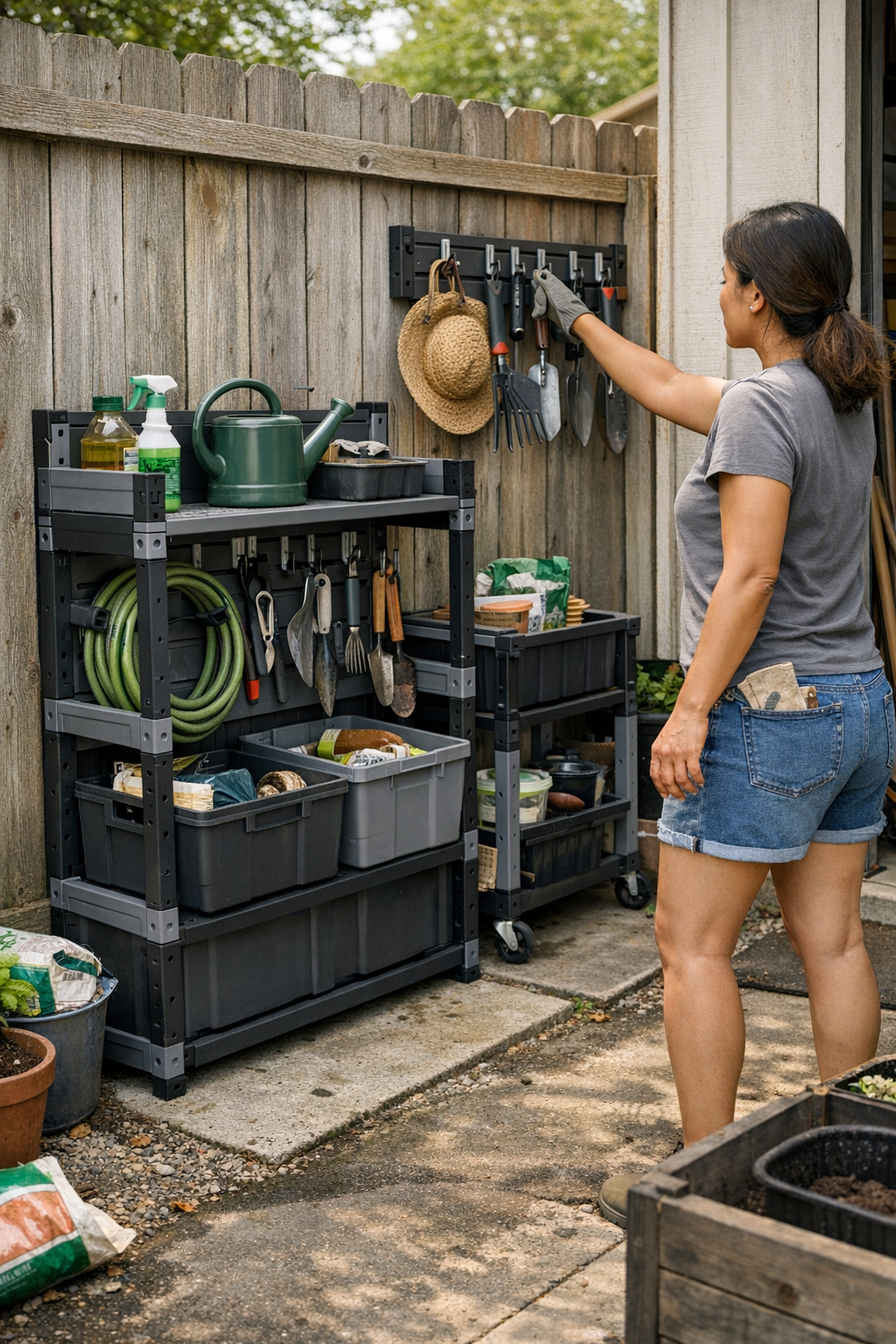
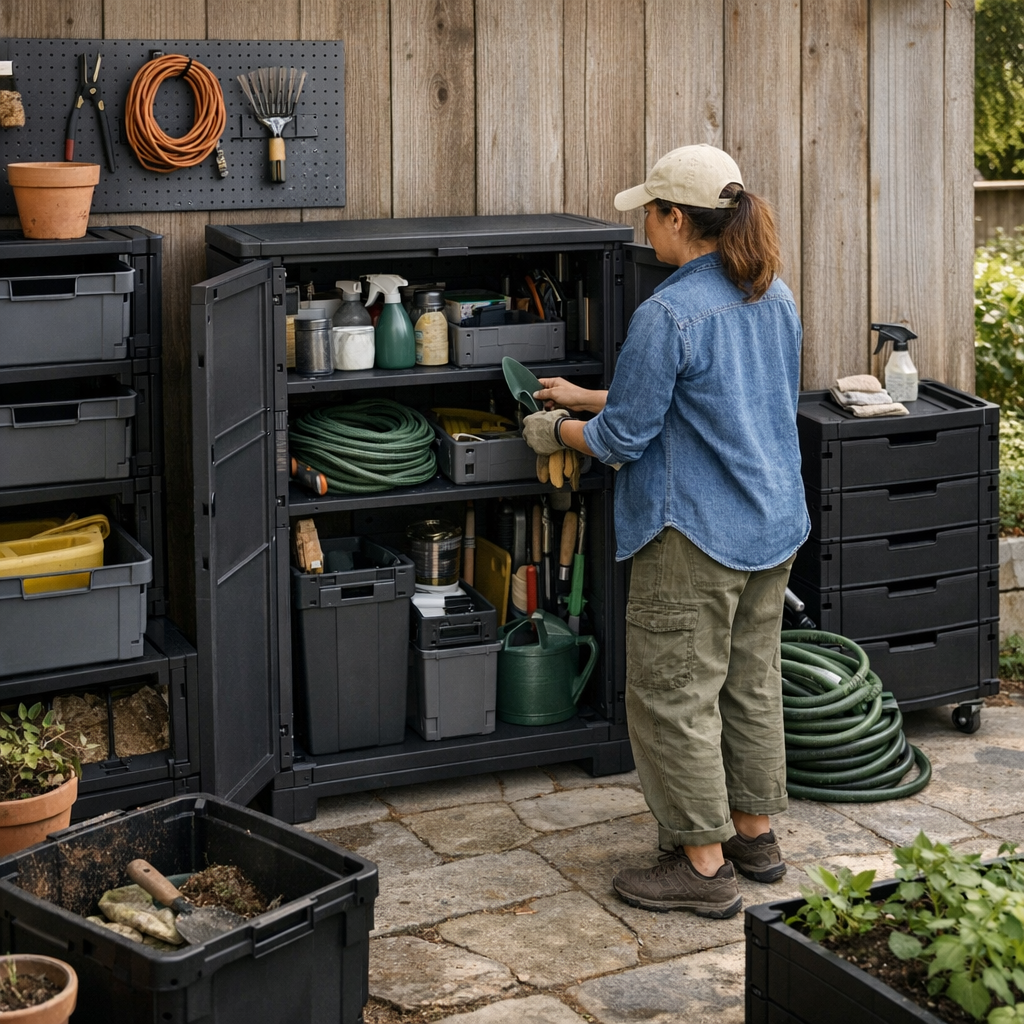
When Yard Clutter Reveals Hidden Household Habits
Surface-level organization fails when storage doesn’t match real use, but vertical, reachable zones cut clutter and ease upkeep.
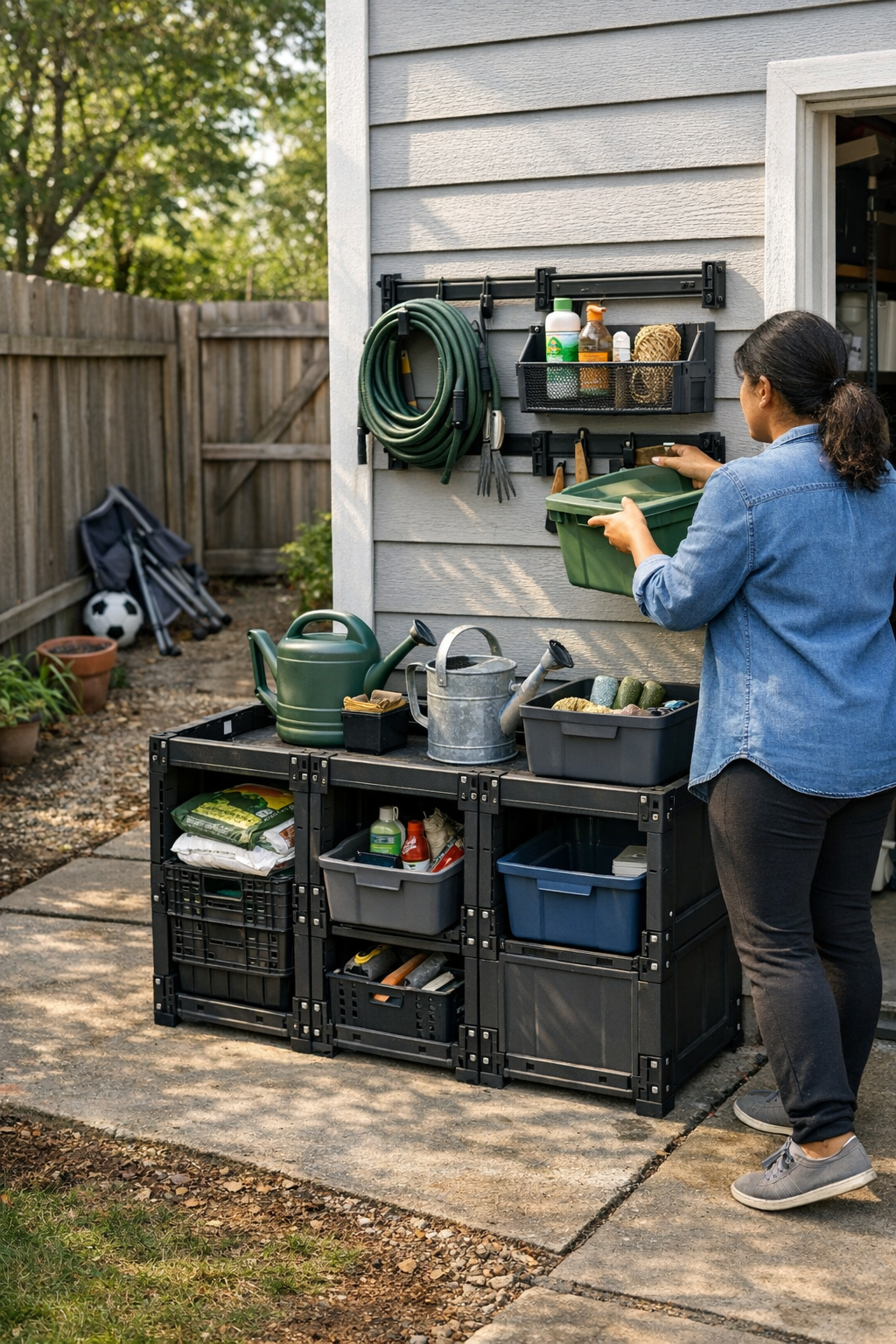
Clearing space outside always feels good at first. There’s this sudden breath of order, with bins aligned and racks resting on the wall. But beneath that initial neatness, I kept noticing other rhythms in the yard—especially when more than one person used the space. A shared yard stays organized only as long as its storage fits how real people move and return things, not just how it looks right after a tidy-up.
You don’t notice it immediately.
But you feel it.
The Illusion of the First Clean Slate
The first hours after resetting a shared yard are almost too perfect. You have the sense that everything has its place—bins for toys and chairs, hooks for tools, shelves for the odd-shaped gear used only in summer. For a moment, the whole space looks like it could stay that way. But the illusion fades quickly.
As people unwind the neatness, trouble spots show themselves. Too-high wall racks might look smart, but if a kid or someone shorter can’t reach, tools end up back on the ground. Floor bins fill unevenly and, after a few days, overflow returns to the edges—particularly on paths everyone uses.
I used to think another round of decluttering would fix it. But what actually made a difference was less about removing stuff and more about noticing how each person actually reaches for and stows the things they use most.
Where the Return Flow Stalls
There’s a part of the yard—just inside the gate, near the main walkway—that quietly keeps score. When many hands contribute, small frictions build up there. A folded lawn chair left askew, hand tools just underfoot, a baseball rolling out from behind a bin. No one means for congestion, but it happens week after week.
You probably pass through without thinking at first. Then you catch yourself stepping over the same cluster daily. That says something—not just about clutter, but about which storage is actually serving real use, and which is fighting how people move.
I started seeing that the reset wasn’t failing because of laziness. Instead, small mismatches—a hook a few inches too high, bins blocking a narrow path—kept inviting stuff to pile up in the same places.
The Quiet Fix Underfoot
The change that lasted was almost imperceptible. We lowered a hook near the gate to fit heights accessible to everyone—kids, adults, anyone who needed it. Suddenly, bulky tools stopped migrating across the ground. A few bins shifted off the path, and putting things away became more automatic.
The biggest difference wasn’t having less stuff, but having storage that fits actual routines, not imagined ones from a catalog.
The difference shows up most clearly on Sunday afternoons, when everyone is coming or going at once. The walkway stays clear. The pileups don’t form. For once, the reset feels less like a weekly chore and more like something quietly built into the space.
Most days, the yard tells you—if you look—how well the setup is working. It isn’t always about imposing order. Sometimes, the right feel arises from making the easiest return the right one for whoever walks by next.
These small realizations surfaced as I adjusted our own setup and thought through the challenges common to backyard storage, small-yard organization, modular wall systems, and shared outdoor utility spaces.