When Your Bag Slows You Down at the Gate
A carry-on’s true usefulness shows in real movement; outer quick-access pockets and item separation reduce slowdowns and ease boarding.
You don’t always notice it right away. There’s the comfort of feeling organized, the small pride in every zipper sliding neatly into place before you lock the door. But then comes that moment in line—when your bag’s weight shifts in your hand and the boarding pass isn’t where you thought you’d left it. Someone waits behind you, and you’re suddenly digging through a pocket that was tidy a minute ago, just not accessible now.
What keeps coming back isn’t whether the bag fits everything, but how easily it comes out when you need it most—while moving in line, under a little time pressure. Every trip proved it’s less about raw storage and more about access, especially for the things you need in those in-between moments when movement matters more than perfect organization.
The Real Test Comes With Movement
A carry-on looks orderly at home. Every pouch zipped. Items stacked quietly in rows. But it’s strange how that surface clarity gets tested the first time you join a boarding line and reach for your passport.
You notice it after a few transitions: every small stall, a micro-hesitation as a pouch shifts open and a charger tangles itself with your ticket. Someone shifts behind you; the bag feels heavier. It’s not just clutter—it’s the way items overlap, how documents squeeze past headphones and chargers, turning every quick access into a pause.
It looked fine at first. But the difference kept showing up.
Where the Delay Actually Starts
In quieter moments, the tidy bag system almost invites you to forget what goes where. But even one awkward fumble at the gate—hand searching, half-unzipping, trying not to drop what’s inside—stays in memory longer than the perfectly coiled cable ever will.
Shuffling for an ID at security, feeling the line inch closer, is where the illusion cracks. The time lost is rarely minutes, but the moment breaks your forward flow—especially if your setup means opening, searching, closing, repeating.
By the second or third boarding, you start separating repeated interruptions from real essentials. The practical shift here wasn’t adding more compartments—it was setting aside a dedicated outer pocket, kept clear except for what you grab immediately after arriving at the airport. Passport. Headphones. Nothing else layered in.
Quiet Design That Makes Its Point in Line
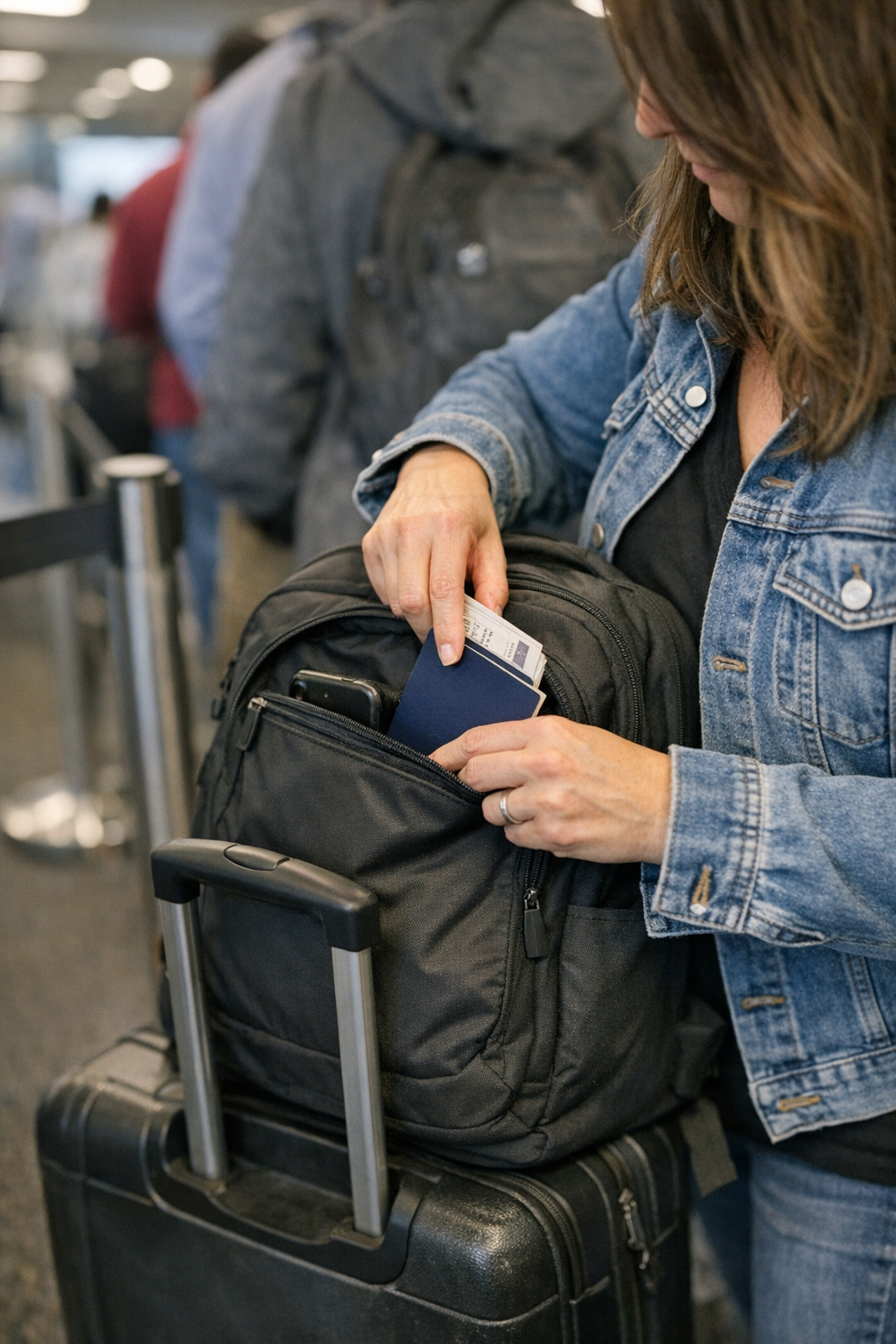
After one too many pauses, I moved all high-frequency items—a passport, boarding pass, even a pen—into a single outer zip. No chargers, no snacks, nothing that turned returning things into a puzzle.
It’s quieter in motion now. On a trip with a tight connection and nowhere to set anything down, I found myself moving faster without thinking about it. No extra handling—just a quick thumb-zip, retrieve, and move on.
That became the real relief: the bag fades into the background until you need it, and then the right item is always there, without the fuss. These routines live in small, repeated motions—the bag’s weight shifting only when you want it to, the single smooth motion replacing an awkward shuffle. No drama, just fewer interruptions.
This recognition took a few trips to settle in. If you want to see a handful of examples and ideas from the world I’m describing, they’re quietly gathered here: http://www.carryonsupply.myshopify.com