Behind Closed Doors: The Quiet Struggle of Linen Cupboard Order
A clean closed-door linen cupboard often hides access friction; front-placed separation and matched shelf depth ease restocks and retrievals.
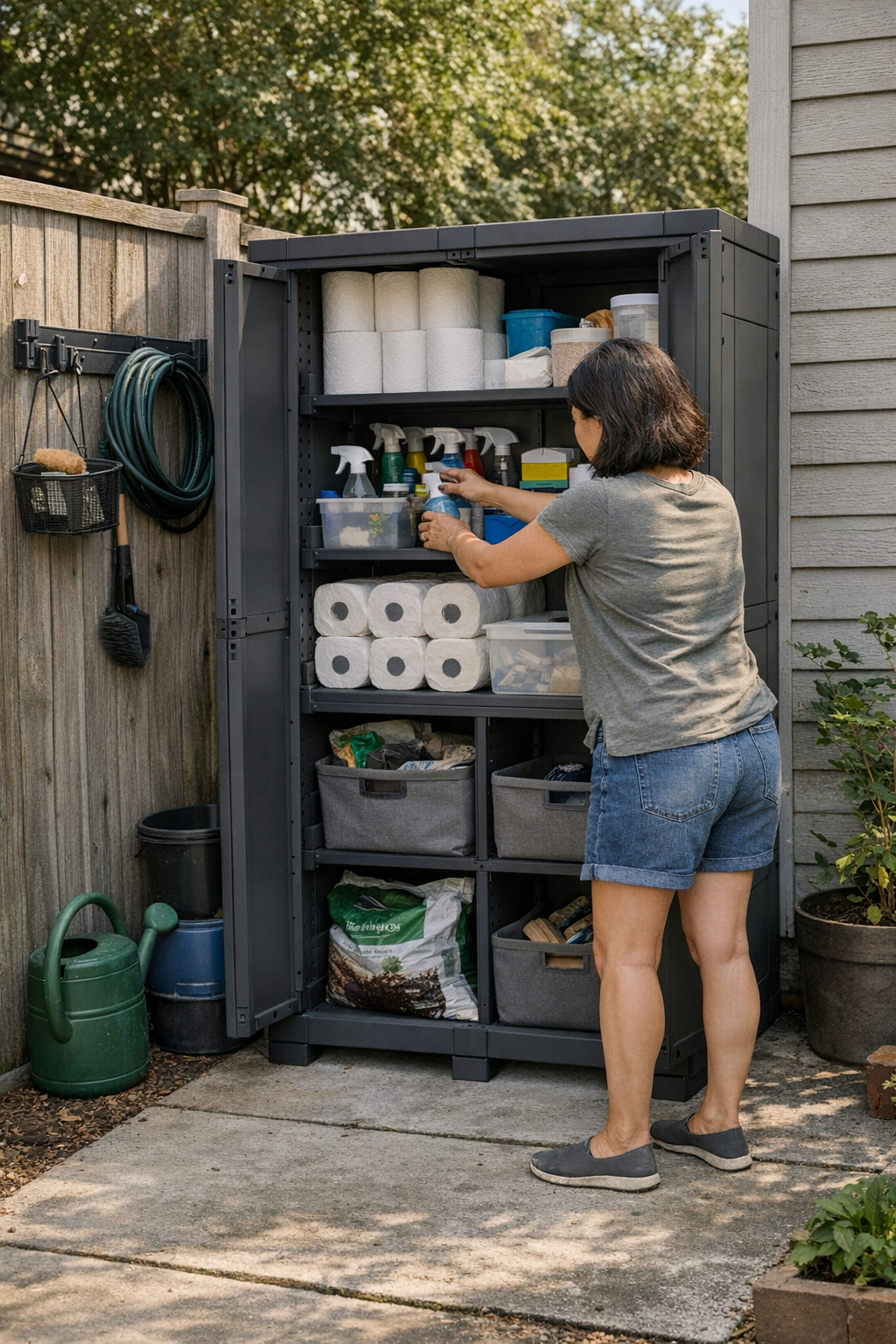
There’s a particular relief that comes with closing the doors on a linen cupboard. For a moment, everything looks calm, level, quietly resolved. But after the first few weeks, another feeling starts to settle in—especially if paper goods share the same shelves as linens. I didn’t notice it at first. It crept in gradually, with each restock and hurried retrieval, the gap between cupboard calm and actual use quietly widening.
This wasn’t just about organization but about ease. The little delays—digging for the last box of tissues hidden behind towels, noticing a surplus of one item and lack of another, awkward shuffling with every refill—showed how the visible order of a closed-door cupboard can disguise a slow drift happening underneath. There’s a difference between what looks settled and what actually works in daily use.
Surface Calm, Hidden Drift
At first, the smooth fronts felt like victory—the clutter of open shelves sealed away in one tidy move. I’d restock toilet rolls and paper towels wherever there was space, aiming for a quick and neat-looking fix.
But the pattern only became clear after repeating it a few times.
Soon, paper goods migrated behind softer piles of towels. A deep shelf, meant to maximize storage, became a hiding place instead of a help, especially after a few rushed mornings or when family members returned items out of place. The cupboard always looked fine from the outside. Inside, it became a quiet puzzle you had to solve every time you reached for something.
The relief of shutting the door each time masked a different growing friction.
That Blocked Edge
The trouble showed up midweek. You reach for a fresh roll in a hurry, expecting an easy grab, but find it wedged behind bedding—shadowed and inconvenient, never front and center. That was the sticking point I kept returning to.
Depth was supposed to be an asset. Instead, every extra inch welcomed confusion—packs stacked two or three deep, softer things drifting forward, supplies pushed out of sight by their own bulk. The cupboard’s promise of order was just skin-deep, quietly undone by everyday habits: a quick shuffle here, a forced reinsertion there, improvisation trumping any original shelving plan.
It’s a small thing, but when a simple grab means moving multiple layers, the tension becomes something you carry through your week.
Changing the Pattern, Quietly
Eventually, I stopped searching for spare corners and drew a firm line. Paper goods at waist height, always facing front, no more than two packs deep. This kept everything visible, made every return as easy as retrieval, and created a small daily relief. No more digging, no overflow piles, just a predictable spot that survived through routines, rushed or relaxed.
This stuck—a practical realization wrapped in repetition: shelves between fourteen and sixteen inches deep worked best. Everything stayed reachable and visible, and there were far fewer surprises. It was less about perfect order and more about not leaving hidden work in the shadows.
This kind of storage change doesn’t look dramatic from the outside. But over time, the shift felt like a quiet lifting of friction—a linen cupboard that fit actual use, rather than only the idea of it.
Sometimes even the calmest storage setups ask you to trust your own flow, not just the neat view behind a closed door.
If you’re curious where these reflections started, you’ll find the same structures here: http://www.gridry.myshopify.com



