When Flexibility Turns Into Everyday Frustration at Home
Modular storage only works well with clear boundaries; without them, flexibility causes clutter, blocked movement, and wasted reset time.
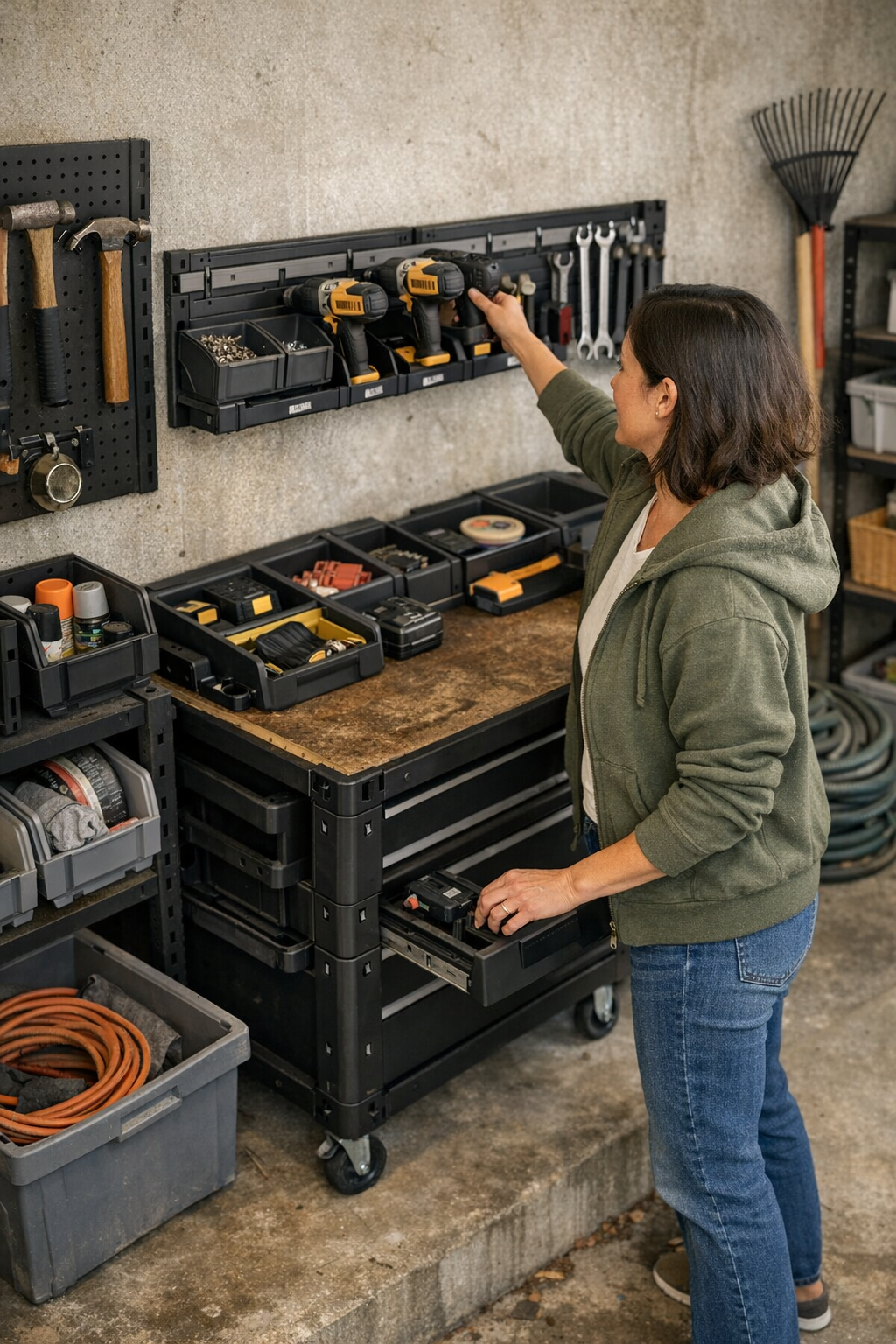
There’s a particular satisfaction in reorganizing a space—whether it’s a garage, workshop, or backyard utility setup. You picture baskets sliding smoothly into rails, mobile carts rolling purposefully, wall grids ready for whatever tools or gear come next. In those first moments, all feels possible. The promise of endless flexibility is right there.
But flexibility wears thin. You don’t notice it immediately.
What Looks Adjustable Isn’t Always Adaptable
Most modular storage systems at StackNest offer the appearance of freedom. Bins and shelves shift with ease; carts move like loyal helpers. Yet after a few days, something subtle changes. Tools start lingering in odd spots. A loose handful of screws or a charger ends up on the wrong shelf—and somehow never leaves.
Then the open floor space shrinks. Edges fill up, walkways lose inches. You feel it—the friction of bending around an out-of-place cart or searching through overflow for that one wrench. What felt so promising begins to feel like an added chore. The same features bought for convenience slowly begin to cost small moments—tiny frictions that add up over time.
The Cost of Endless Arrangement
I used to think more adjustment meant more possibility. But whenever a tool drifted to the edge of a shelf, it invited others to wander over too. “It’s just temporary,” I told myself—until corners overflowed and pathways were lost beneath layers of almost-put-away gear.
You don’t see the slow creep of clutter until every reset demands double the effort. It becomes clear: pure flexibility breeds piles, not order. Freedom without boundaries can be just organized chaos dressed in a tidy grid.
A Quiet Shift: When Limits Help Us Move
One slow afternoon, I added small stops to shelf edges—some friction here, a label there. The difference was immediate but subtle: the return path for each tool became obvious. The rail stayed clear; the mobile cart stopped wandering. The mess around corners faded.
It’s surprising how a simple edge or a clear zone can change your whole interaction with a workspace. When the system asks less of your attention, it gives more in return. The relief isn’t dramatic—it just feels like a lighter breath as you move through.
The best kind of flexibility I’ve found is the kind that knows itself—movement inside a frame, not in every direction at once. Boundaries don’t restrict; they reveal the real flow.
These thoughts came to me during an afternoon tinkering with a wall system in my workshop. I’m quietly grateful the floor stayed open and the return paths stayed clear. That reflection lingers like a room with just enough space to move—and room for one more realization.