Dust Settles Where Fans Don’t Reach
Ventilation fan effectiveness depends on exact placement near the dust source; mounting about 1.2m above improves extraction and finish over time.
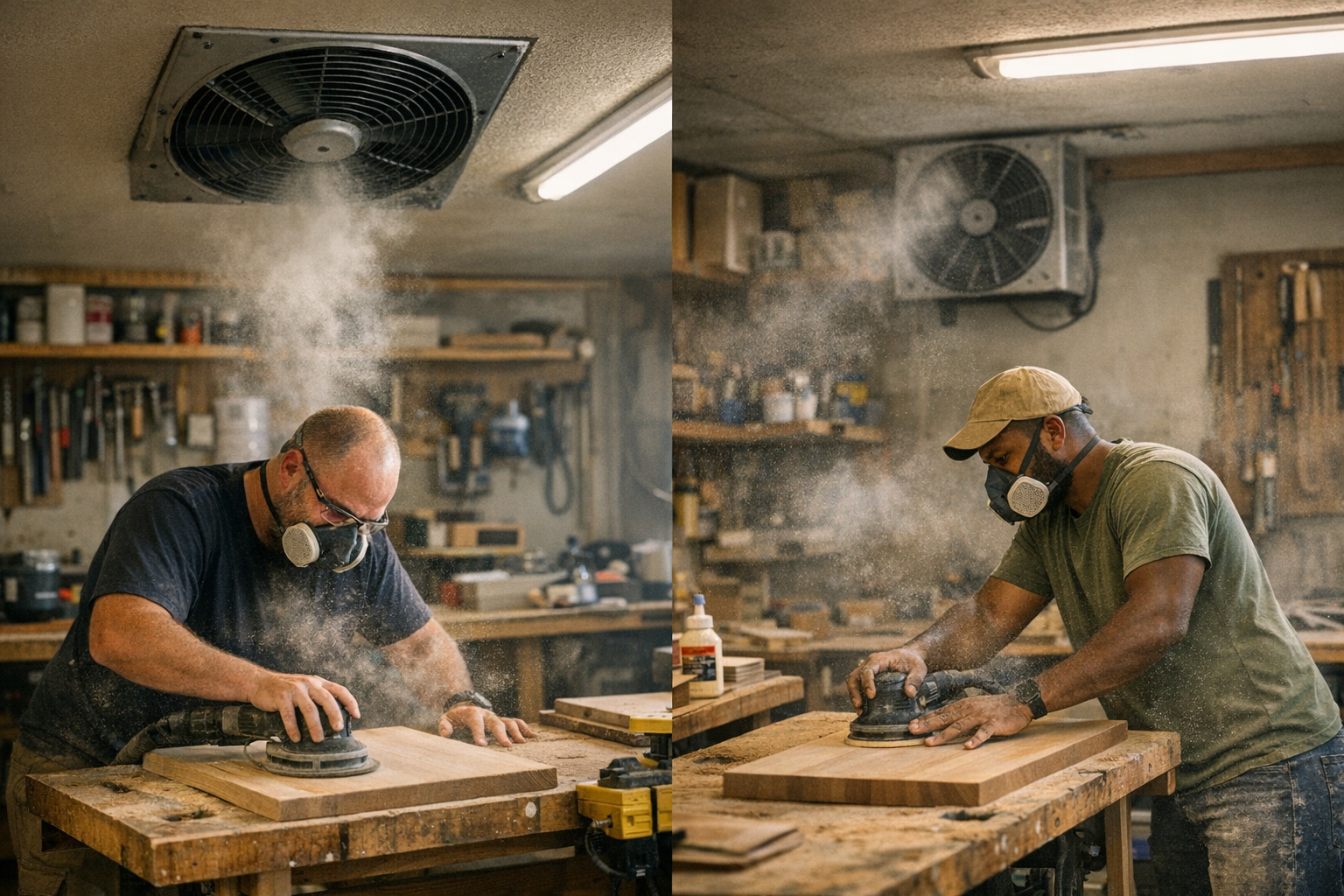
There’s a particular silence that settles over a workshop after you switch off the tools. The hum fades, the air clears—or so it seems. Yet some evenings, a faint layer of dust reappears on the benchtop, persistent and fine, as if it’s waiting out of sight. It’s easy to overlook what’s floating in the air until the grip of residue starts complicating every new project. This lingering, invisible presence is often the result of where the ventilation fan is positioned.
When Clean Looks Like Enough
The first few times working in a fresh space, there’s relief: you turn on the fan, sweep up, and the air feels light. It’s only after several cycles—repeated sanding, finicky finishing work—that the soot begins to settle along edges you didn’t anticipate.
You don’t notice it immediately.
But you feel it.
What hides in the corners after each pass seems harmless at first, a sign of another job well done. Over time, though, these traces start to change the texture and mood of the space; surfaces get rougher, cleanup grows tedious, and a haze lingers longer than it should. Often, it’s not until mistakes add up—a scratch in the finish, a streak in the paint—that the role of airflow becomes clear.
The Unseen Pattern
It’s a strange thing, how misalignment by even a meter—a fan just slightly off from where most dust rises—sets off a series of small, accumulating setbacks.
I’ve seen two rooms with identical equipment turn out completely different results for the simplest reason: one fan is centered above the main bench, the other is mounted off to the side. There’s no alarm bell or sudden disaster, just a slow drift of persistent clouds collecting in stubborn ways. In the best-aligned spaces, dust is swept away quickly, leaving less to wipe, fewer masks to swap, and—maybe most importantly—fewer interruptions.
The difference isn’t theatrical. It’s quiet, almost easy to miss. But over a string of busy days, you notice whose routines run smoother and whose patience is quietly worn.
Finding the Flow Again
A refresh moment came when I decided to look closer—not at tidy workspaces, but at the actual spot where dust leaves the surface. Mounting the fan directly above that brief, messy zone changed things. Bit by bit, the haze faded. The air felt different, lighter somehow, and grit under the hand all but disappeared. Cleanup was gentler, and filters lasted longer before crying out for relief.
It turns out, “close enough” isn’t quite enough. Allowing airflow to follow the true path of dust—not just what looks neat—quietly recalibrates the day’s work. It isn’t dramatic. Sometimes, it’s only in the quiet—when the room feels less heavy and the work flows on without pause—that you realize what’s changed.
Sometimes the best improvements reveal themselves by what no longer lingers at the end of the day.
These thoughts first took shape during long afternoons at my own bench, and some good airflow notes live here.