Evening Calm Begins with a Simple Feeding Habit
Variability in evening meal order causes restlessness; a consistent feeding routine before your dinner eases tension and smooths evenings.
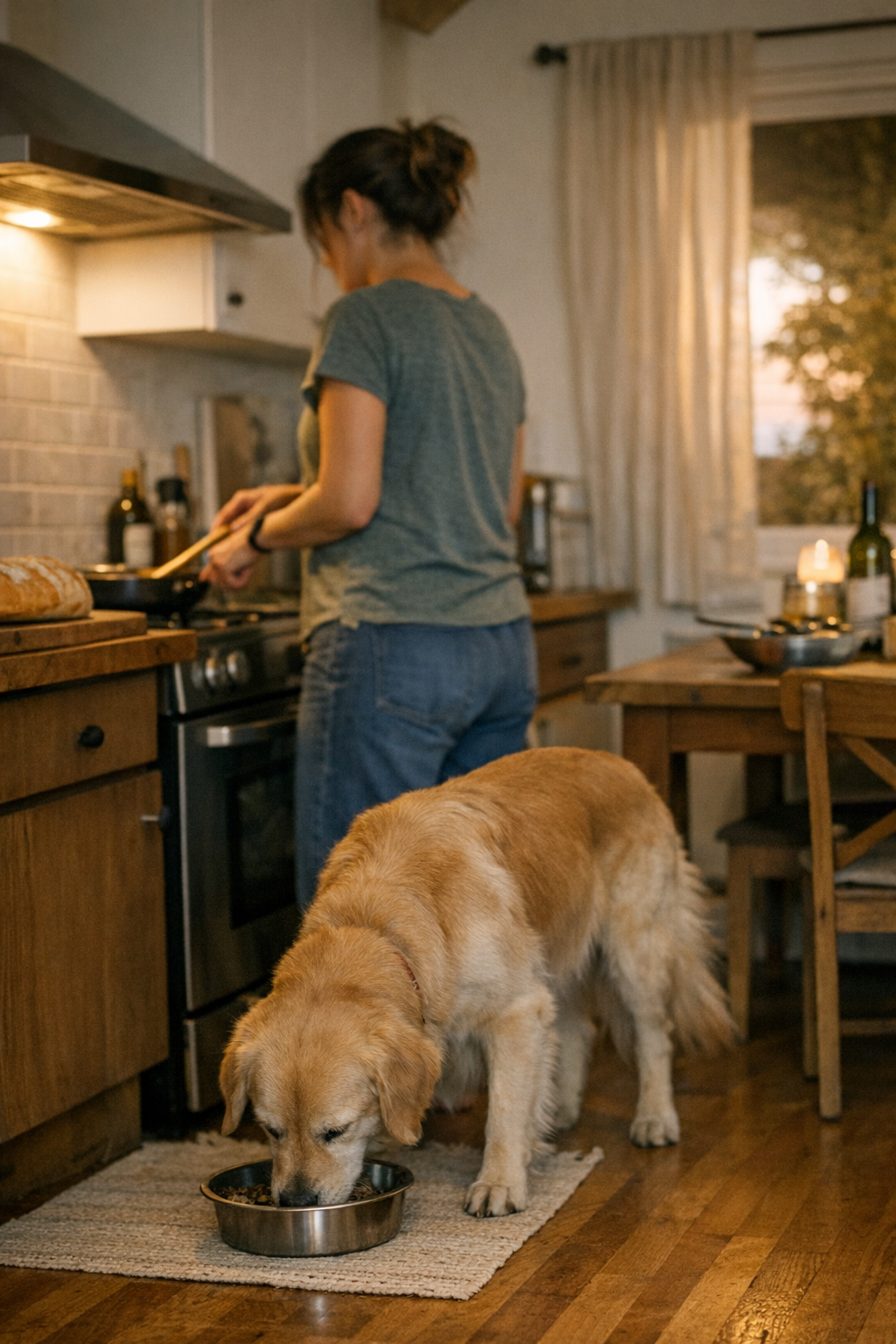
There’s a moment that repeats itself in the kitchen, quieter than most: the sound of a bowl nudged across tile, or paws repositioned just out of sight behind a chair, while I reach for a pan. At first, I barely registered the pattern—my dog’s pacing or hovering whenever I set about making dinner. Sometimes she’d camp beside the door, other nights she’d wait just near the stove, eyes moving from my plate to her empty bowl. It wasn’t urgent, but it was relentless, reshaping those small, transition moments at the end of a day.
Odd how much the order of things can matter. If I served her whenever I remembered—before, after, shuffled in between—she’d stay restless, waiting for the next cue. Over time, I noticed her pacing wasn’t fading. I’d finish dinner only to deal with her circling or nudging the bowl, the kitchen never quite settling. The peaceful evening I imagined kept slipping away, replaced by a low hum of distraction.
You only really notice it after a week or so, when the restlessness becomes background noise. That’s when it became clear: it wasn’t the exact time I fed her, but the consistency of the order. Each evening, if the sequence wobbled—my dinner, then hers, or vice versa, or just whatever felt convenient—her signals got tangled. I watched her park herself under the table, wait with that half-hopeful, half-annoyed stare. The kitchen would stay unsettled, and I’d find myself shooing her aside just to move from the fridge to the stove or stepping around toys she’d dragged closer as a sort of protest.
The Difference Between Tidy and Easy
It looked fine at first: the bowls lined up, her rest corner fluffed, leash hung by the door. The space gave this illusion of readiness, but friction built up right at those handoff moments. Does she eat before me tonight, or after? Sometimes I’d feed her to keep her quiet, then get distracted with prepping my meal and end up stepping around her as she looped through the kitchen, tail thumping impatiently, waiting to see what came next.
The order started to matter more than I expected. Changing it on a whim meant she stayed alert, waiting for another handout or some next signal. Even tidy space—everything placed just right—wasn’t enough to smooth these moments out. The routine itself was what smoothed the evening, not the look of the setup.
You see it after a few mornings too: breakfast rushes, dog weaving between ankles, never really settling until both our bowls are emptied in the same sequence, every single time. That was the part that kept returning. The hunger wasn’t the problem. It was the pattern, or the lack of one.
Learning to Build One Quiet Transition
Some nights I experimented, just to see if she’d settle faster. I fed her before hanging up the leash, or after wiping her paws, or after I started sautéing onions. Each time, the result was similar—a little confusion, a little hope, some pacing that didn’t resolve. Dinner for her had turned into a moving target. It didn’t help either of us.
So I started to hold the line. She ate first, always, right after the walk. The leash came off, the bowl went down in the same corner. Then I washed up, reset the space, and only then did I return to my own meal. After a while, she just stopped hovering. No more pacing, no more insistent circling during human dinner. She’d finish her own, wander over to her bed, sigh deeply, and settle.
The change wasn’t dramatic. It just felt easier, quieter. The rest corner started feeling like hers again. Bowl placement mattered less when the sequence was fixed; she learned what came next, and the house found its rhythm again.
Small Things That Made Evenings Work
I realized the tiny moments added up more than I thought. The question wasn’t how efficiently I could juggle her meal with my own, but whether the pattern was one she could trust. On busy nights—takeout containers, mail to sort, lights clicking on a bit too late—she still glanced at me as if checking: is it the usual order, or something new tonight? When I kept the order steady, she’d watch once and then let it go.
What surprised me was that the routine settled both of us, not just the dog. Once her dinner happened first, I could move around the kitchen untangled, without that low-grade interruption or the feeling of being watched with expectation. Cleanup, too, got easier. No more tripping over toys dragged out in anticipation or dripping water near the bowl because I’d rushed things. Just a smoother return to quiet, and—after a stretch—seconds of unclaimed silence that didn’t have to be earned.
Not everything turned seamless, but the anchor held. There are still scattered toys, late nights, or the days I get distracted and the rhythm slips. Each time I reset the order, though, the evening trades friction for a little more calm, and the house starts to feel like itself again.
Some small routines really do rewire the room. For that, it’s worth noticing.