Evenings Brightened by Thoughtful Wall Lighting
Choosing wall sconces creates targeted, reliable light that improves clarity and comfort without clutter or visual strain over time.
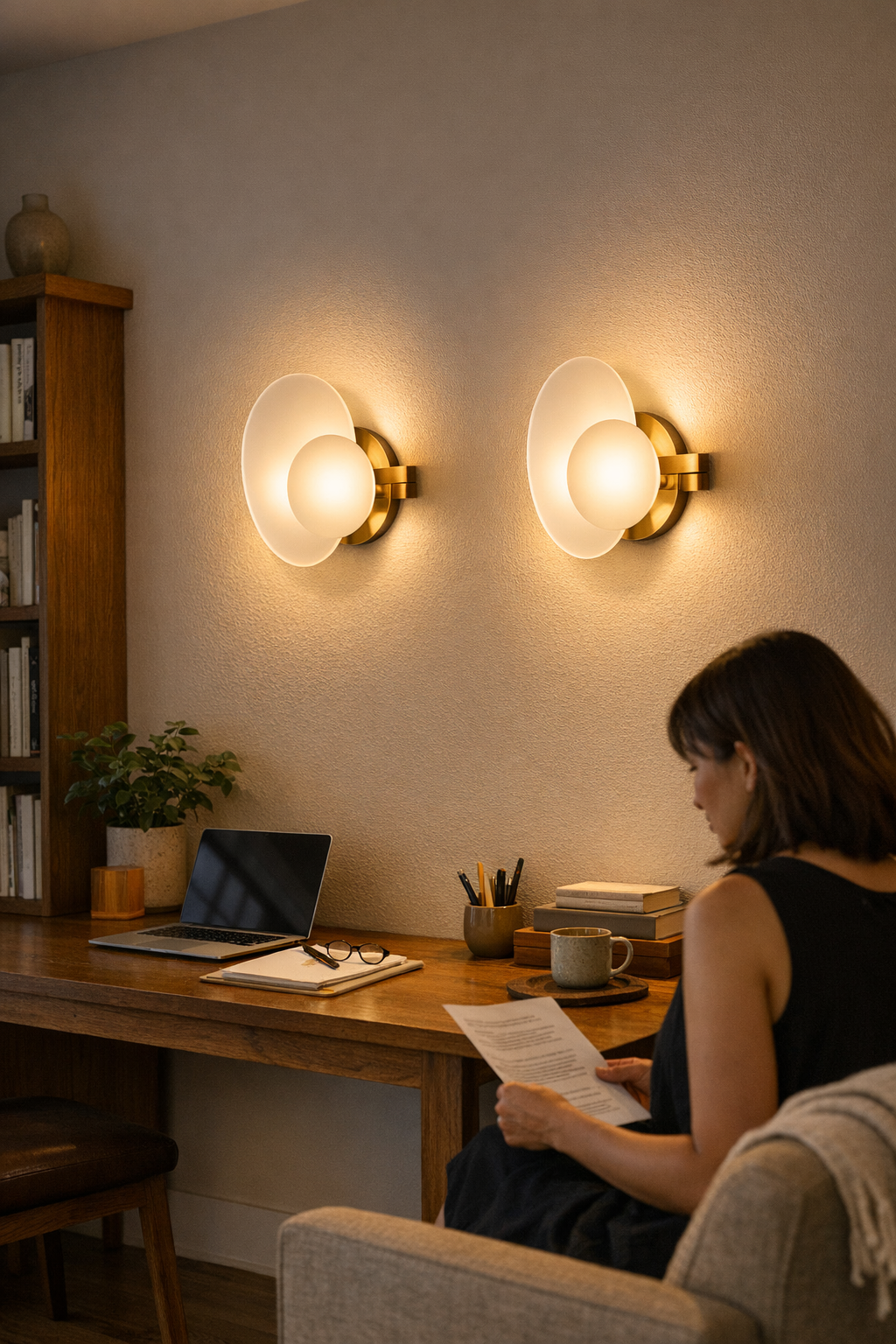
There’s a quiet kind of promise in a new lighting setup. When the ceiling fixture casts a clean, bright pool over the center of the room, or when a couple of plug-in lamps give off an organized surface glow, it’s easy to feel like you’ve got it right. The desk gleams, the floor looks even, and cables aren’t calling for attention. But somewhere around the third week, that sharpness starts to fade. Shadows creep back into corners by evening, paperwork becomes harder to read without moving the lamp again, and glare off the laptop screen makes you squint. It’s not chaos — just a slow sense that enough light should feel easier.
Glare, Corners, and the Quiet Gaps
I used to think it was just about adding brightness. More lumens, supposedly, would bring things back into focus. But in real use — late-night emails at the kitchen table or a book open in the living room — harsh overhead lighting did more harm than good. Glare bounced from desks to shelves. Cables multiplied under tables. Even a tidy space started to break down at the edges, light-wise, the longer I lived with it. You don’t notice it immediately.
But you do feel it.
The problem I kept coming back to was this: no single fixture, however well-placed, seemed able to cover both daily work and soft background lighting at once.
Sconces and Softening Edges
Wall sconces weren’t in my plans at first. They seemed decorative — something for style blogs, not work surfaces. That changed with one persistent problem wall. Each evening, crossing between desk and shelf, I would notice the light just wasn’t right. After trying bracket angles and rearranging power strips, mounting a slim sconce near eye level and aimed along the neglected wall run brought a real shift. The glare faded, corners filled in gently, and shadows softened without washing out the room.
Movement became easier; the usual need to chase stray cables or reposition lamps started to disappear. Sconces quietly supported the routines that overhead or table lamps had always struggled with.
Layering Without Clutter
The real advantage turned out to be about support, not just brightness. Sconces, placed with patience, directed light exactly where needed — along wall lines, reading corners, under shelves — without flooding the whole space or tiring your eyes. Over a few weeks, I noticed less strain, fewer lamp adjustments, and less cable distraction crowding the edges. The room stayed open, surfaces felt present, but the support layered in quietly.
One evening, the relief was as simple as settling into the same spot — no new adjustments, just steady light that faded into the background and made things work.