Evenings Settling Into Quiet Moments With Our Dog
Missing or misreading a dog’s settling routine leads to restlessness. Clear bed placement and cues turn restless laps into calm, repeatable transitions.
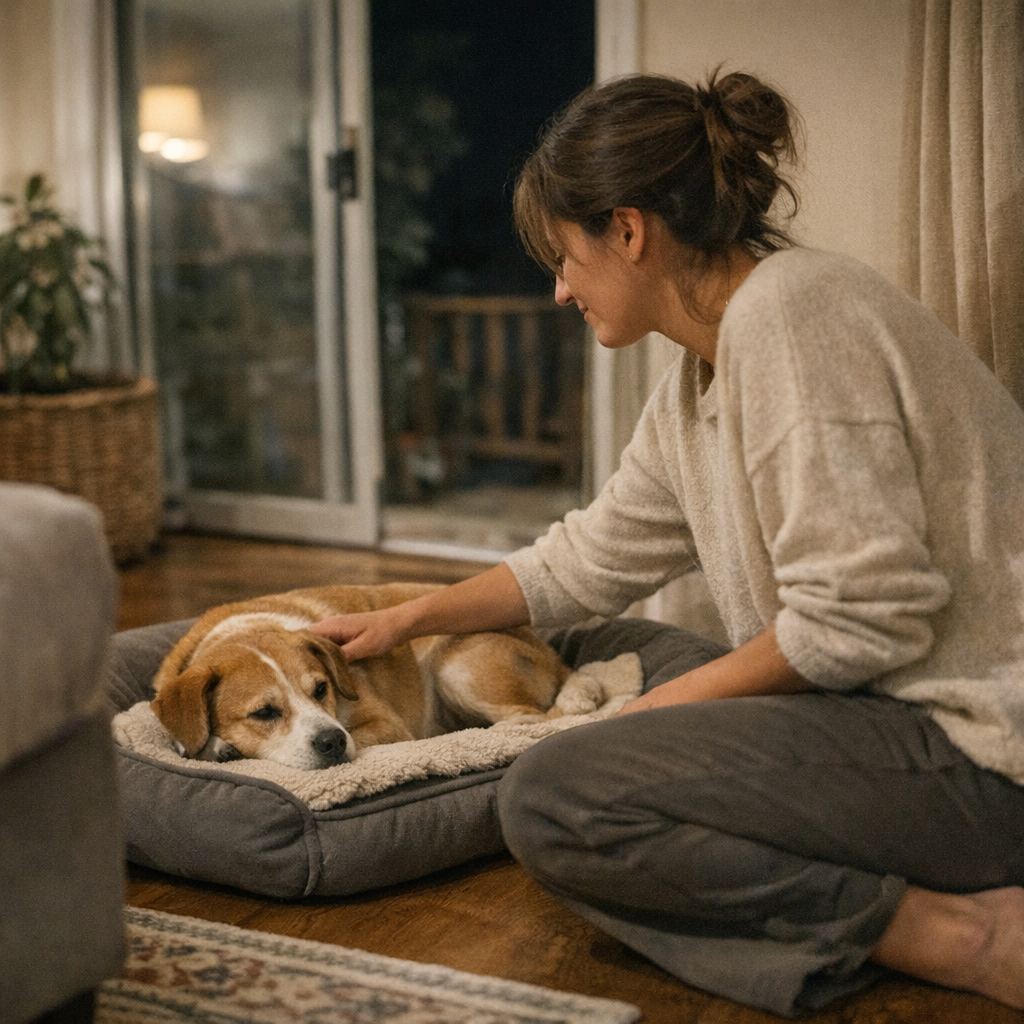
You only really notice it after the third or fourth evening: the small, invisible ways a dog’s rest corner trips up the end of your day. When I first brought home a bed for my dog, it fit neatly against the wall beside the living room chair. It looked fine. For a bit, I thought that was all there was to it—bed near the outlet, toys tucked underneath, path nearby. But every night closed out less quietly than it started. One of us would shuffle past, a tail thud softly, or she’d pause mid-lap, lingering just outside her spot. The routine stumbled, not loudly, but repeatedly in the same places.
At first, it seemed too simple to matter. But over a few weeks, the pattern showed up in all the in-between motions: stepping over the bed to get to the door after her last walk, sidestepping spilled toys rushing to the kitchen, re-fluffing the spot only to watch her immediately get up and circle again. These little disruptions added up—not disasters, but friction that kept repeating. I noticed the same restless loop on weekends when we came home tired after long walks. Her bed was right in the center of things, easy to see, but always in the way when we needed quiet more than clutter.
Morning Muddles and Quiet Interruptions
You notice it after a few mornings, too. Breakfast bowls, shoes by the door, leash on the end table—every object seems to have a routine, except the bed, which sits in the path as if waiting to be tripped over. There’s no real mess, at least not at first glance. But the rhythm is off: pause, sidestep, wait for her to circle, try again. We both kept missing the easy, straight-close of winding down.
The realization didn’t come suddenly. It happened on a busy Tuesday morning, trying to get coffee while she did that slow, indecisive lap from kitchen to bed and back. We hit the same logjam as the night before: her paused just shy of her spot, glancing toward the door; me awkwardly reaching over her bed for my shoes. The setup looked tidy, but living with it meant being out of sync at the exact moments we were supposed to reset.
That stuck moment kept returning: settling down wasn’t simple, just slow. I started to see that sometimes what looks organized isn’t any easier to live with. I wondered if moving things—even just a bit—might change the routine.
A Small Change, A Noticeable Difference
In the end, the fix was smaller than I expected. Just a few feet over, not so close to the door, the bed found its own corner. No more blocking the quick kitchen exit, no more her hovering in my way while I picked up after dinner. The ripple was subtle: she circled once, then settled. The restless pacing dropped off; her rest spilled less into my movement. I found myself stepping less cautiously—just walking, not navigating an obstacle course.
The difference showed up in smaller ways than I expected. Less tripping, less waiting for her to curl up before I sat down. Cleanup after bath night moved quicker. It didn’t erase every scattered toy or damp towel, but our pacing lost that stuck-in-neutral feeling. When a routine works, you forget it’s there. There’s relief in not managing a dozen tiny interruptions—the bed as background, not an edge to step around.
Most of the time, routines reveal where real pauses are. Moving the bed out of the main path didn’t suddenly make her rest better. It just meant neither of us had to interrupt each other’s reset, and the evening closed without needing a repeated cue.
Routines Shape the Space and the Moment
Routine isn’t just finishing the day on autopilot. It’s how a space opens or blocks you, how a simple dog bed can press pause on settling down if you let it. After a few resets, the place she lands becomes quieter, and so does the hour around it. I’m learning to see these changes more as habit than design, but either way, it makes the rest of the night unfold a little easier.
If you ever want to see how these objects show up in real life, there are more honest details here: http://www.dogpile.myshopify.com