Finding Calm Above the Clutter in a Busy Cat Home
Adding one higher perch helps multi-cat homes by reducing clutter, opening pathways, and easing maintenance after repeated use cycles.
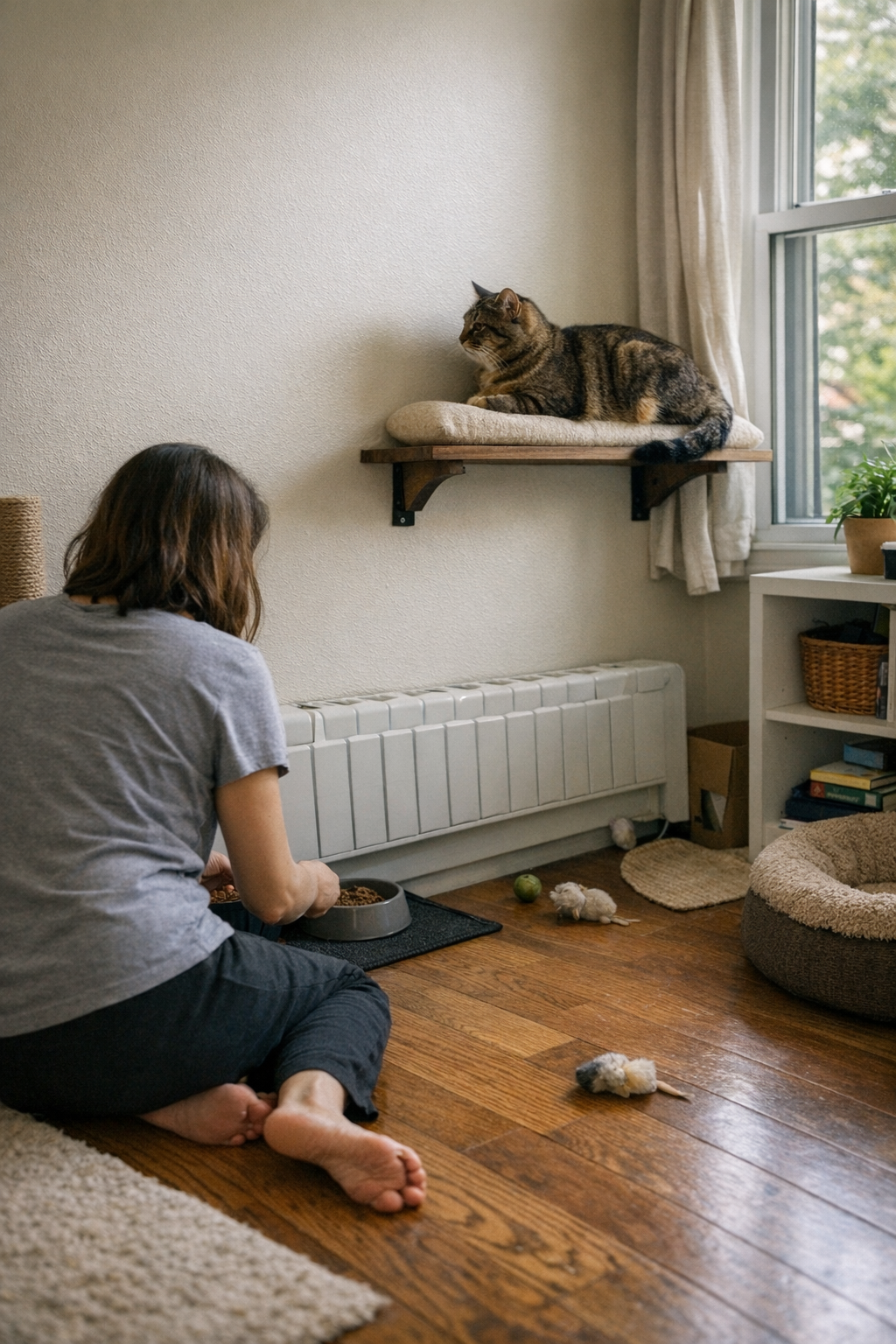
It crept in on an ordinary afternoon—one of those typical resets in a home with two indoor cats: shuffling bowls, gathering stray toys, quick-sweeping the fresh mess left by paws that never follow the same route twice. At first, the setup seemed to hold. Each feeding bowl sat on its mat, toys were clustered in the cat area tucked in the corner, and everything felt contained. But as the days passed, the familiar signs returned: sidesteps around scattered toys, tangled water bowls, and an undercurrent of tension as the cats began to eye overlapping spots as rival territory. The cost wasn’t dramatic, just steady—more time spent untangling than enjoying.
Places Layers Can Go
You don’t really notice how much a flat setup fails until you find yourself rerouting the feeding area for the fourth time in a week or wiping up water that’s spilled onto the same runner. Bowls looked fine on day one. The mat stayed in place once or twice. Then one cat claimed the only sunny window patch, pushing food bowls, toys, and rest spots outward into tighter, lower lines. The slyest cat started sneaking onto high ledges—radiators, shelves, cabinet corners never designed for paws. This pattern kept coming back: a feeling that the usable floor space was shrinking, with every patch of cat life adding friction to simple movements, rest breaks, or moments to pause.
How Things Start to Move Again
One quiet afternoon—more tired than deliberate—I installed a small shelf above the unused radiator. It wasn’t a full redesign, only a practical, offhand change. But the effect was clear: fewer bowls knocked askew after breakfast, less fur drifting across the floor, and no more quiet wrestling over the patch of sun by the window sill. Cats shifted their routes, lounging routinely up high with only a passing glance at the bustle below. Cleanup changed too—from a full-room reset to a quick lint roll. It was surprising how much ease felt like a physical shift in the room.
Making Enough Space for Rest, Not Just Order
It turns out small choices—how high the perch sits, how far from the litter edge the resting spot stays—quietly decide how much effort your daily routine demands. A space can look “set up” and still bring constant delays: slower refills, lingering litter traces, toys scattered in repeat spots, hidden storage that’s a hassle to reach, or watering areas that need daily soak-ups. A higher perch isn’t a renovation, just a gentle, lasting shift in traffic flow—a way for cats to avoid friction and for you to stop losing minutes untangling the same messes. When the setup finally stops demanding extra work, the room itself feels like it breathes a little easier.
If your daily routines keep looping around the same snags, a few clearer spots can make the difference—sometimes those ideas gather here. StillWhisker Store