Finding Calm in a Busy Home’s Quiet Cat Corner
A cat’s rest corner near daily movement raises alertness and upkeep; moving it outside traffic with a marker reduces mess and interruptions.
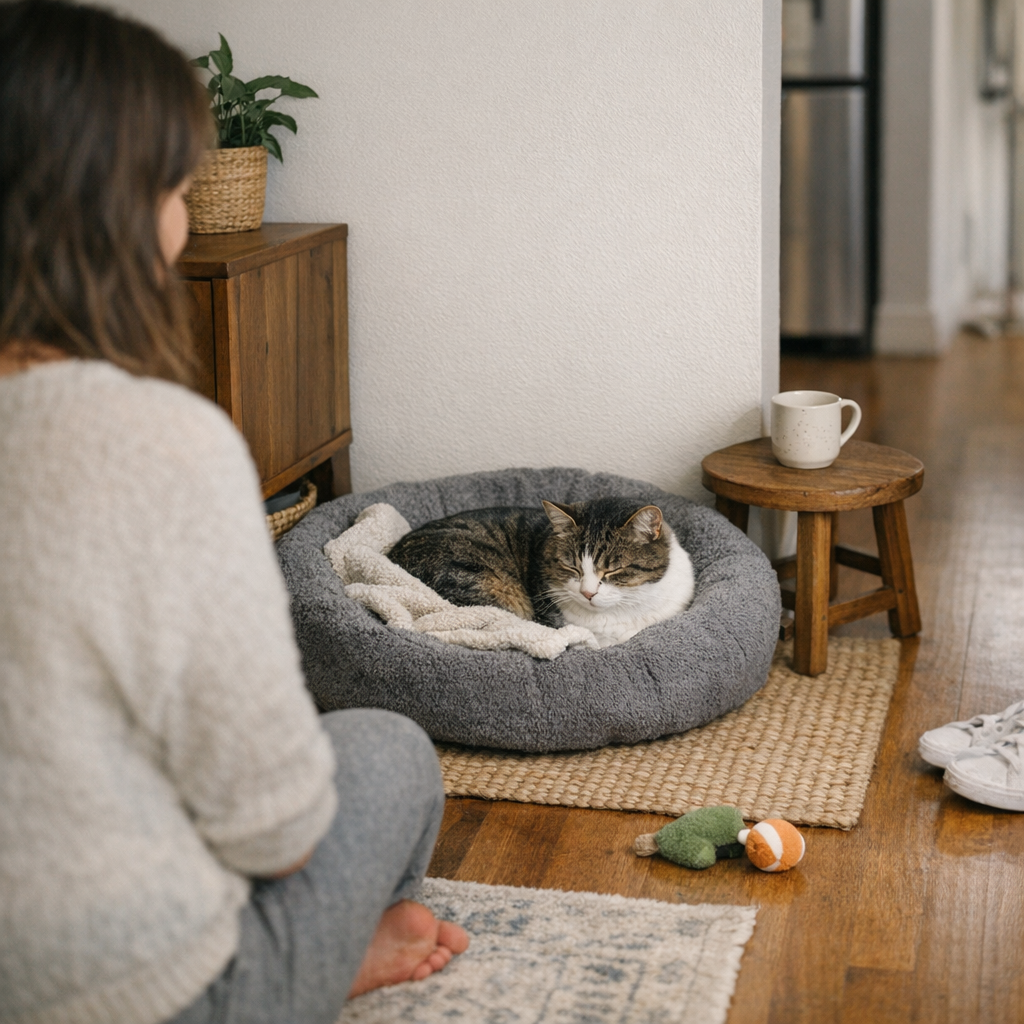
It’s funny what you miss when you set up a cat’s resting space for the first time—a neat corner, a soft bed, a fresh blanket, all arranged like a still life you think will last. For a few days, it does. Then, life resumes its usual movement: feet passing, shoes kicked nearby, a rolling toy you don’t find until later. At first, these seem like background things. But after a while, I started noticing the cat not sleeping quite as long, looking up more often, and the area somehow always needing another quick fix.
That was the part that kept returning.
Watching over time, the difference became clearer. A cat’s “quiet corner” lives or dies by what’s just outside its edges. The first week, I’d find myself stepping around his bed to refill water or grab a stray sock, always breaking the supposed calm. Each pass scattered a toy, left a little more hair, or nudged the blanket off-mark. It looked fine at first, but the cycle added up—a slow build of clutter, alertness, and constant resets.
Moving the whole setup just a couple feet away from the main traffic flow changed everything more than I expected. The new spot wasn’t dramatic—just a mat marking a buffer that felt more like a boundary than decoration. Suddenly, the cat settled longer. The area didn’t collect as much fur or stray toys. I was wiping less, picking up less, resetting less. Cleanup dropped from every hour or two to once a day. The shift wasn’t flashy, but it was real. The cat watched less and slept more deeply. That’s what finally stuck.
I keep thinking about what “low-maintenance” really means for both of us. It’s rarely the prettiest setup, or the one you imagine at first. The mat, the buffer zone, not pushing the bed flush against the busiest route—these simple things quiet the tension that kept creeping back. A cat’s comfort isn’t just blanket softness, but how the room lets you move without pausing or sidestepping, and how often you don’t have to reset the scene.
The difference keeps showing up over repeated use. A lived-in arrangement reveals its value by how quietly it stays in place, with both cat and space feeling less ruffled. It’s not dramatic—sometimes barely noticed—but that’s probably why it works.
If you’re curious about practical details, they live quietly here: http://www.stillwhisker.myshopify.com