Finding Calm in a Focused Entryway Tool Space
Choosing a single, defined tool zone over an open wall speeds resets, prevents clutter, and keeps entry routines smooth under pressure.
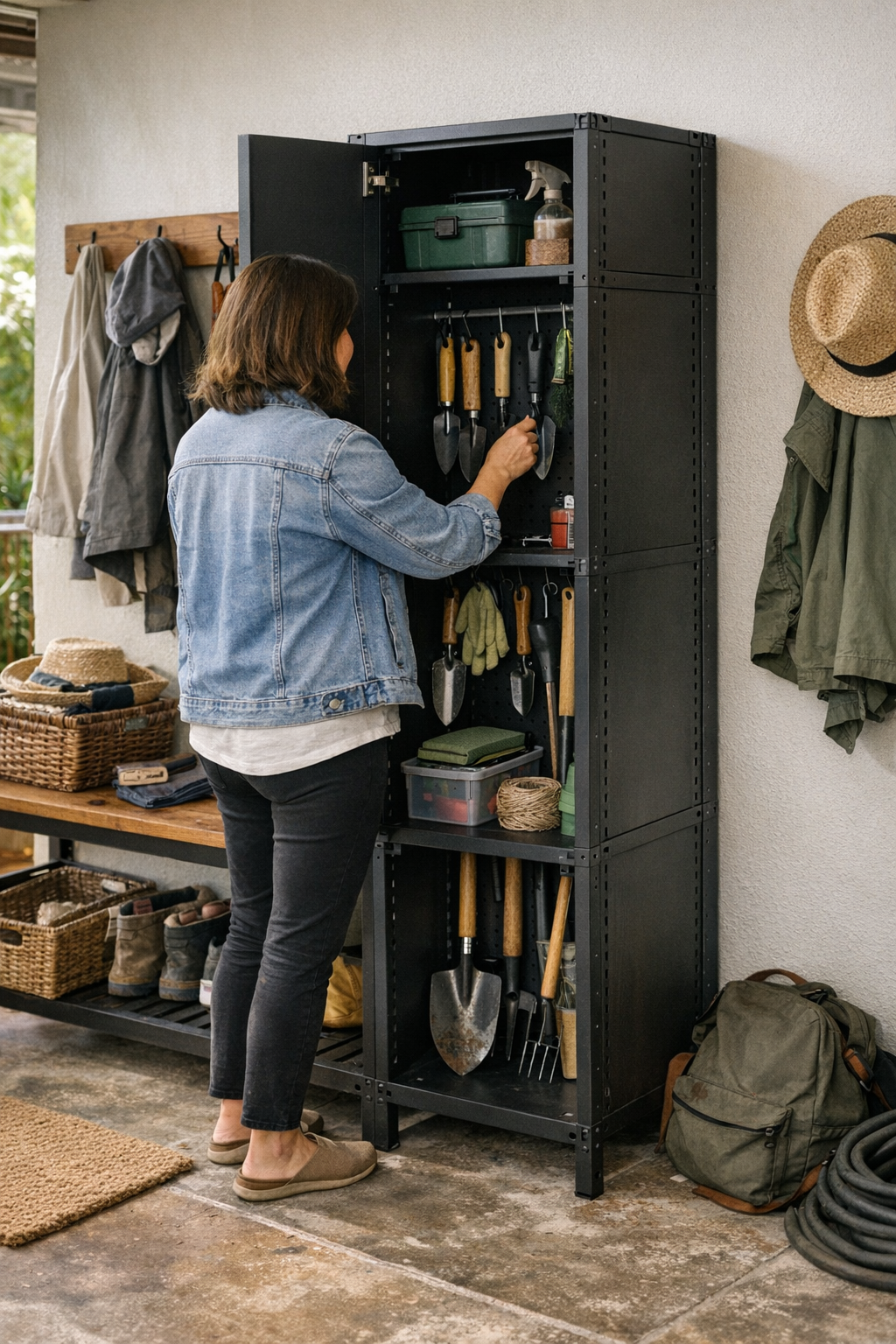
There’s a quiet frustration that builds when an entry starts to look impressive but quickly loses its intended function. At first, it’s just a few slowdowns, a minor tangle of boots and bags along the wall. The space between the outside world and the rest of the house is meant to keep life moving smoothly, but over time I realized that it wasn’t the size of the storage that mattered. It was how well the boundaries held up, especially when the rush of daily routines hit hardest. In the middle of repeated arrivals and departures, I kept coming back to the question of what actually keeps the flow clear.
The Wall That Promises More Than It Delivers
Open tool walls invite hope at the start. Everything lines up, labeled and ready, hinting at the possibility of lasting order. But you don’t notice the drift right away.
Hooks start to take coats that don’t belong. Shoes squeeze under tools. Bags find a place, half-hung, half-dropped. After a few busy days, even the most careful setup becomes patchwork—grab-and-go turning into pause-and-sort.
A wall that looks spacious in principle gets swallowed by the realities of a busy threshold. In practice, the very openness that feels so promising at the start ends up collecting more than anyone intends.
A Smaller Zone Holds Its Shape
Eventually, I gave up on the idea that more hooks and shelves would solve it all. Instead, I narrowed the entire tool zone into a single, closed cabinet right at the threshold, tall enough for the essentials. It was a quiet experiment, but the change in how the routine felt was immediate.
You don’t feel the relief right away. But on the busiest mornings, when kids and weather gear speed everything up, that cabinet would keep its shape. Overflow zones along the bench faded away. There weren’t as many decisions to make.
If something didn’t fit, it stayed out—forcing a quick return and keeping category lines sharper. There was no place for “just for now” items. In the long run, moving from an open wall to a cabinet reset the pace of every arrival and departure. Crowded walkways finally cleared.
Repeating Patterns, Quiet Boundaries
Most days, the routines don’t really change: shoes still multiply, bags drift, a tool or two ends up where it shouldn’t be. But with a smaller, disciplined tool area, the pressure of repeated crossings doesn’t lead to full chaos. The space feels less like it needs to be rescued and more like it’s absorbing the regular mess with a firmer edge.
It’s a small, steady kind of relief—being able to reach for the spade or gloves and know they’ll be there, unmixed with everything else. In spaces that get used hard, boundaries often outlast surface area. It’s less about a picture of order and more about a routine that really holds up beneath the repeated surge.
There are quiet ways of improving the day’s first five minutes, and sometimes one of them is just the discipline of a contained place for things that never stay put for long.
Sometimes these shifts reveal themselves only in how subtly they make the days smoother—more thoughts about small, lived-in solutions can be found quietly over at http://www.betweenry.myshopify.com.



