Finding Calm in the Chaos of Airport Travel
A carry-on’s neat look often fails under airport stress; adjusting item placement reduces interruptions and enables smoother travel pauses.
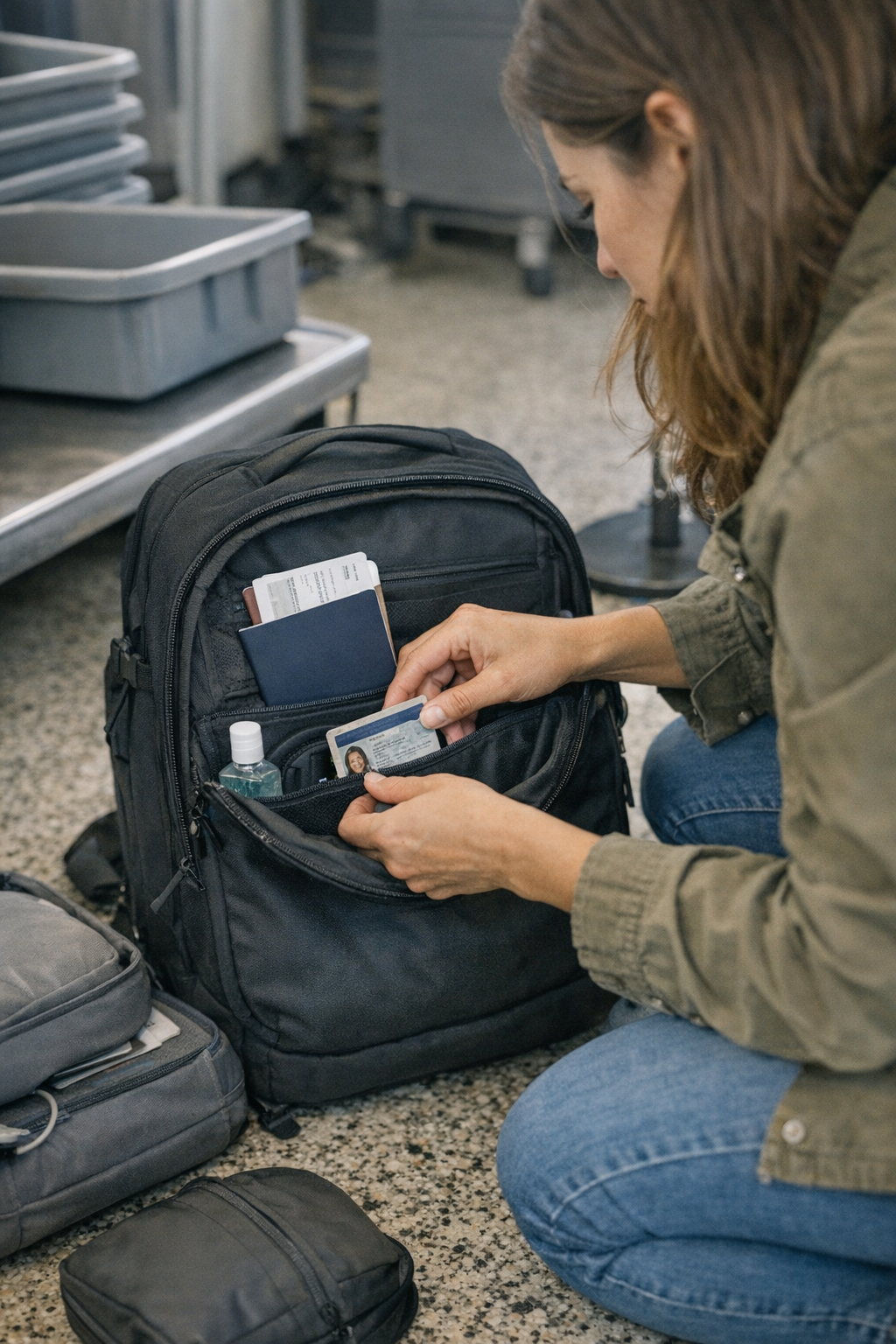
You only start noticing the subtle drag of a carry-on setup after the first few moves. It’s easy to feel in control when everything is zipped, labeled, and stacked on your living room floor—each pouch where you intended, every comfort item fitted into a chosen sleeve. But the difference between static order and in-motion use becomes clear after your third document check or second round of security. The frustration doesn’t shout; it just builds, until the relief you feel sitting still isn't about rest, but about not having to reach into that bag again for a minute.
Something shifts when you realize your “organization” is making you work harder, not less. That thought kept coming back each time I paused to dig out the same things from the same obstructed spots inside my carry-on.
Where Neatness Falters in Motion
You notice the problem after a few transitions. At home, every pouch sits where it “should”—chargers in one, toiletries in another, travel documents tucked out of sight. But just one unexpected gate change or a sudden request for ID flips that order on its head. Most bags look fine at first glance. The difference appears when you find yourself sliding sleeves around just to reach your boarding pass or digging behind comfort items to fish out headphones.
It’s not a crisis—just a thousand small delays stacking up. Like when your toiletry pouch blocks access to travel docs, or every outer pocket demands extra maneuvers to reach essentials. You remember the pause more than the neatness.
The Accumulation of Small Interruptions
The pattern gets clearer with repeated sequences: in line at security, at boarding, then finding your seat. If your setup slows you down, both sensation and time compound. I’d catch myself, almost embarrassed, unzipping half the main compartment for a document I should have pulled in one motion.
The interruption isn’t dramatic. It’s the catch in your rhythm—the shuffle that makes you hurry, the feeling of being just a second behind others in line. Lose enough seconds this way, and the bag’s “lightness” feels secondary. That part kept coming back: not the bag’s weight, but the constant micro-stops stitched into the trip.
Quietly Rearranging for Less Friction
At some point, I moved the highest-frequency items—a smaller cluster than expected—into a single outer pocket that opened wide in one smooth zipper sweep. No more category sorting by visual logic; just the essentials arranged along the shortest access path. I noticed a subtle change, like muscle memory forming. Each retrieval demanded less effort, and moving through crowded spaces felt like a glide rather than a stutter.
There was no single magic moment, just a pattern: when I didn’t have to stop, reach under, or reshuffle, my attention drifted back to the trip itself instead of the mechanics of the bag. The bag began to feel lighter, even though nothing inside had changed.
Sometimes the only fix that lasts is the one you almost don't notice until you move—just a small, repeatable shift in how the next minute unfolds. There’s a quiet relief each time you realize you haven’t had to pause.
If you want to see what I mean, you can find the setups I keep coming back to here: http://www.carryonsupply.myshopify.com