Finding Calm in the Chaos of Pet Travel Pauses
A pet travel setup may seem organized but repeated stops reveal if it truly reduces interruptions, making travel calmer for pet and owner.
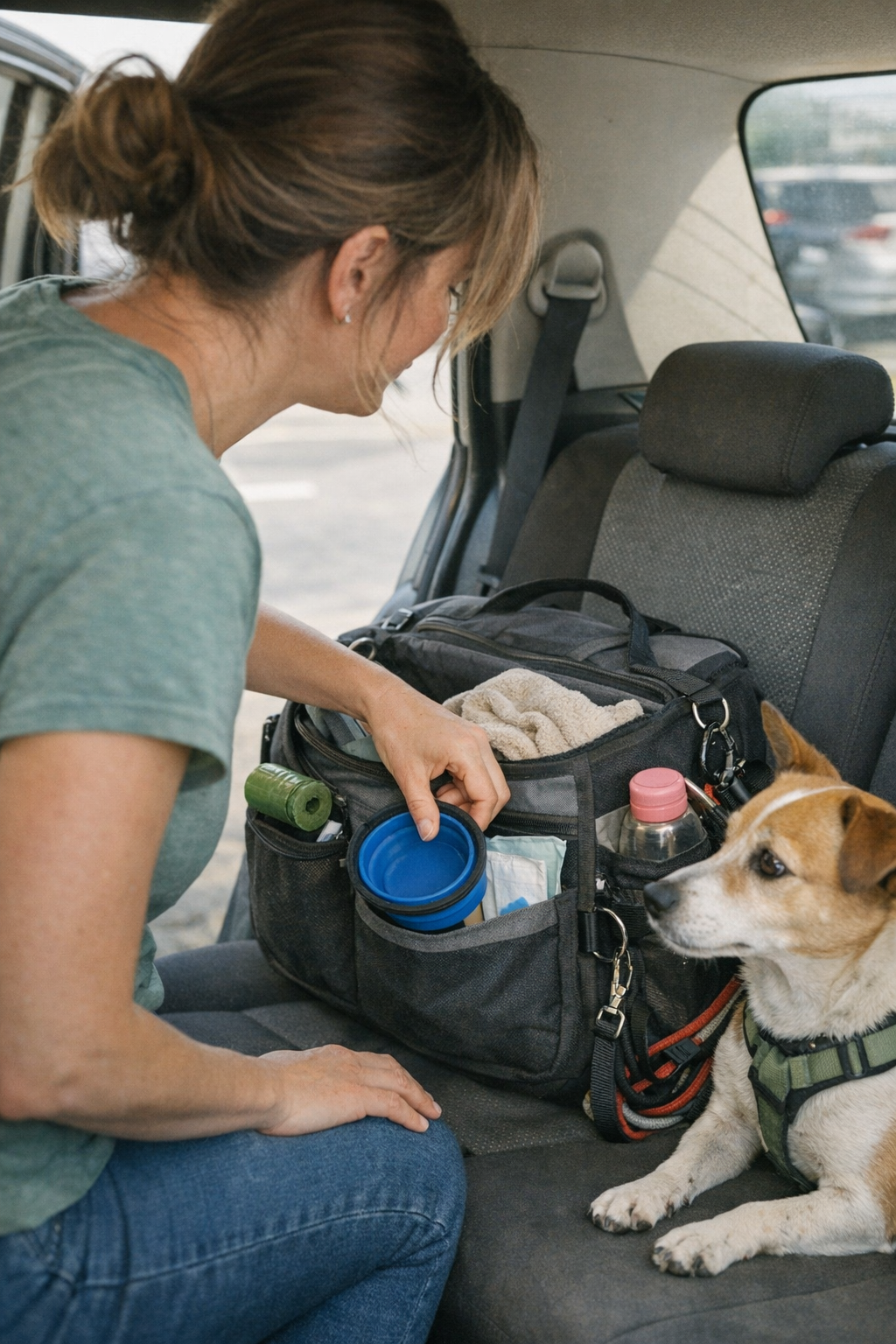
There’s a moment—usually sometime between the second or third unplanned stop—when you realize that having a “ready” pet travel bag isn’t the same as having a usable one. It starts quietly, almost overlooked: one short pause to fetch a bowl, a slightly longer reach for wipes. The dog sighs beside you, waiting as item after item emerges from under a layer that looked “neat” only an hour ago. Calm gets chipped away quickly, detail by detail.
Most of the trouble never arrives with a big mess. It’s subtler. One drive, maybe two: you line everything up at home, slotting blanket, leash, snacks just so. But out in the parking lot, your idea of organization gets tested by real reach. A bowl’s trapped under a sweater, cleanup bags are buried against the seat, and suddenly the everyday movements—lift, hand, return—feel stilted. The easy routine you thought you had shows its edges once you’re midway through another curbside pause, hands full, your pet tensing at the delay.
Seat-Side Reality
You notice it after a few trips. What looked fine on a clean floor stops making sense in the back seat—especially when you’re reaching one-handed with your dog eager to move. Pockets that seemed smart hide small essentials in the worst places. Maybe it’s only seconds lost, but on a day with four stops, each pause compounds.
It wasn’t the bag’s size that bothered me, but how the order and location of items mattered when you needed something instantly. Cleanup gear blocked by heavier stuff. Finding the water bowl meant shifting an entire pile. What’s organized at a glance too often gets in the way at arm’s length.
Rhythm and Friction
You start measuring trips by interruptions, not just miles. Each time you dig or reshuffle, your pet feels that pause too. A long drive followed by quick detours—hotel drop-offs, gas breaks, the odd bench in the park—and suddenly the time spent searching stacks up. Neither pet nor owner escapes the slow grind: repeated, small delays that go unnoticed but add real friction.
At first, it’s barely noticeable. But it kept showing up. One hand on the leash, the other searching for the right pouch, quietly hoping the cleanup bag hasn’t slipped beneath everything else. Over time, even the lightest setups feel heavier if the rhythm breaks down at every stop.
A Small Shift
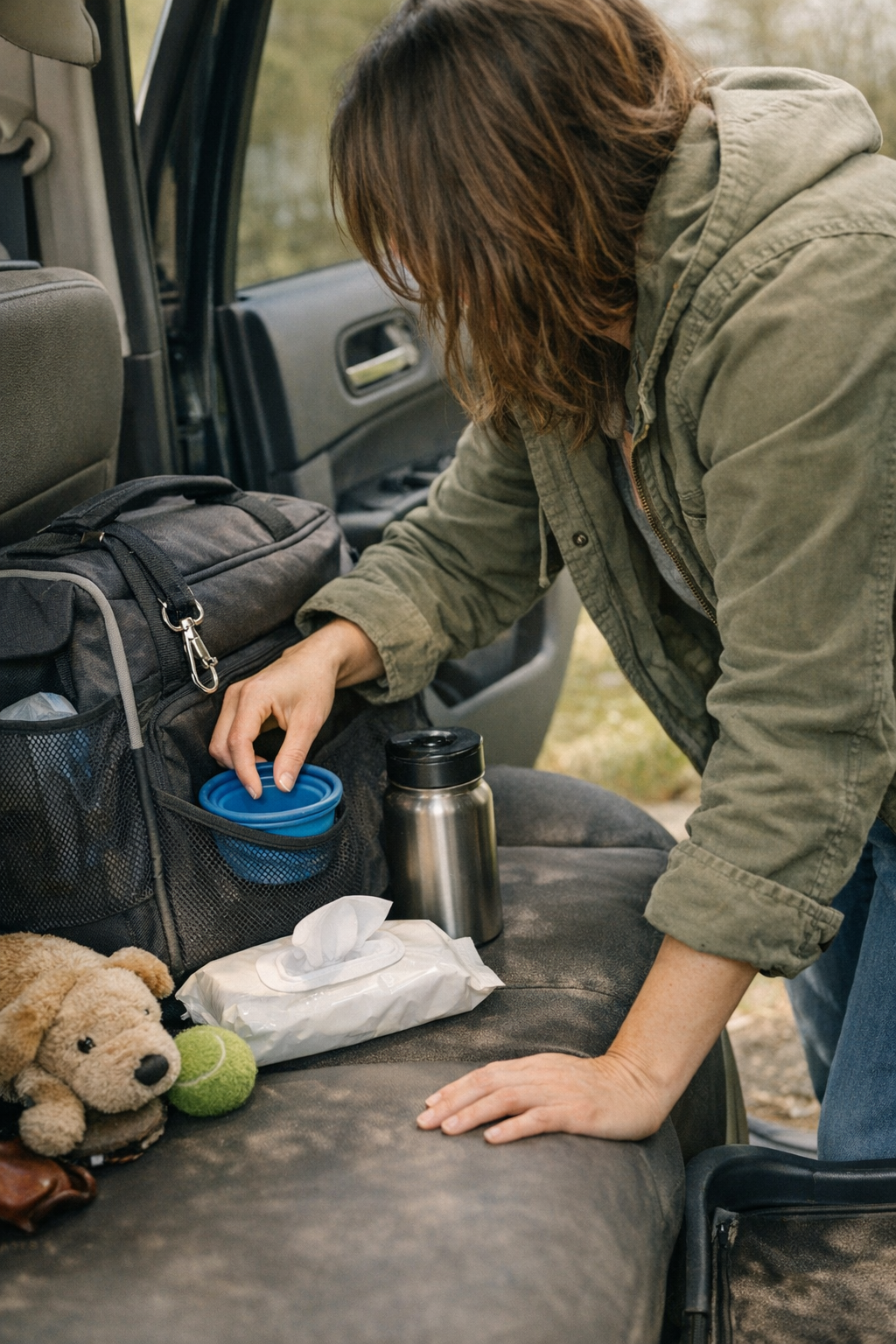
The adjustment was mostly about proximity—letting bowls and bags live at the edge, near the unzip, rather than under bulky layers. That one repeated move—reaching for an outer pocket instead of rooting inside—changed how every pause felt. It wasn’t about getting more organized, exactly. It was about making each interruption shorter, letting the return to movement come quietly, almost unnoticed.
Real travel with a pet exposes any weak spot in the setup. After enough days, what remains is more than order—it’s knowing that when your hand reaches out, you won’t have to second-guess where anything is. That’s what makes every wait easier, both for you and the animal waiting beside you.