Finding Calm in the Rhythm of Daily Dog Walks
A small adjustment—pausing before usual trouble spots—reduces pulling and creates steadier, less interrupted walks over time.
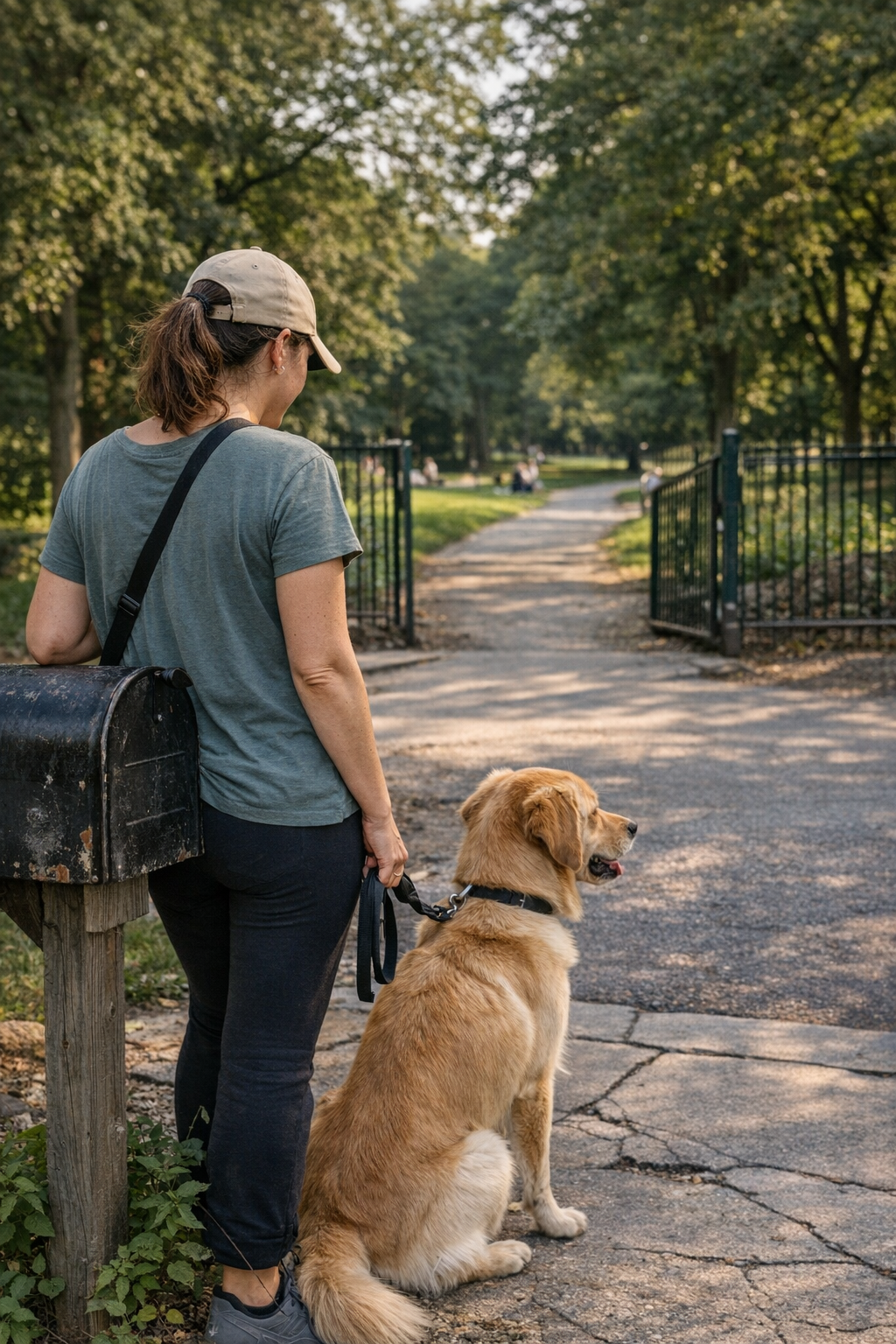
It’s the fifth morning in a row and there it is again: the brief, awkward pause at the base of our usual block, halfway between the front step and the crossing. I keep thinking it’ll pass with time—that whatever throws us off in that spot will fade away if we just keep walking. Instead, the routine slows, almost like we hit the same invisible snag day after day. I don’t even notice it until we’re both hesitating, leash taut, our momentum flickering out for no real reason except that it always happens here.
In the quiet of an everyday walk, these friction points line up like small pebbles on a path. It’s not dramatic—just enough to make movement feel less like flow and more like a series of small recoveries. Some mornings, it’s a tug hard enough to jostle my arm; other days, just a nervous shift of weight. The pattern’s always the same. That’s what caught my attention—it looked like a random burst of dog energy at first, but these interruptions have a rhythm of their own.
The Loop You Don’t Plan For
You notice it after a few mornings—not the big commotion, but that quiet, almost scripted stutter in the walk. I used to blame it on distractions, cars, squirrels, winter grit. But there’s a difference between chaos and a repeat misstep. This spot—the low brick wall near the alleyway—pulls both of us out of sync. Bag in hand, leash drawing tight, everything suddenly held up by anticipation neither of us can control.
If you’re rushing, it feels like a nuisance. But when the day’s quieter, you see how the loop repeats. We move, jerk to a stop, I reset the bag or the leash, my dog realigns, and then we go on. The spot’s the same, even as weather, traffic, and distractions change. It isn’t just about wasted seconds—more like a crack in what should be a smoother pattern. Living inside the same walk, the tension stands out over time.
You start to see the visible setup only tells part of the story. A walk can look organized—a clean leash, pockets stocked, treats ready—yet the trouble comes from somewhere smaller. Something about this spot interrupts the routine in a way tidiness can’t cover.
Seeing Where the Pattern Breaks
After a few weeks of these pauses, I shifted one small thing. Instead of bracing for the tug at the usual trouble zone, I started treating the spot differently—not by correction, just by pausing early enough to let the pattern settle before it fractured. A regular two-second stop at the tree ten paces back. That’s all.
Nothing mechanical about it. It felt almost like giving myself a moment to walk at my dog’s speed before we reached the problem point. There was less scramble, less of the bag slipping or keys jangling onto the pavement. The leash stayed looser on its own. I think both of us were anticipating less. Before, I was always a half-step behind, playing catch-up with my own routine. Adding that pause out of prediction, not reaction, did something quiet and useful. The walk went on, but the snag didn’t follow us so closely.
The difference showed up in smaller ways than I expected. We’d finish the block and not feel behind. I stopped rushing after the pause. She stopped eyeing the alley as if it needed conquering on every pass. It was easier to move into the next part of the morning—feeding, towels, toy pickup—without the previous tension trailing behind us.
When Routines Return, So Does Calm
The strange thing is, the rest of the day moves more easily when the walk doesn’t start off broken. That old sense of routines stacking up—stepping around toys, rushing a feeding, fumbling with crate doors—fades if the first pattern isn’t jagged. The change isn’t flashy. My dog still circles before settling down, and her water bowl is still by the kitchen door, sometimes half-spilled by noon.
But the subtle difference is there: fewer clumsy resets, calmer fetch, less irritation at tangled leashes by the rest corner. You notice it at night when setting the towel by the door feels like preparation, not a patch-up. Everything goes back where it started, but it’s all less interrupted.
It’s a small realization—that most of the routine isn’t about fixing something big, but uncluttering the moments that keep dragging out. The world inside each walk turns easier when the hardest spot is treated as a cue, not a confrontation. The routine feels lived in, like the space is made to hold movement, not just decoration for the sake of it.
The more walks pile up, the easier it is to see which patterns help reset everything and which keep us stepping around the same invisible snags. That friction doesn’t really go away, but it becomes simpler to meet each pause as just another part of the road, not a disruption.
If you’ve been inside these sorts of routines, you might find the tools here feel familiar: http://www.dogpile.myshopify.com



