Finding Peace in Travel by Letting Go of Forced Moves
Calm travel starts when essentials are within direct reach, reducing the need to rearrange gear and easing movement at every stop.
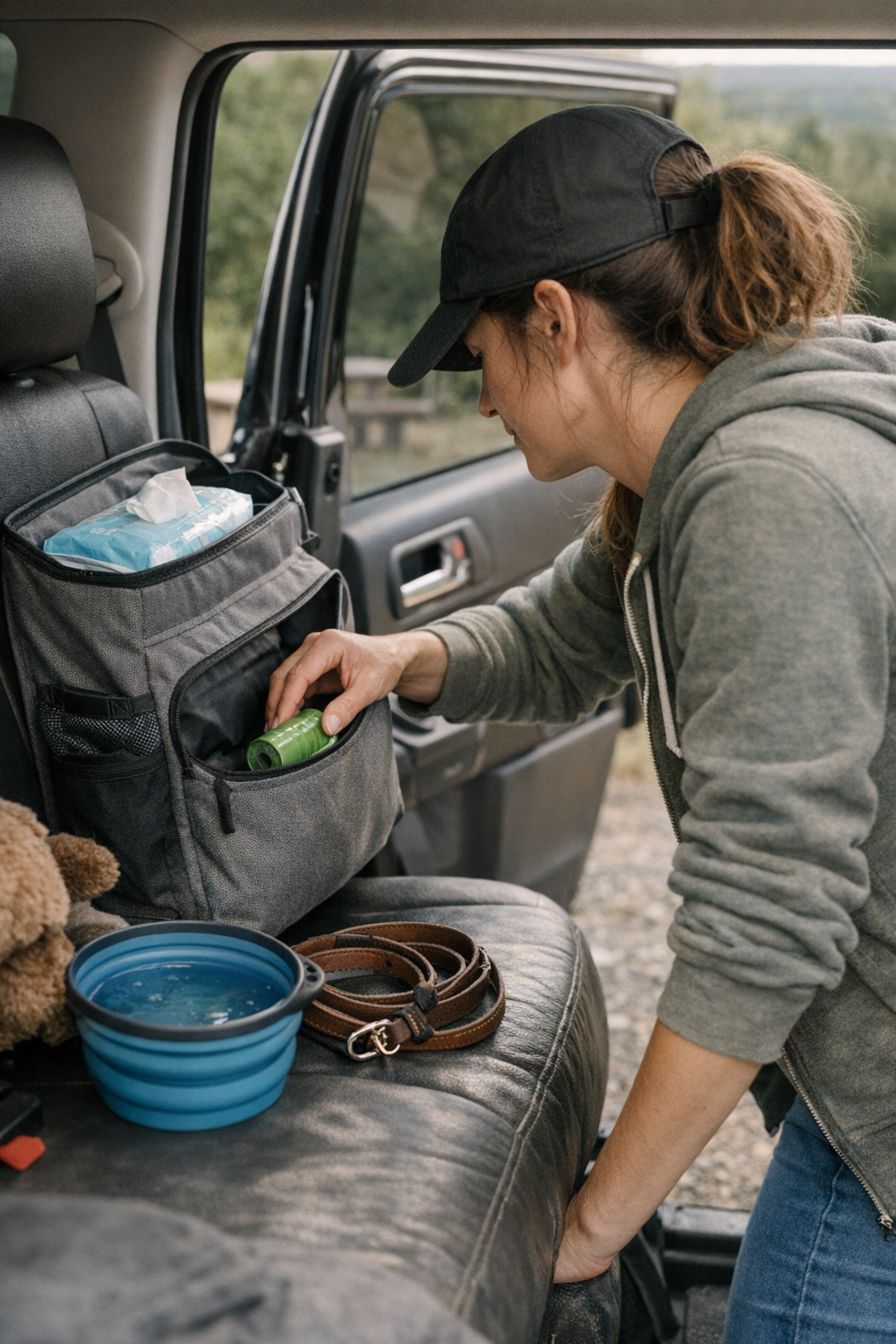
It takes a few trips before you really notice how a pet-travel setup that looks orderly and ready on your living room floor can feel like slow sand once you’re back on the road. At home, every leash and snack fits neatly in its labeled place. The first drive feels easy and prepared. But the real test only shows itself after a few stops—when you pause, dig around, reshuffle gear with an antsy dog, and discover things are more complicated than that calm pre-trip moment suggested.
What looked arranged in a snapshot now has to hold up under repeated cycles of stopping, grabbing essentials, settling your pet, and moving on again. The real challenge isn’t the first reach for wipes or the quick grab for a water bowl, but what happens the third or fourth time you try.
Reaching for the Same Items, Again and Again
It’s the repeated motion that reveals the gaps in the system. Early on, a bag with various compartments seems smart—treats in one pocket, bigger items zipped away, a hidden spot for the leash. That’s exactly what I thought. But stops develop their own rhythm, and a neat arrangement at first can slow down to a crawl in use.
You notice it after a few stops—the same hesitation by the car door, the quick apology to your dog while you reshuffle to find the wipes. It’s not about being unorganized. It’s how the layout demands more unstacking, more opening and closing, just to get at essentials. The awkwardness is quiet at first, but persistent.
When Structure Becomes a Barrier to Movement
This friction came from layers, not mess. The more stops, the more the stacking wears on you. I’d find myself rushing at rest stops, wishing the wipes weren’t under the treats, wincing every time the leash clip tangled or the bowl sat too deep beneath other gear. No matter how carefully the bag was packed before we left, my hands still fumbled in the moment.
After a week of these small repeats, the solution became clear: move all cleanup and quick-grab items to one wide, outside pocket. No more zippers to open into a maze of compartments. Cleanup stops shrank from a slow interval into a single gesture—just grab and go, no stalling, no interruption to the flow.
A Small Change That Shifts the Pace
It looked no different at first glance, but the effect showed up every time I reached for the bag. By the fourth stop, that one outside pocket was carrying most of the load—keeping pauses short, the dog calm, and my own mood lighter. A simple principle stuck: when a small relief repeats, its value quietly compounds.
You live with the actual structure, not the photo of it. The pet travel bag or organizer that really works isn’t the one with the most compartments or clever sections. It’s the one that doesn’t force you to rearrange your focus or shuffle items every time the car door swings open. The right setup fades into the background, the friction of access gone, and you and your pet are already halfway back on the road before you even think about it.
Sometimes the smallest structural shift is the one that sticks long after the trip has ended.



