How a Narrow Cart Changed Our Laundry Day Flow
A slim rolling cart reduces blocked passages and repeated trips by making laundry transfers more efficient and organized in tight entryways.
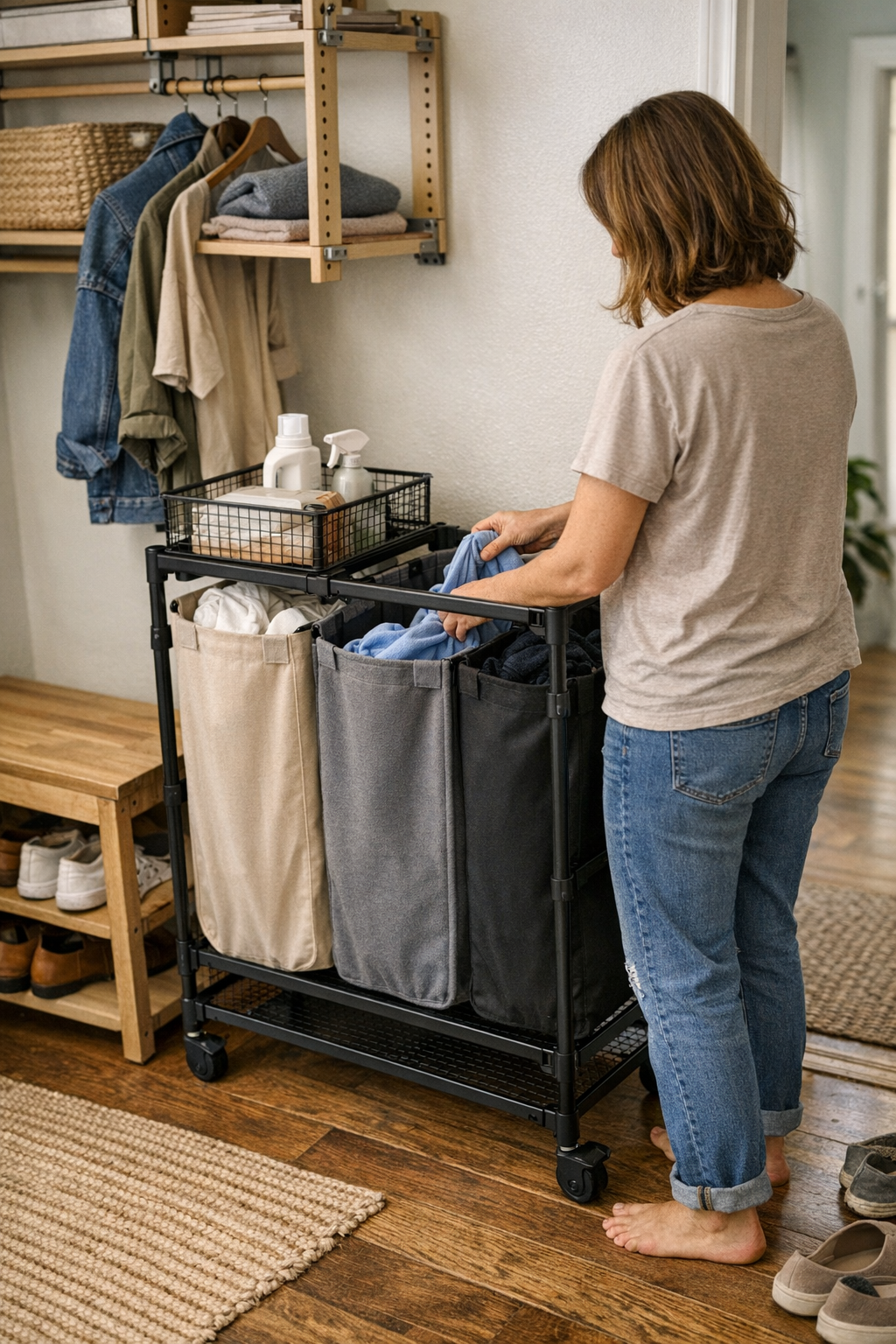
I didn’t realize how much a static laundry hamper was slowing down the moments between leaving and coming home—how those small, repeated delays in the entryway shaped the whole experience. Shoes crowd closer to the wall, dropped bags form a quiet blockade, and the easiest path through the space gets just a little more tense each time. The real challenge of transition spaces isn’t visible clutter; it’s how the space resists being used effortlessly, every single time. I only started to notice a difference when I traded in a regular bin for something slimmer and on wheels: a small, compartmentalized rolling cart that moved with unexpected ease.
Not Just Laundry, But a Lived-In Path
At first, the cart was just another object in the background—vertical, mobile, compartmentalized. But after a few busy days, the change was clear. I stopped weaving around piles of laundry bags and half-sorted baskets. Laundry moved straight out of the drop zone and into the wash in one smooth, deliberate sweep. The shift isn’t always something you spot right away, but you feel how crowding and threshold pressure start to ease, little by little, from daily life.
Sometimes the space feels less like a hallway and more like a crossing point where routines spill into each other. Sitting on the entry bench tying my shoes, I realized I hadn’t had to move a laundry bag out of the way in days. That simple easing of a daily pinch kept pulling me back.
Accumulation, Sorting, and the Invisible Reset
It’s easy to think of storage as containment—just line up baskets and hope congestion never hits a critical point. But I started noticing how single, mixed hampers collapse under real use: towels swallowing socks, shirts squeezed in corners, and sorting turned into a sprawling, uncomfortable chore that blocked the entry tiles. The cart’s slim, sectional design kept categories separate and helped prevent those small messes from spreading.
There’s something freeing about moving everything at once, without stooping or shuffling. The row of shoes stays put. No more pathfinding between obstacles or balancing a laundry bag while pushing a door open with an elbow. It quietly removes one of the most nagging reset pressures.
Thresholds and Patterns That Outlast Appearances
Entryways fill and empty dozens of times before you notice and straighten them up. Some days, a blocked path makes you turn around and drop your bag at the kitchen table instead. But with the mobile cart, that routine shifted. Laundry days didn’t pile into the rest of the week, and the floor stayed clearer without constant resets.
This was more survival than presentation. The cart didn’t just sit there looking tidy—it sustained use, week after week, while the rest of the entryway flowed without falling behind. The real change came almost by accident, quietly altering how it felt to move through the space.
If you’re curious about how a transition-space solution might look or work, there’s more to see here: http://www.betweenry.myshopify.com