How a Slim Tower Changed Our Busy Entryway’s Flow
A narrow vertical tower allows entry spaces to stay clear and organized, reducing clutter and easing daily use and resets.
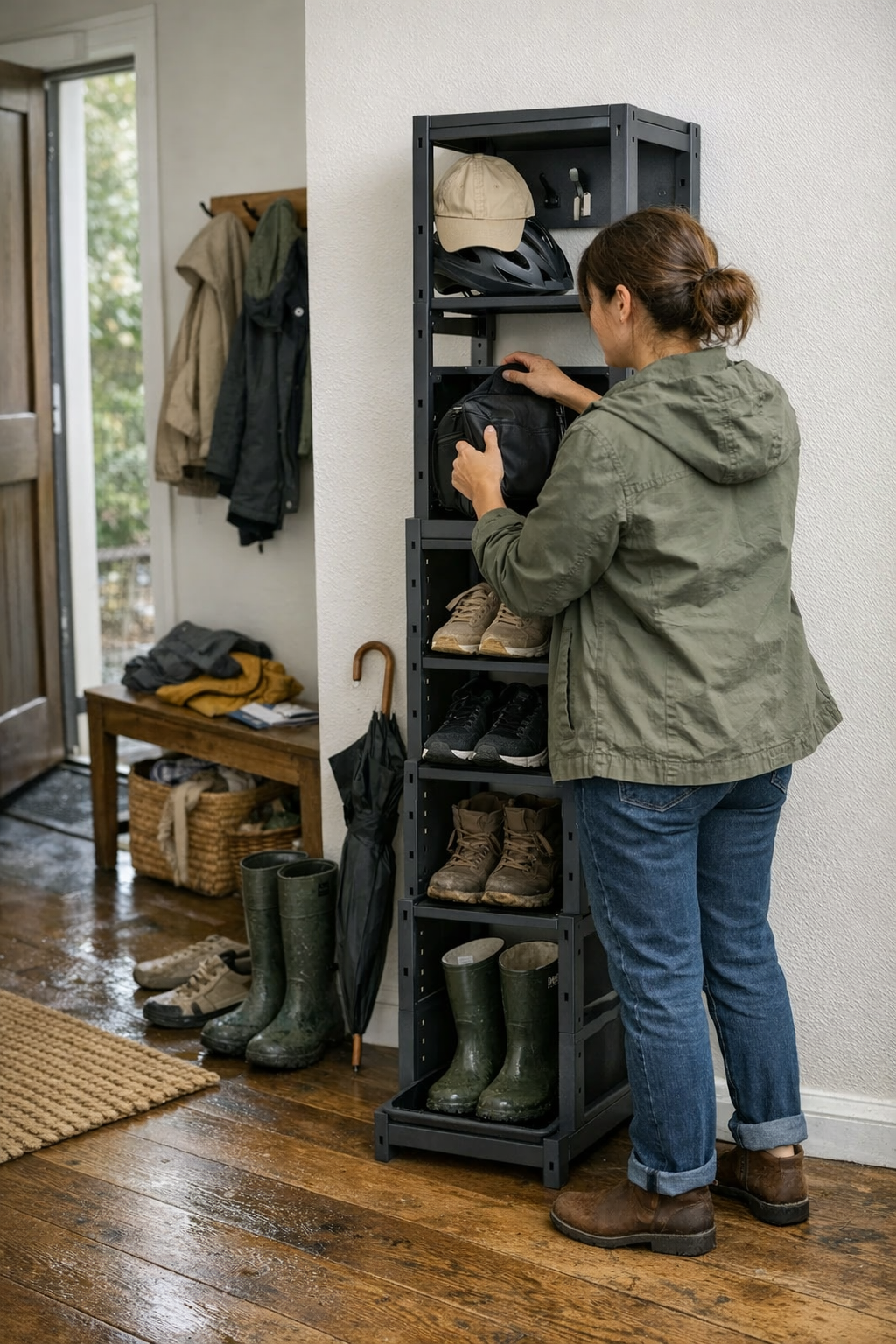
There’s a small relief that settles at the end of a long day, just before reaching the door. Lately, I notice it most in the pause after entering—a subtle ease, without needing to sidestep shoes or shift bags to get through. It took a while to realize this change came from switching to a narrow, vertical storage tower in the transition space. Widgets and racks had come and gone before, but this time the difference was quieter, almost invisible, until the weeks stacked up.
Space and the Slow Unpacking of a Routine
With a bench, the mess always spread—shoes in loose rows, backpacks dropping where they may. Even when everything started out neat, by week’s end the threshold was crammed, things scattered across the path. It wasn’t just an eyesore. Passing through became a series of tiny negotiations with clutter.
You don’t notice it immediately.
But you feel it.
The slim vertical tower didn’t announce itself like a fresh entry bench might, but what it did changed the rhythm of coming and going. Instead of items drifting edgewise, they ended up stacked upright, contained. Getting through the door—arms full or in a rush—no longer meant clearing a spot just to enter.
Seeing the Pattern Beneath the Surface
At first, adopting it felt like a simple storage tweak, but gradually something else settled in. During back-and-forth afternoons, I noticed the floor stayed open, even as shoes rotated and bags came and went. Where baskets once overflowed, there was now a clear view to the other side—a built-in breathing space in daily clutter.
That was the part I kept coming back to.
Shoes arranged in columns, not piles; bags visible at a glance. When something overflowed, it was immediately obvious, not hidden behind a bench or lost in a shadowed corner. There was less searching, less double-handling, because items landed where they were supposed to—or, if not, the stray stood out. The pressure along the threshold shifted, quietly loosening a spot that used to feel tense by late afternoon.
The Quiet Reset
Sometimes, a solution isn’t about overarching control but about removing one daily friction at the right spot. A slim tower, set along the path everyone already uses, seemed to nudge routines rather than demand them. Restoring order became less a task and more a brief pause before leaving, a small moment reclaimed from the shuffle of repeated arrivals and departures.
Thinking back, I’m less concerned with appearances and more drawn to the unseen flow. It isn’t perfect—there’s still the occasional bench-edge clutter, a bag that doesn’t quite get returned—but the space never clogs the way it used to.
The difference lingers even when the door is closed, and the next departure feels lighter for it.
If you’re curious about what happens when storage gently fits the way people actually move, you can wander a bit further here: http://www.betweenry.myshopify.com



