Living Between Tasks: The Quiet Power of a Buffer Bin
Using a buffer bin keeps in-between items contained, preventing clutter buildup and maintaining clear, easy-to-reset spaces over time.
There’s a quiet comfort in seeing a space arranged just so—the lined-up bins, the shelves with their crisp edges, every belonging in its assigned spot. It promises control, or at least the hope of a life that doesn’t unravel around the entryway. We expect order to hold. Yet sometimes, the chaos creeps in. Not all at once, but in small ways: a jacket draped over a chair, unread mail teetering on the counter, shoes refusing to find their way home. The buffer bin—maybe you’ve never called it that—emerges as an unexpected relief, the thing you didn’t realize was missing from your “organized” life.
The Discreet Undoing of Perfect Systems
Perfection rarely survives contact with daily life.
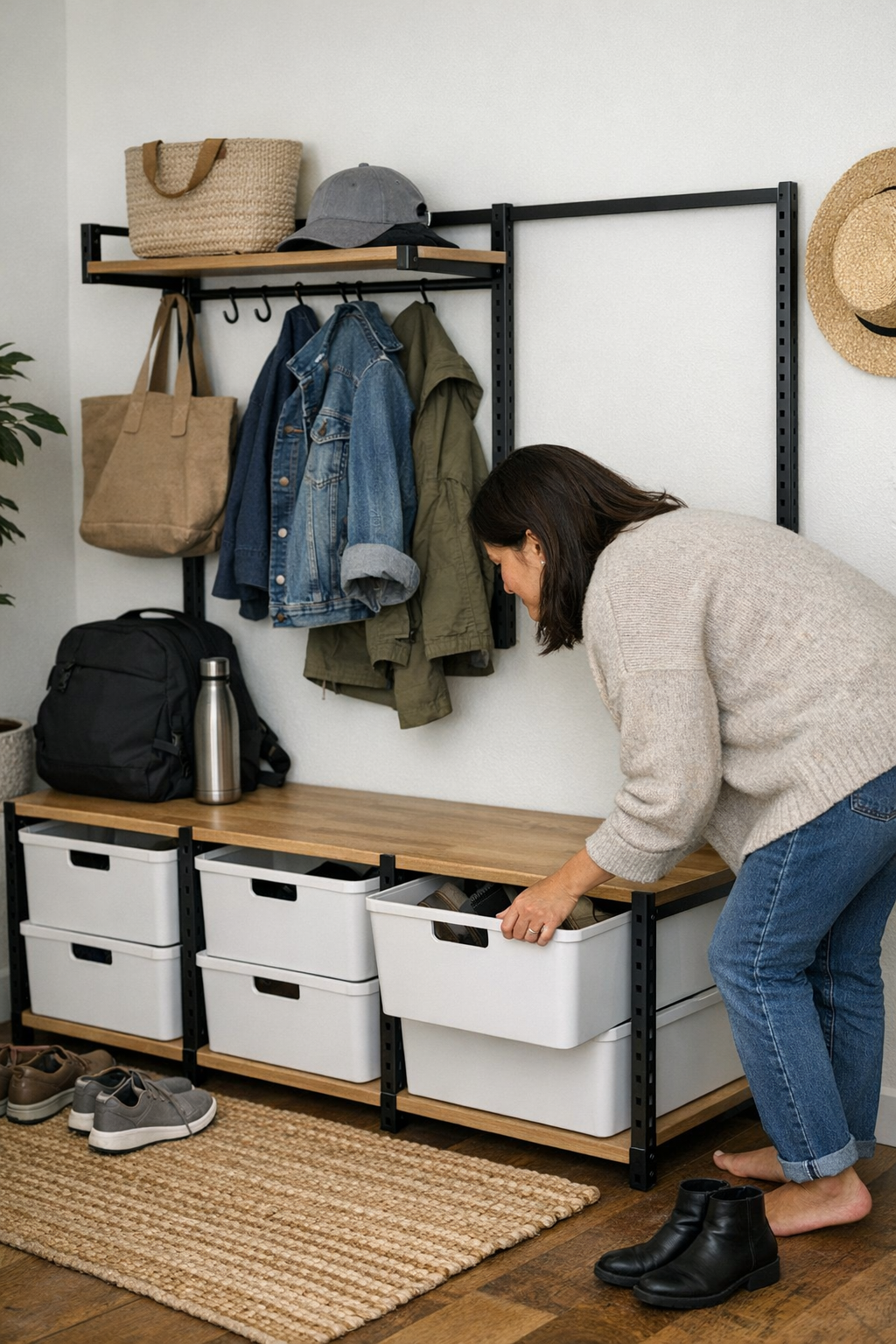
Closets and entryways often start out immaculate. Everything in its place, with dividers drawing neat lines between order and disorder. But then the mail arrives. Wet shoes cross the threshold. Everyday routines—so reliably unpredictable—gradually work against your carefully mapped plans.
You don’t notice it immediately.
But you feel it.
It happens as corners fill up, as benchtops gather things that don’t have a category yet. The “organized” look begins to feel like a photo from last week, slightly out of sync with reality.
The Buffer Bin: Quietly Absorbing the Overflow
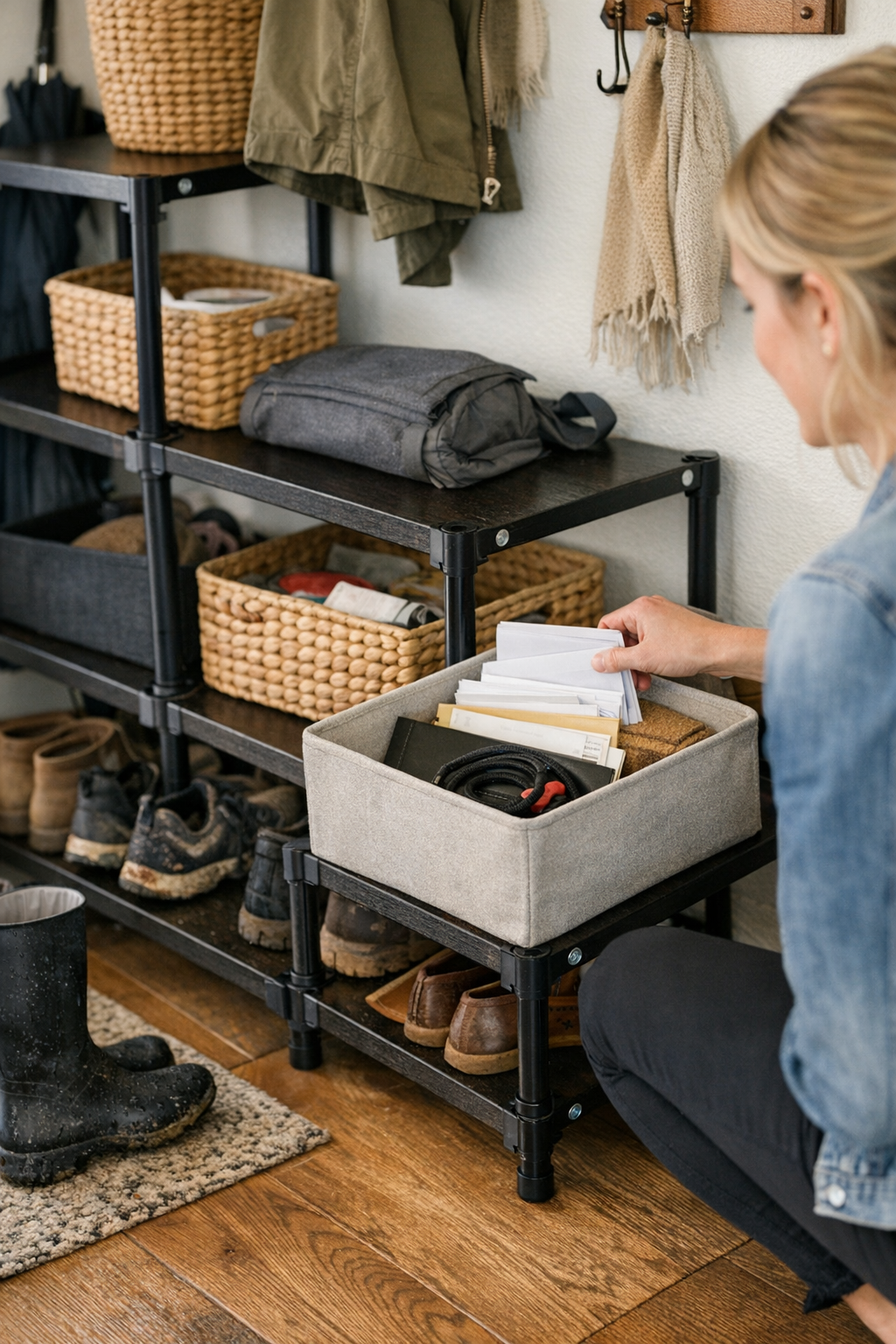
Some homes add a buffer bin without ceremony—a shallow basket on a low shelf, open and easy to reach. At first, it can look out of place, like a flaw in the plan. But over days and weeks, its purpose sharpens.
It isn’t about extra storage. It’s about interception.
Every home has those in-between moments: a coat wet from rain, a dog leash mid-transition, today’s letters unopened. Without somewhere to land, these things scatter, lingering where they were last dropped. But set down a simple, open bin—no lid, no fuss—close to the action, and suddenly all that unfiled stuff waits in one place.
Here’s the gentle shift: the floor stays clearer, the table isn’t stacked with uncertain piles. Something about the visible, finite boundary of a buffer bin keeps the sprawl in check. Once, after adding a twelve-inch basket to the shelf near my door, I noticed my whole routine slowed down—less time backtracking, less resistance to resetting the space.
Living With Pause: Real Moments and Small Resets
Real homes adapt. Routines change as weather changes, as moods do. After a rainy week, the entryway tells a story—umbrellas, footprints, bags in flux. The buffer bin absorbs these chapters without letting the plot spill everywhere.
A practical comfort settles in: any item in the bin by day’s end is either acted upon or quietly put away. No scavenger hunts, no endless tidying.
You realize the reset becomes a single, calming gesture at the close of each day.
Keep it small. A buffer bin only needs to hold what’s in transition—a day or two’s worth. Leave it too long, expand it too much, and it loses what made it useful. But managed gently, it helps a space return to itself, even as life continues to change.
Sometimes, it’s the little things that soften the edges of disorder. And sometimes, living well is mostly about making room for the unfinished.
These thoughts came together while rearranging the shelf just inside my own front door.