Living with Cables That Just Won’t Stay Put
Proper cable management reduces clutter, supports safe setups, and prevents cables from shifting or disrupting your workspace daily.
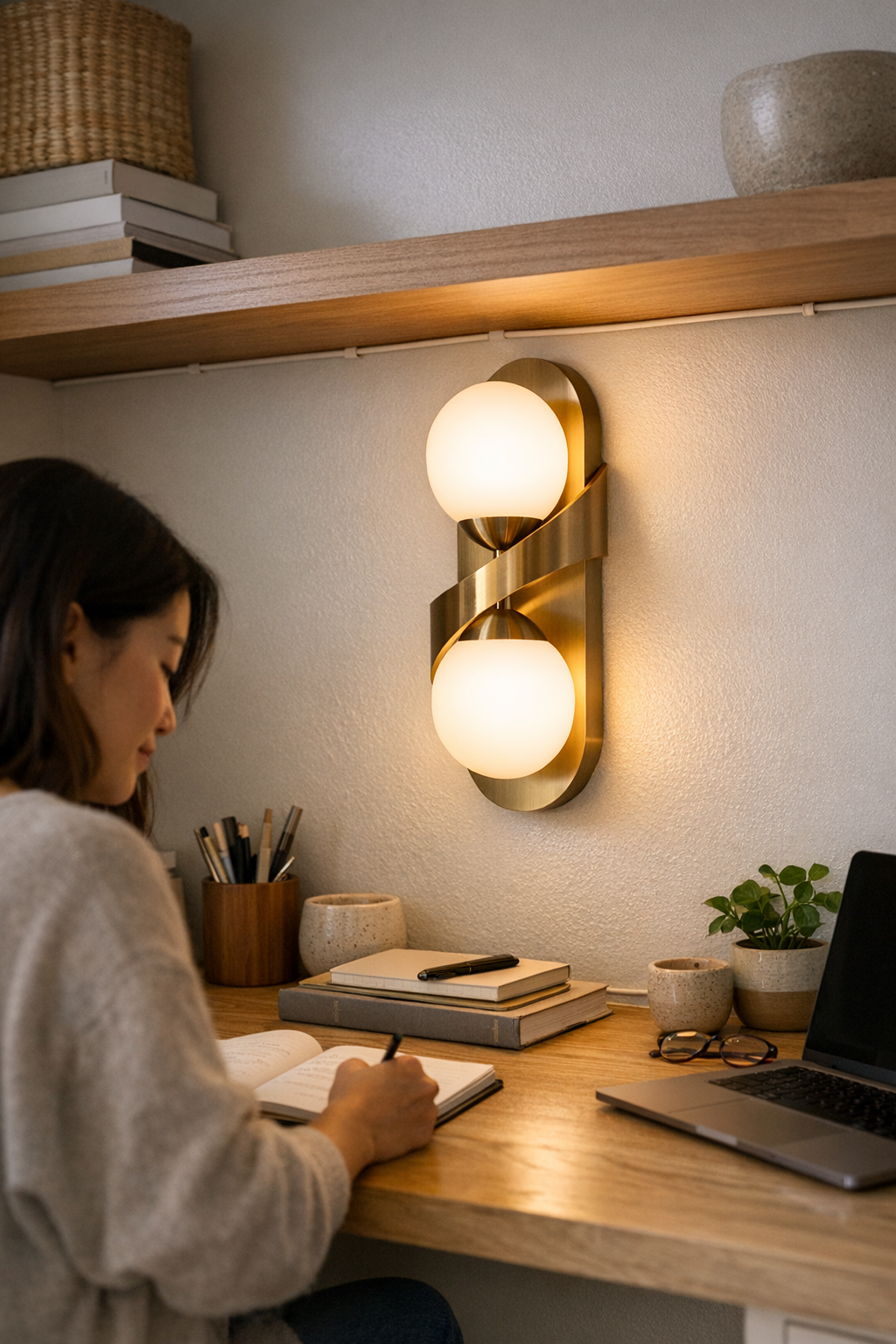
I didn’t think much about the cord at first. Setting up a new desk lamp or running a slim light bar under a shelf often feels like the final step in clearing a work area: honest, functional lighting with a half-hour of arrangement, and suddenly the room seems in order.
But clutter often sneaks in quietly, especially where it affects your focus and the space where your hands move the most.
Distraction Finds Its Own Route
It started small. A single cable, barely noticeable, curving out from behind a clamp lamp and skirting the edge of the desk. Yet I noticed my elbow would sometimes brush it during pauses, or I’d pull my coffee closer and feel the cord tug against a nearby book.
You don’t notice it immediately.
But you feel it.
Desks and tabletops used through real routines—adjusting spreadsheets, reading late into the evening, aligning papers before bed—accumulate subtle signs of friction that tidy setups rarely show. Piles shift, dust gathers along the cord’s path, and soon enough, the cable becomes a small but persistent interruption. Not just to the look of the workspace, but to the way it feels to sit and work, time after time.
Surfaces That Don’t Stay Resolved
Shared or shifting work areas test those cables even more. An under-shelf light in the kitchen seems perfect until its cord slips loose and dangles across a cutting board or trails into a footpath. At the family table, an LED sconce stays out of the way—until laptops and chargers appear, homework spreads, chairs bump, and the lighting setup suddenly feels unstable.
It’s not just the visible cord that disrupts the space. It’s the subtle pull it exerts on the whole arrangement—the low-level effort to avoid dislodging the lamp or tugging something loose. That was the problem I kept noticing.
Sometimes a space looks resolved from a distance, but at close range you find yourself working around issues instead of enjoying solutions.
A Quiet Shift When Lines Stay Put
One afternoon, after the third time in a week keeping that wandering lamp cable in check, I anchored it along the underside edge of the desk with simple removable clips—nothing fancy. The change was nearly invisible, but the difference at the surface was clear. No more pulling, no sagging cords drifting into view. Just smooth, unobstructed movement, as if the desk was finally designed to be used without constant adjustment.
The change was small, but once the cable stayed tucked away, routines felt lighter, surfaces opened up, and even the light itself seemed calmer, as if it belonged more with each passing day.
This simple step became a habit I have carried forward into every lighting setup since.
If you ever wonder where all the little distractions disappear to when the day feels clearer, start by looking down—at the lines kept quietly out of sight.
Some of these habits and setups have started to resonate over time, especially through resources like this one from LightSupport.