Living with Clear Bins: Honesty in Everyday Clutter
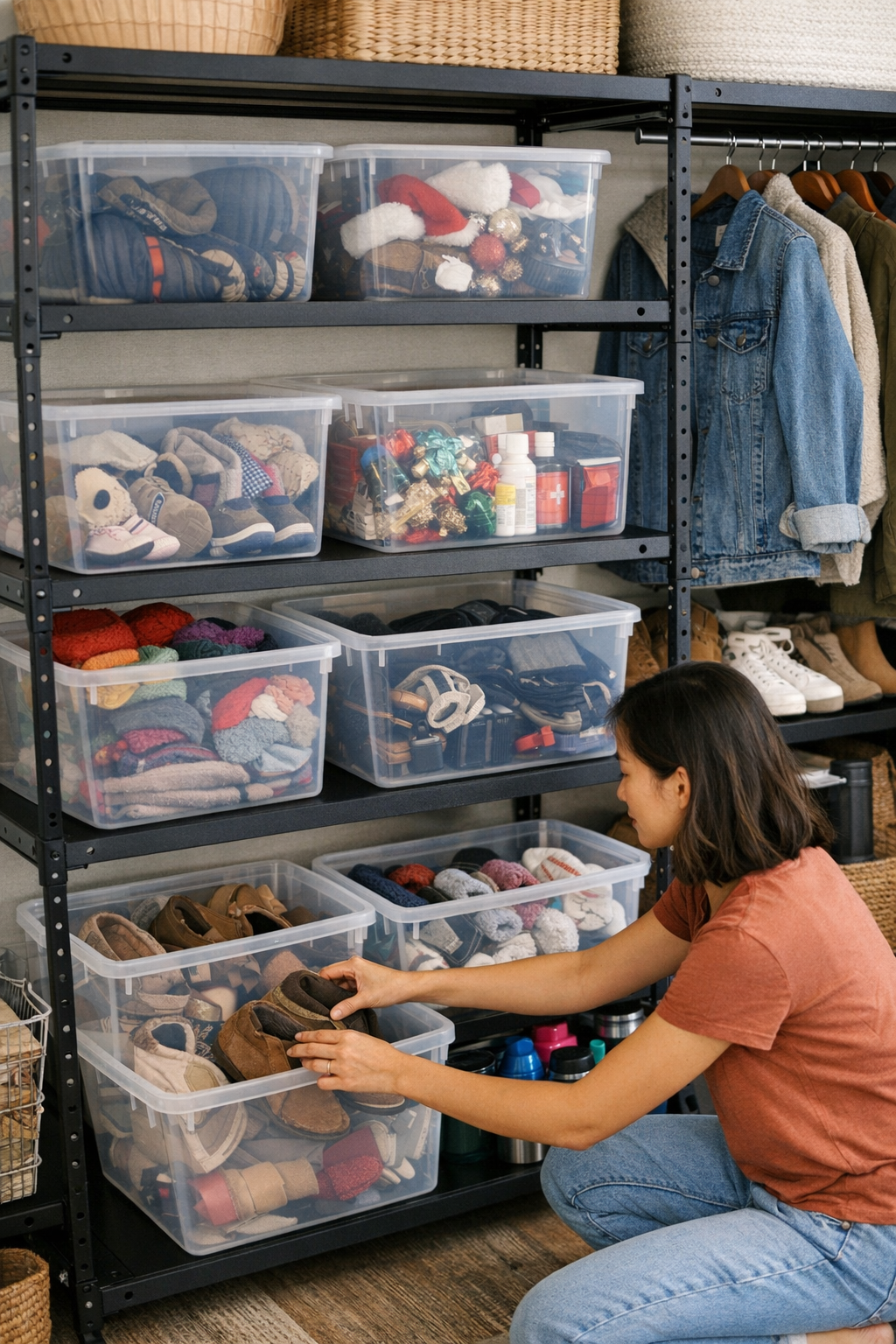
Clear bins reveal overflow and category drift early, making resets quicker and storage easier, unlike opaque bins that hide clutter until problems grow.
The Surprising Chaos Hiding in Plain Sight (And Why How You Store Things Quietly Shapes Your Days)
It’s easy to believe life is organized when things look tidy at a glance. Shelves lined with matching bins—a satisfying visual, almost soothing. But neatness can be a kind of illusion. Sometimes, the very containers that promise order end up quietly hiding slow-growing disorder, right in the background of daily life.
I first noticed this during a rushed morning—one of those days when time slips away and you’re searching for something small but essential. That’s when the difference between clear and opaque storage bins became more than just a style choice. It was about how easy it was to see what mattered, or how quickly you realized you’d lost track.
When You Can See Everything
There’s an honesty that comes with clear bins. You don’t have to wonder or remember. Each container offers up its contents at a glance—sometimes helpfully, sometimes a little uncomfortably. Overflow and unsorted mess have nowhere to hide.
Pause for a moment.
This visibility does something interesting. The small piles that would have blended together behind opaque lids start calling for attention instead. You’re nudged to tidy up before things spill over. A shelf of clear bins can look a bit busy, even imperfect. But it blocks the slow build-up of forgotten items, catching the stray objects that would otherwise multiply unseen.
The Comfort of Hidden Mess
Opaque bins, in contrast, provide quiet cover. They keep everything looking calm, as if order is the default. For a while, that surface simplicity is comforting.
But you feel it when the search starts taking longer. More time spent opening and closing, poking through baskets for a missing charger, or buying duplicates of things you already own but can’t find. It’s not obvious at first. Clutter has a way of waiting in the wings, only making itself known in small moments of frustration.
In my own closet, things seemed peaceful until the morning I tried to find out-of-season gloves and came up empty-handed, even after checking three identical bins. Each container hid just enough that whole categories blurred together—a slow drift that only comes into focus with repeated inconvenience.
The Quiet Power of Consistent Clarity
Switching to clear bins started as a little experiment. It wasn’t about being stricter. It was about making it easier to notice what was happening. After a week or two, something shifted. Instead of dreading resets, I could see what needed fixing at a glance. There was less guesswork, fewer piles shuffled from one bin to another.
The shelves didn’t always look picture-perfect. But there was a sense of movement—less time spent searching, more time saved just by seeing reality without the filter. For others in the house, it meant fewer questions, less confusion, and even small children could help put things away without extra instructions.
The real surprise? How quickly I grew used to that clarity, and how heavy the hidden mess had felt in comparison.
It turns out, choosing between clear and opaque bins isn’t only cosmetic. It quietly decides whether your storage makes life simpler or just looks neat on the surface. There’s a difference between looking organized and actually being able to keep things that way.
These thoughts came together while rearranging a shelf that, finally, didn’t hide anything at all.



