Living with Clutter: When Organizers Stop Helping
Bins seem neat but cause friction over time; shelves with open dividers offer faster access and easier daily resets.
It’s easy to admire a closet or utility shelf the day it’s organized. There’s a quiet satisfaction in seeing everything neatly contained—labeled bins stacked just so, rows perfectly aligned. For a little while, it feels like life is in order and everything has its place.
But the real test is never on day one.
The promise of order is comforting, but the nature of daily life—its messiness, its little interruptions—begins to erode that surface calm. It’s only when routines settle back in that we see how storage systems really hold up. The difference between bins and open shelves becomes more than just aesthetics.
The Disappearing Line Between Tidy and Tricky
You don’t notice it immediately.
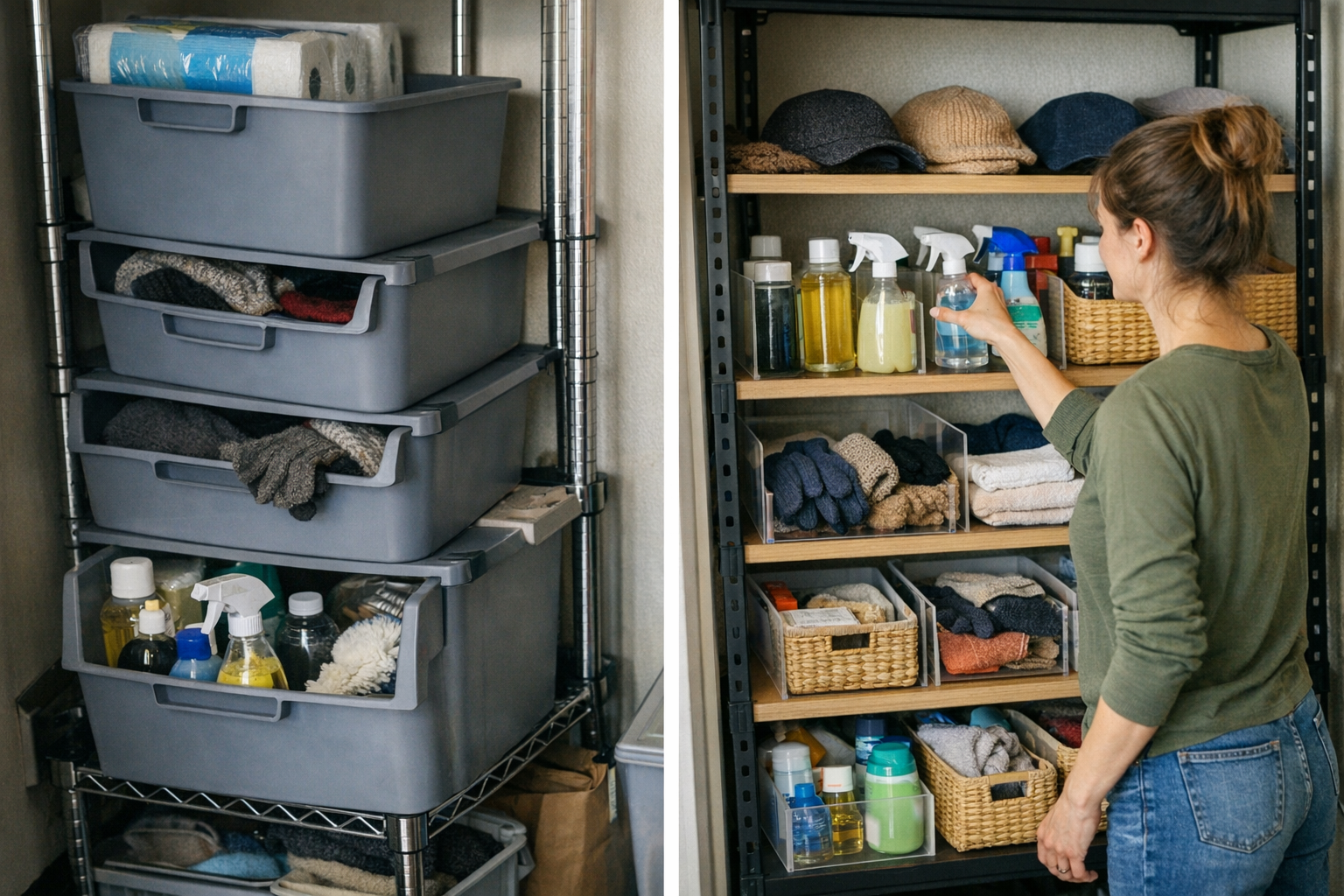
There’s a moment, maybe midweek, when you reach for something buried under a stack. One bin lifted, another shuffled aside, all just to grab a bottle of cleaner or winter gloves. It happens during a busy morning, when your mind is elsewhere.
A closet can look “organized” yet quietly introduce new friction. What begins as order slowly turns into hidden clutter—a duster slips behind a larger box, gloves mix with scarves, and overflow items tumble out of categories. The first few resets feel easy enough, but over time, organizing starts to feel like extra work rather than relief.
Clarity in Everyday Movement
After living with both stackable bins and open shelves, the difference becomes hard to ignore. With open dividers, reaching for what you need feels seamless—one motion, nothing teetering, nothing hidden.
It’s a small but refreshing shift: returning something at the end of a long day no longer means restacking or searching. You can see everything. If a shelf is blocked, it’s immediately obvious something’s out of place.
There’s a gentle rhythm to this kind of system. Less time spent straightening things means more time enjoying a little breathing room in the morning. The little moments add up.
A Storage System That Takes Care of You
The right organizer isn’t about how it looks after you spend an afternoon arranging it. The real comfort is found in how easily it resets itself during the week. Categories stay sharper when they’re visible. Items stay within reach when you’re not forced to move others out of the way.
A subtle insight reveals itself with time: storage that works with your routines, not against them, makes daily life feel lighter. Messy edges and tangled categories are an early sign the system needs a rethink—not that you have failed at maintaining it.
The shape of organization changes quietly, in the space between using and resetting. When it feels effortless again, there’s a sense of calm that lingers long after the closet door is closed.
These ideas started to take shape the last time I reorganized my own hall closet.