Living with Less Clutter in Our Shared Outdoor Space
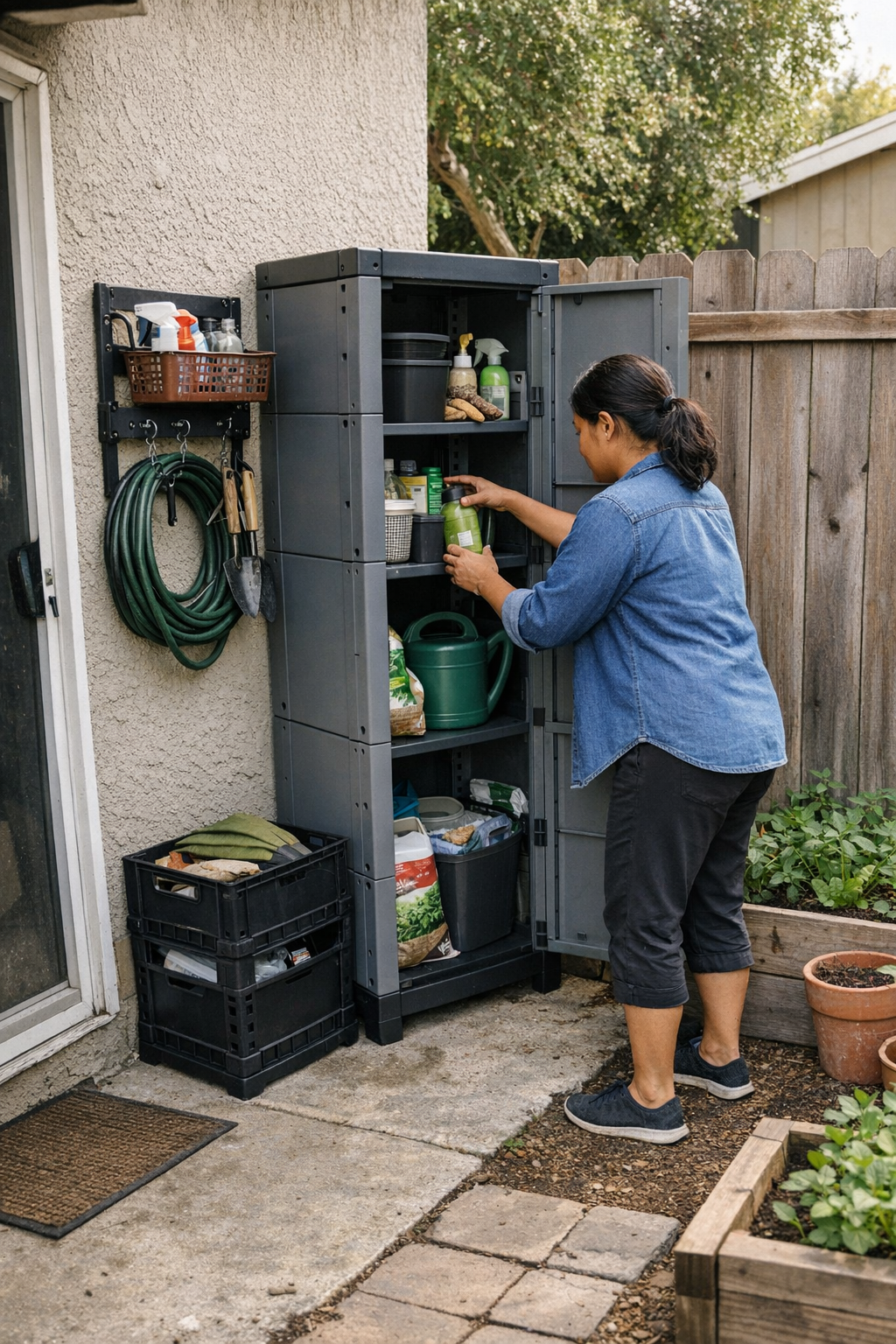
A closed outdoor cabinet prevents clutter by containing mixed returns and resisting mess spread, reducing reshuffling and visible spillover.
Some messes aren’t loud at first. They happen quietly, almost as if the space itself forgets to raise its hand. I saw it in our side yard—the slow drift of shoes, garden gloves, stray tools edging out of their places after different hands came and went. After a while, you notice the narrow path you once walked mindlessly is tighter. Not blocked yet, just asking for subtle detours. I kept circling back to one ordinary culprit: the kind of storage we used.
Where Everyday Clutter Begins
It sneaks in between routines. One person in a hurry drops garden shears on a bin lid; another tosses a soccer ball onto an open rack, bumping yesterday’s tools into a lean against the gate. Returning things to order isn’t a single moment—it’s how a space absorbs tiny choices, day after day. You don’t notice it immediately. But you feel it.
A closed cabinet doesn’t promise perfection. It simply asks for a completed action: to open, return, then actually shut the door. Unremarkable, but in a shared yard, this rule seems to matter more than any organizing strategy ever did.
When Structure Shapes How We Move
Racks and bins seduce us with easy access at first. It takes almost no effort to toss in boots or lean a rake as you pass by. The trouble is cumulative—after a week, the most-used tools are always at the front, while odd socks and broken bits slide outward, edging into walkways meant for feet, not clutter.
I watched as our open storage spot morphed each week, forcing me to stop and shuffle everything back. After switching to a slim vertical cabinet—just enough for yard tools, nothing more—the change settled in quietly. It became clear that the simple act of closing a door blocks the flow of things spilling out, more effectively than any mental note about “putting things away.” That was the part I kept coming back to.
Living with a Subtle Boundary
It’s less about the storage and more about the line it draws—almost invisible, but there all the same. Even someone who hardly uses the yard can see what goes where and, more importantly, is nudged to take two extra seconds to finish the return. Over time, the path stays clear. The need to reset the whole area fades into the background, giving room instead for whatever the day might bring in.
I still think about how certain boundaries, when gentle and consistent, change the feel of shared space. Not by demanding better habits, but by shifting what it means to leave something “done.”
These quiet observations took shape while making our side yard workable again: http://www.tidyyard.myshopify.com