Living with Light: Finding Calm in Clear Boundaries
Lighting that draws a true boundary reduces confusion and movement risk for kids or pets, making routines safer with fewer collisions.
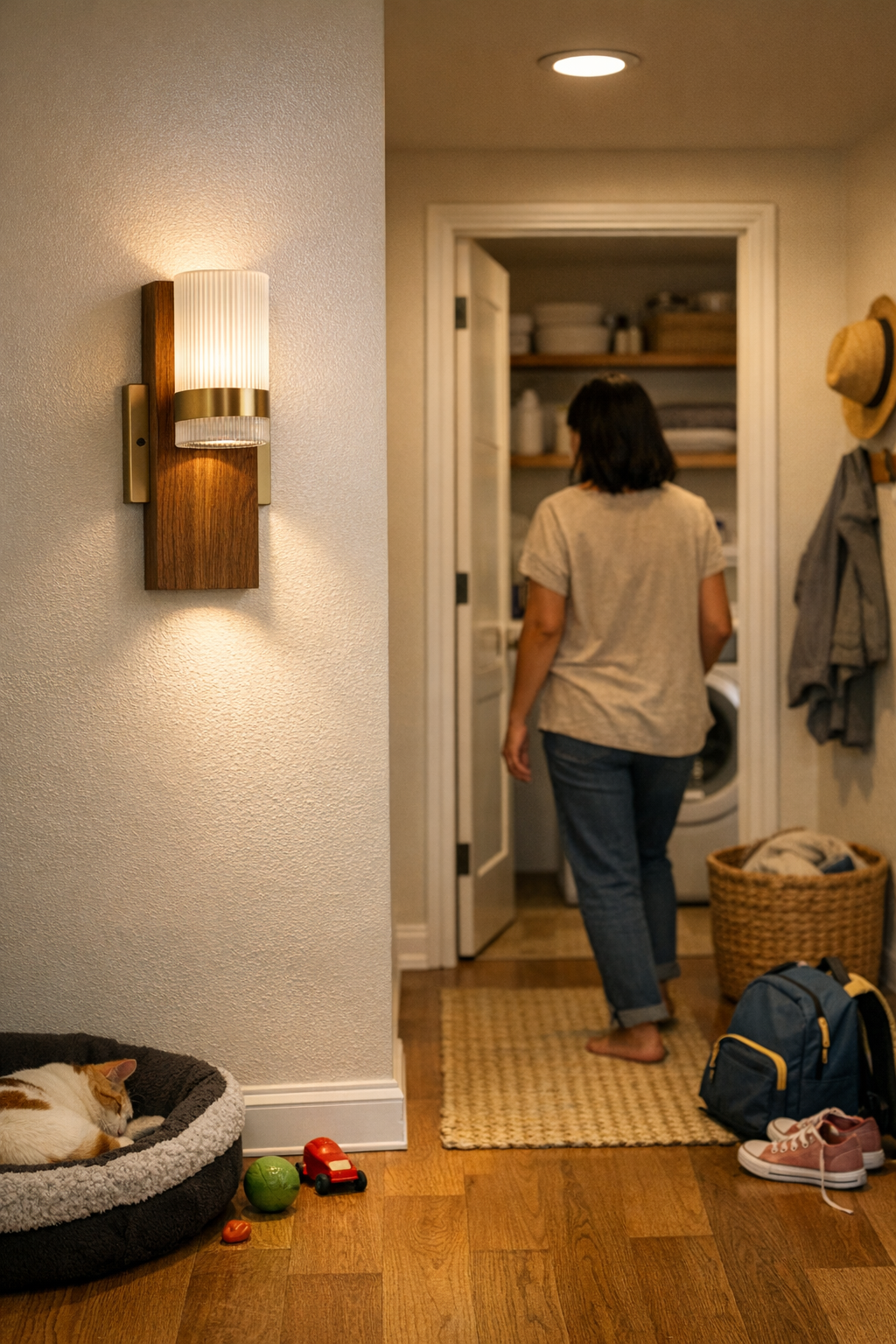
There’s a strange comfort in a room after dark when the ceiling light flicks on—enough to see toys, bags, and shoes scattered along the hallway, yet something feels off. At first, I didn’t notice it. The light filled the space, technically bright enough, but blurred at the edges where daily routines actually unfold: a child running to the stairway, a dog pressing nose to the laundry-room door, backpacks forgotten underfoot. It’s only when movement repeats day after day, when the clatter and shuffle of life returns week after week, that those vague boundaries start to leave their mark. What looked “lit” was less clear than it seemed.
Where Shadows Keep Surprising
It happens slowly, almost invisibly at first. A flush-mounted ceiling light can make a corridor look safe and simple—until a quick glance misses a pet curled in a dim patch or a child’s backpack shifts into the walkway. Shadows fall in odd places, and the border between “waiting” and “moving” becomes smudged.
You don’t notice it immediately. But you feel it. Routines start to stumble where the light doesn’t quite define edges. There’s a hesitation before a stair, an unexpected twitch of glare, a moment’s uncertainty about what’s actually in the path.
That was the part I kept coming back to: how light, when too broad or unfocused, fails to mark where movement ends and pause begins.
The Subtle Art of Boundaries
One evening, after nearly tripping over a forgotten lunchbox at the top of the stairs, I realized it wasn’t just about brightness. The whole landing looked well lit with a semi-flush ceiling light, but there was no clear edge—no distinct band to show where to walk and where quietly to wait or set something aside. Clutter tended to gather where zones overlapped.
There’s a difference between lighting that makes a room look open and lighting that helps you move through it predictably. I started noticing all the places where a line softly drawn by a wall sconce, a hardwired wall light, or a directional downlight would have spared us those small, daily hesitations. Reliable task lights above the washer, fixed wall lights at entries, or offset fixtures on stair landings — each one shapes the spaces people (and pets) use without thinking.
It’s such a gentle change. But over time, I found that the right light on the right edge becomes more than visibility—it’s a silent guide. Dogs no longer wandered into work paths; kids learned, unconsciously, to stay just outside the bright edge until the way was clear.
When Lines Are Drawn in Light
The main thing I noticed was that targeted lighting—those quiet but deliberate placements like vanity and mirror wall lighting, under-cabinet lights along cabinet runs, or bathroom-rated downlights—never called attention to themselves but quietly solved the whole problem. Movement became smoother. Routines tightened up. Stumbles and near-collisions, the awkward pausing and retracing, all faded into the background.
And the space felt more like it really belonged to us, not just our things. The difference was less about seeing more, and more about seeing the separation between what’s active and what’s waiting its turn. Even the air seemed to settle.
Sometimes it only takes a shift—a focused downlight above the usual path, a wall sconce edging the calm side of a busy hallway, or well-placed damp-rated fixtures in a laundry corner—for the everyday balance to return.



