Living with Light: Finding Calm in Even Illumination
Ceiling lighting seeming tidy overhead may create shadows or clutter unless coverage, support, and cable management fit room needs.
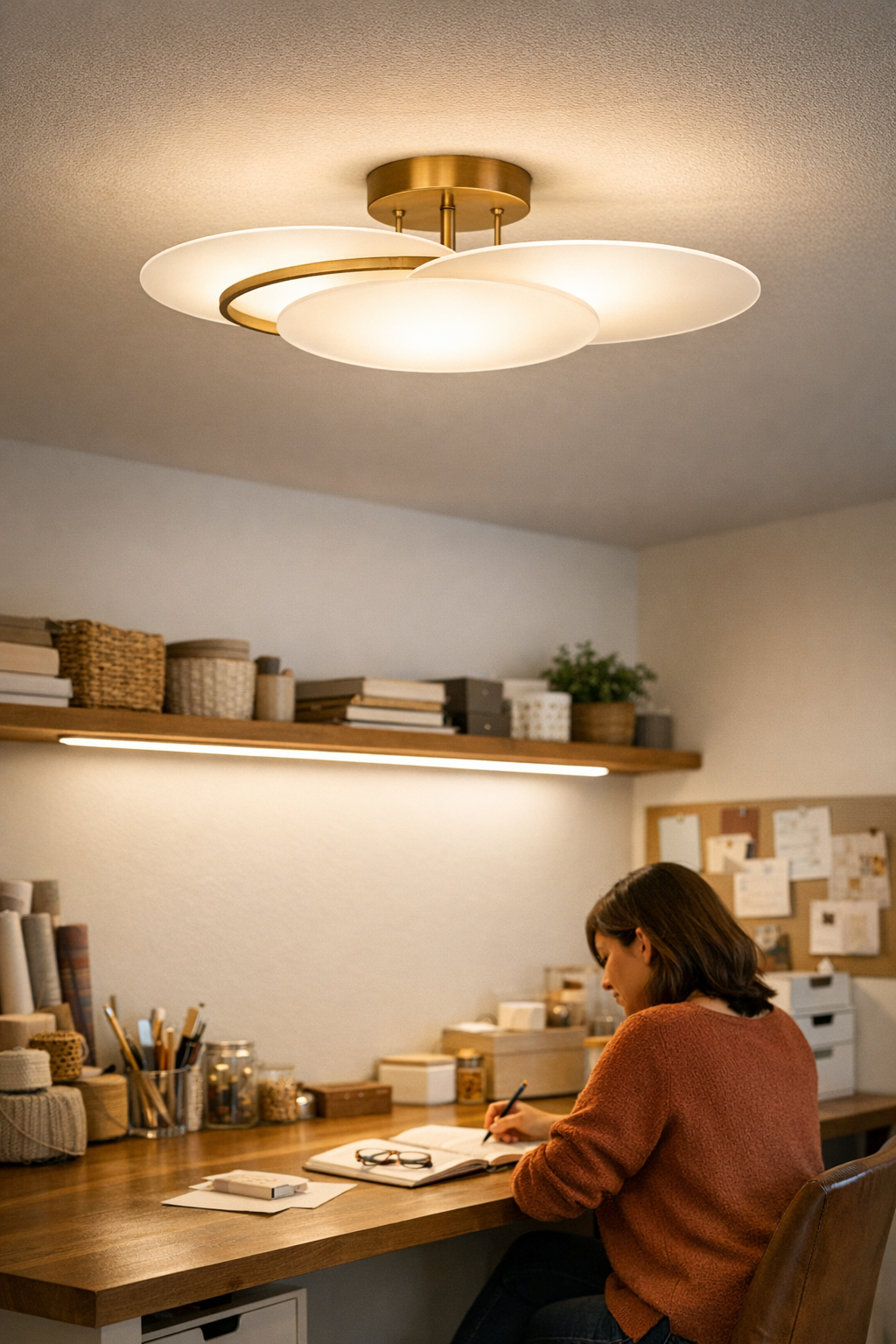
There’s a quiet satisfaction that comes from turning on a light and having a room simply work. Maybe you only notice it at the end of a long day, sitting at the corner of your desk, expecting even light but instead facing a patchy mix of glare and shadow. Ceiling lights can look perfectly arranged when viewed from the center of a room—their lines neat and predictable—until something about the space doesn’t quite resolve as you hoped. Sometimes, a shadow on paperwork or a cable you keep tripping over reveals more about the lighting setup than the fixtures themselves.
The result isn’t always immediate, but you feel it. You find yourself chasing light across the room or nudging a lamp just so, trying to even out the lingering unevenness.
The Illusion of Aligned Overhead Lights
It’s easy to walk into a space and assume that tidy rows of ceiling downlights or a neat grid of fixtures guarantee well-lit comfort.
But there’s a difference between what looks finished from above and what feels resolved at your feet or across your desk. I kept noticing, at the end of the workday, how one corner remained dim—as if the nearest fixture kept its beam stubbornly out of reach. Even neatly mounted ceiling lighting can leave cables exposed or surfaces caught in half-shadows.
That’s how most lighting routines start. At first, imperfections are easy to overlook, but over time the small adjustments pile up. Suddenly, a shared workspace becomes tangled with extension cords and sideways desk lamps—each addition trying to fix an original plan that missed key details.
Light That Moves Quietly Across Surfaces
There’s something persistent about dark spots just beyond a main chair, where work extends into corners and under shelves.
A mixed-use room—shifting from crafting to remote work—often exposes these weak points. As daylight fades, cables creep across the floor again, chasing the last bit of usable brightness. Sometimes this becomes an awkward dance: avoiding glare, shifting seats, moving a bracket, or looking for a missing plug.
I once installed a low-profile linear fixture along the edge of my worktable. It wasn’t dramatic, but the dim patch disappeared. I no longer needed to keep a lamp handy for paperwork, and there were fewer cables to manage at the end of the day. It’s strange how something so simple can make a space instantly calmer. That was the detail I kept returning to.
The Calm That Comes From Enough
The spaces between lights matter as much as their neatness overhead.
Evenness doesn’t mean more fixtures; it means light reaching where hands and eyes rest—across desktops, under shelves, and along table edges. Cables that used to snag sleeves suddenly disappear when gathered into brackets or nudged out of the way.
It changes daily routines: no more stopping to fix last night’s lamp placement or wondering how you missed a shadow for so long. The change feels quiet, almost invisible. But the room stays ready.
There are more thoughts about living with light, and a few details if you want to keep going here: http://www.lightsupport.myshopify.com