Living with Light: How Ceiling Fixtures Shape Our Daily Comfort
The right ceiling lighting reduces eye strain by controlling glare and dust, keeping damp or busy areas cleaner and more comfortable daily.
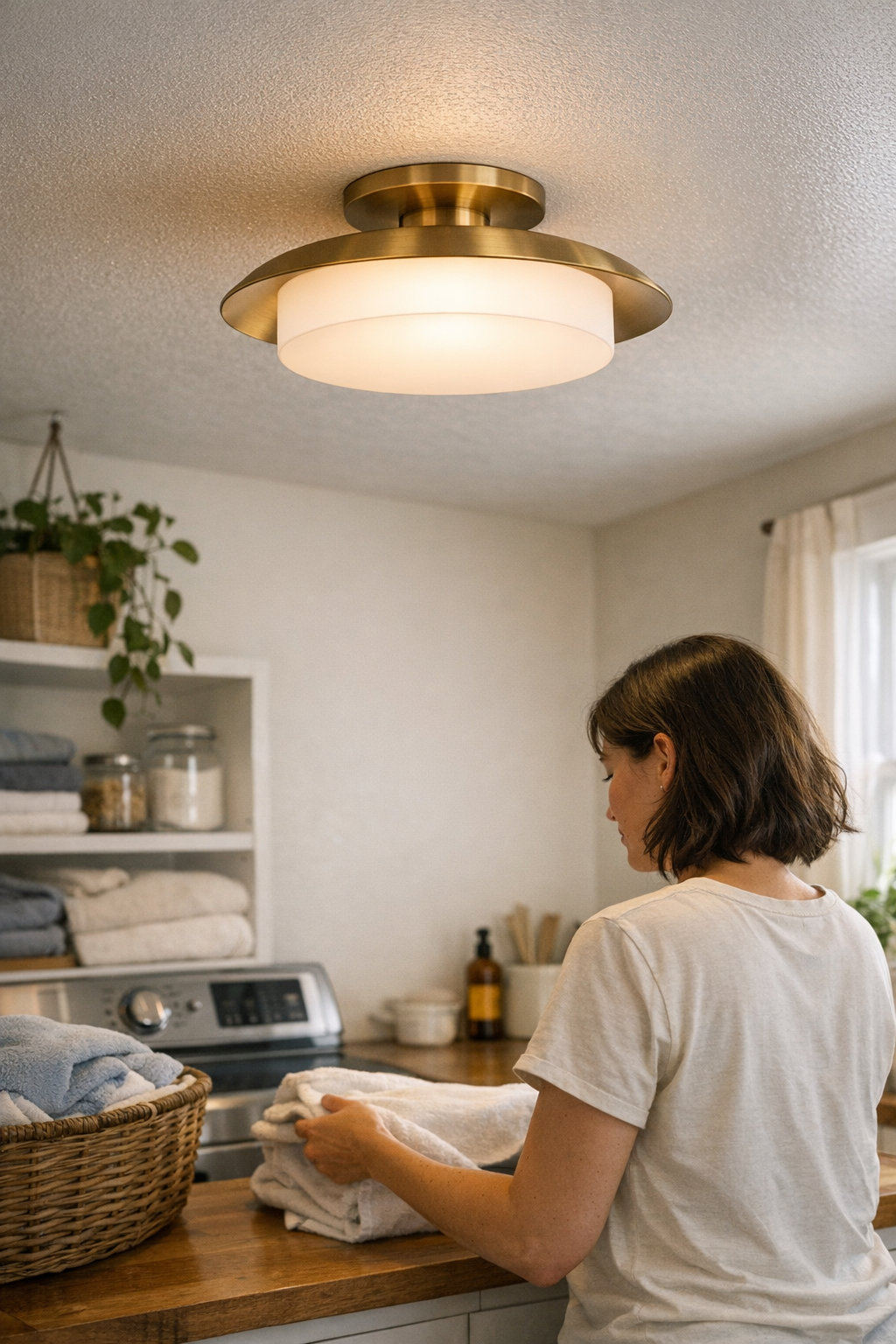
When Overhead Light Starts Showing You Everything You Didn’t Want to See
Living with a ceiling light can reveal details you barely noticed before. At first, the room seems brighter and more open, expanded by the promise of even illumination from above. But after a little time, marks and dust start to appear in places you rarely checked. What once felt like just “light” becomes sharper around the edges. That change settles in quietly whenever you stand beneath it—folding towels, passing through a hallway, or looking in a mirror as morning steam curls in the air.
The difference isn’t immediate, but it’s unmistakable once you sense it.
The Places Light Lingers
Ceiling fixtures—flush mounts, semi-flush mounts, or panel lights—often blend into the background until they don’t. Across spaces like laundry corners, overlit hallways, or the bathroom sink mirror zone, direct overhead light pulls everything to the surface: streaks on tile, fingerprints on glass, lint and threads visible only in fleeting motions. Under harsh beams on clean tile, even freshly folded towels and dusted shelves seem undone.
Unexpectedly, this direct light gathers the quiet annoyances of daily life and throws them back—glare scattered into mirrors, tracing dust along baseboards, making each room crossing less visually comfortable.
Shifts in Routine
The glare doesn’t bother you at first. Then it becomes impossible to ignore—nagging the eyes or reflecting at odd angles while walking by. Under an exposed bulb, every tiny particle hangs suspended in sharp focus. It’s less about brightness and more about how such fixtures highlight every floating wisp, damp streak, or missed spot.
Switching to a diffused, sealed fixture—designed for moisture and daily messes, common in bathroom-rated or laundry lighting—softens the light. The lint above counters fades into the background. It’s just as bright but no longer amplifies dust, hairs, or streaks. Simple tasks like wiping counters, sorting socks, or checking a reflection become less visually demanding. The decrease in visual noise is what makes the biggest impact.
Where the Light Fails Quietly
After a few weeks, the difference turns practical rather than just preferred. It’s not a dramatic design upgrade but a reduced mental load. The fixture blends back into the background, performing its role without pulling apart the room’s atmosphere. Glare no longer strikes directly into the eyes or onto surfaces that don’t get frequent cleaning.
In high-traffic or changing spaces—hallways, stair turns, cabinet runs, or laundry areas—a covered or diffused fixture keeps dust less visible and reduces eye strain. The room remains lived-in, but the lighting no longer highlights every sign of daily use. Sometimes, enabling light to do its job quietly means making your experience a little easier.
There’s more detail on what makes this work quietly here: http://www.lighthelper.myshopify.com