Living with Light: How Floor Assembly Changes Everyday Spaces
Choosing floor pre-assembly for lighting fixtures prevents loose fits, shadow drift, and glare, enhancing stability and clarity over time.
It’s always the routine moves that reveal where the light really falls—stepping into a hallway at night with your arms full, ducking beneath cabinets hunting for a missing mug, shifting quietly through a laundry room long after the washer’s cycle ends. The overall layout blurs until certain shadows or persistent glare fix themselves in place. You start noticing not the fixture’s style, but how its light lands—week after week—on the same uneven corner or frustrating dim spot.
You don’t see it at first.
But you feel it.
For a long time, I didn’t consider how much installation itself mattered. There were flush mount ceiling lights, semi-flush mounts, linear and panel fixtures, and the usual tools. But after a few cycles of loose trims and shifting shadow lines—especially in spaces used most for crossing, searching, or folding—I began to pay attention not just to what was installed, but how. Building a fixture piece by piece on a ladder felt efficient. It looked fine on day one, with brightness spreading cleanly and all parts seeming tight. But something changed over the following days.
The Trouble in the Repeated Path
I kept coming back to the hallway. There’s something specific about returning to the same narrow corridor at all hours. At first, any decent ceiling fixture seems bright enough. But after a few weeks, new shadows appear—small arcs near the baseboards, glare patches shifting as I walk. Odd how these changes announce themselves so quietly, just small interruptions in how you expect floors and walls to look.
Small misalignments—ones not obvious during the first install—become clear in movement. Each pass, I’d catch my shoulder brushing a shadow edge that hadn’t been there before. Trim pieces rattled, sometimes barely loose, sometimes enough to require the ladder again.
One night, shuffling for a glass of water, I realized the light was technically on, but the space still felt uncertain.
Laundry Light and the Quiet Fix
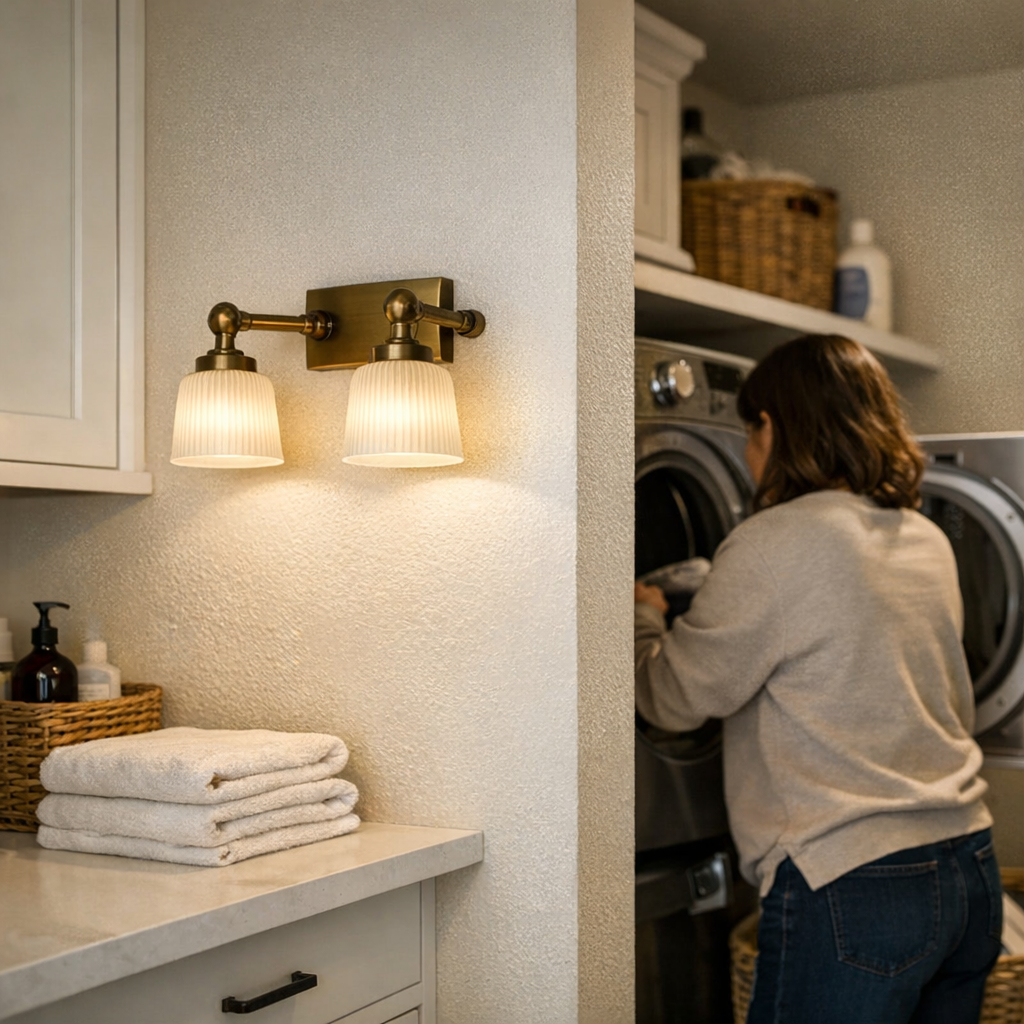
Nowhere is this clearer than the laundry room. Seven-foot ceilings, swinging doors, machines vibrating against trim—all factors that challenge fixture stability. I tried pre-assembling the fixture on the floor—piecing it together and tightening everything before installation. This wasn’t about perfection, just a small experiment. The effect was immediate and persistent.
The beam lined up precisely to the cabinet edge—and stayed that way. No stray shadows stretched where they shouldn’t. Nothing loosened or rattled after sorting towels or leaning over the dryer. The fixture held its position and shape. That’s the detail that stuck with me: not just fewer shadows, but less maintenance and attention required each week.
The job got finished and forgotten—that was the best part.
Knowing When It Lasts
It’s surprising how a better fit at the start changes the rhythm of a room. It’s not dramatic; more like silence where there was once low-level annoyance. I noticed this most while folding laundry late, realizing how steady the light felt against the counter and floor. Cleaning was faster, and the corners stayed visible.
The shift caught me off guard. There’s always the temptation to rush and build everything overhead to be done sooner. But I found floor-assembled fixtures never pulled away from their mounts, nor cast odd shadows after weeks of repeated use. That line between “looks right” and “lives easily” only became clearer with time.
There’s more to discover in these lighting routines if you pay attention.
If you’re quietly interested in what makes indoor lighting last, I found more thoughts collected here: http://www.lighthelper.myshopify.com