Living With Light: Small Changes That Brighten Daily Routines
Lighting upgrades matter most when use reveals flaws like glare, shadows, or fog. The right fixture ensures safer, easier daily tasks.
There’s a certain satisfaction in thinking a room is done—the new hallway fixture is up, the bathroom finally glows, and even that laundry corner looks brighter. At first, you notice only the absences: no more shadows underfoot, no uneasy squint at the mirror in the morning. It’s less about transformation than about quiet friction being removed.
You expect a bright new light to be good by definition. But you only find out if it’s right when you keep coming back, day after day. Movement, routine tasks, and quick glances start to reveal where that first impression begins to wear thin.
Where the Problem Really Shows Up
Over time, the room lets you know what it still needs. The glare off the stair landing you ignored at first becomes impossible to forget—especially late at night or when your arms are full. I began noticing how a flush-mount fixture in the corridor left the steps just out of clear reach, slowing every trip, even though the ceiling glowed.
In the bathroom, the old single fixture flooded the center but left the sides of my face in shadow. You don’t notice it immediately. But eventually, it’s clear—you lean toward the light or tilt your head, adjusting without thinking.
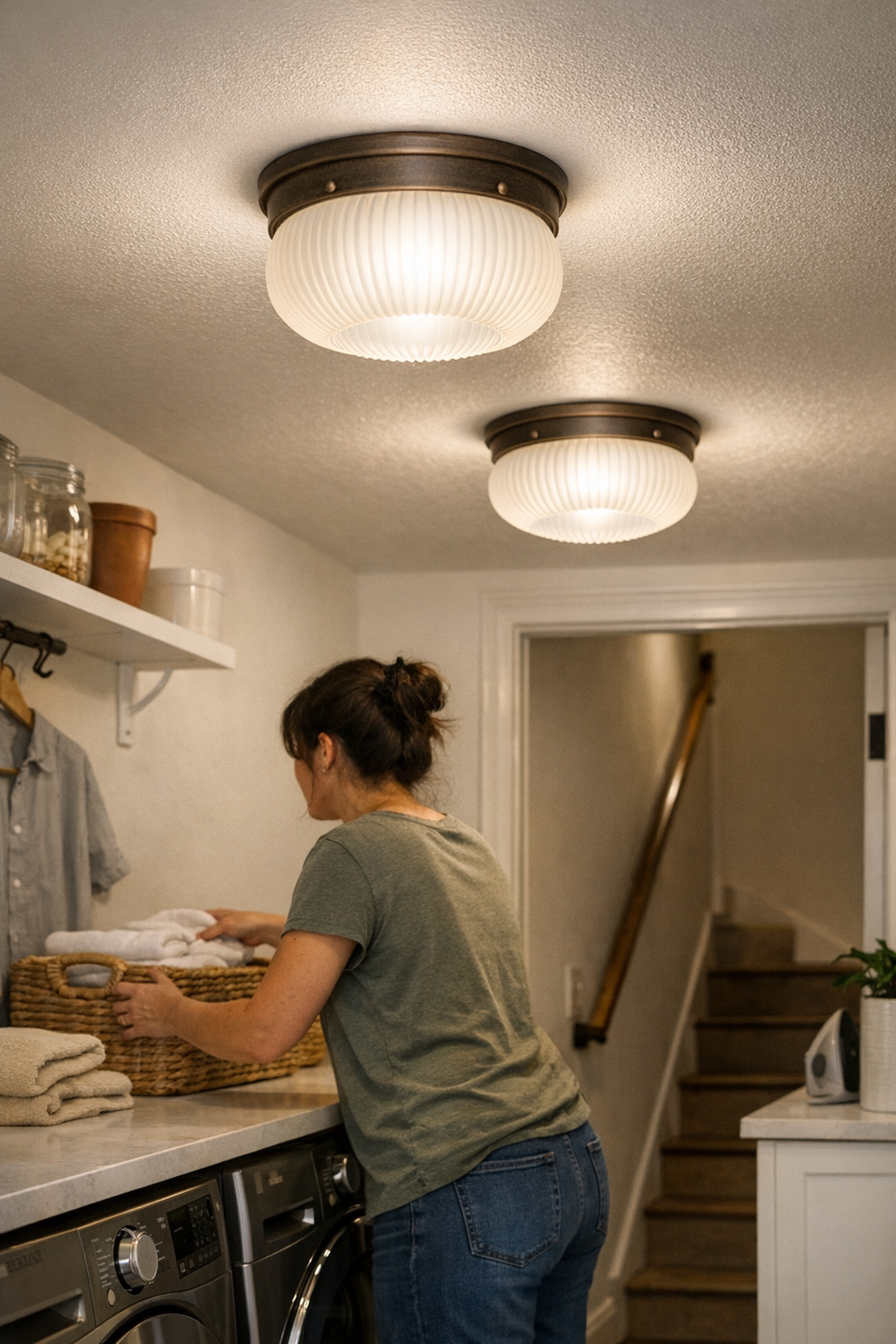
Even the laundry room, often an afterthought, changes with moisture. Steam fogs the air, and what once felt “bright enough” dulls until folding towels at the corners becomes guesswork.
Spread Matters More Than Brightness
I thought a higher-wattage fixture would fix these stubborn spots, but what helped most wasn’t just brightness. Paired wall sconces near the bathroom mirror, correctly spaced, quietly erased the shadows that kept distracting me. A wider, damp-rated panel light over the laundry workspace finally let the entire counter stay visible, even on humid days.
It’s strange—when you no longer have to think about the areas you can’t see clearly, routines speed up. Taking out laundry or trimming hair at the mirror simply blends into what the room is supposed to do.
That was the part I kept coming back to.
When the Light Stops Being Noticed
The best indoor lighting, it turns out, disappears back into the rhythm of daily life. After a week or two, I stopped reaching for my phone’s flashlight on the stairs. My reflection became consistent, not a trick of angle or time of day. The laundry stayed visible—even when every surface was damp and the corners should have blurred.
When the right fixtures are in the right spots—be it flush-mount or semi-flush mount ceiling lights in corridors, wall sconces or vanity lights around mirrors, damp-rated panels over work surfaces, or carefully positioned stairway lighting—the light behaves how you always assumed it should. Not as a noticeable improvement, but as part of the room’s memory of how people actually use these spaces.
This realization started with a few hallway walks and some persistent shadows. If you’re curious where the thought goes next, it continues here: http://www.lighthelper.myshopify.com