Living with Light: Small Changes That Ease Daily Strain
Lighting comfort depends on fixture style and placement that match routine tasks, reducing glare and shadows for lasting daily ease.
It’s funny how a room can look perfect—not a shadow out of place, not a corner left unlit—until you start living with it night after night, in the quiet repetition of everyday routines. You come home, shed your shoes, turn on the hallway lighting, and move from one patch of glow to the next. Surfaces reflect the light back, laundry gets folded, faces lean close to the bathroom mirror. Hours pass, but something about the way the light falls keeps tugging at your attention. Indoor lighting’s real nature isn’t always obvious at first. It reveals itself in the in-betweens.
You don’t notice it immediately. But you feel it.
Patterns You Only See After a Few Weeks
There’s a difference between lighting that dazzles and lighting that actually makes a room easier to use. At first, what I thought was simply “enough”—a flush mount ceiling light brightening the laundry area, a crisp panel in the entryway, spotlit corners in the hallway—felt good.
But then came the small moments: the blind search for a missing sock in a shadow that never quite goes away; squinting into glare reflecting off tile as I walk the corridor late at night; the outline of my shoulder sliced away in the bathroom mirror by a half-lit, uneven beam—no matter how many times I repositioned myself. These don’t announce themselves in one big moment. They build slowly, quietly, routine after routine.
That was the part I kept coming back to.
Why Placement Matters More Than Brightness
The instinct is always to go brighter. But over time, I realized brightness alone wasn’t solving the real issue. A powerful panel did nothing for the dark band beside the storage bench near the stairs. Increasing ceiling light output just created sharper, almost clinical shadows down the hallway—areas where footing felt less certain, not more.
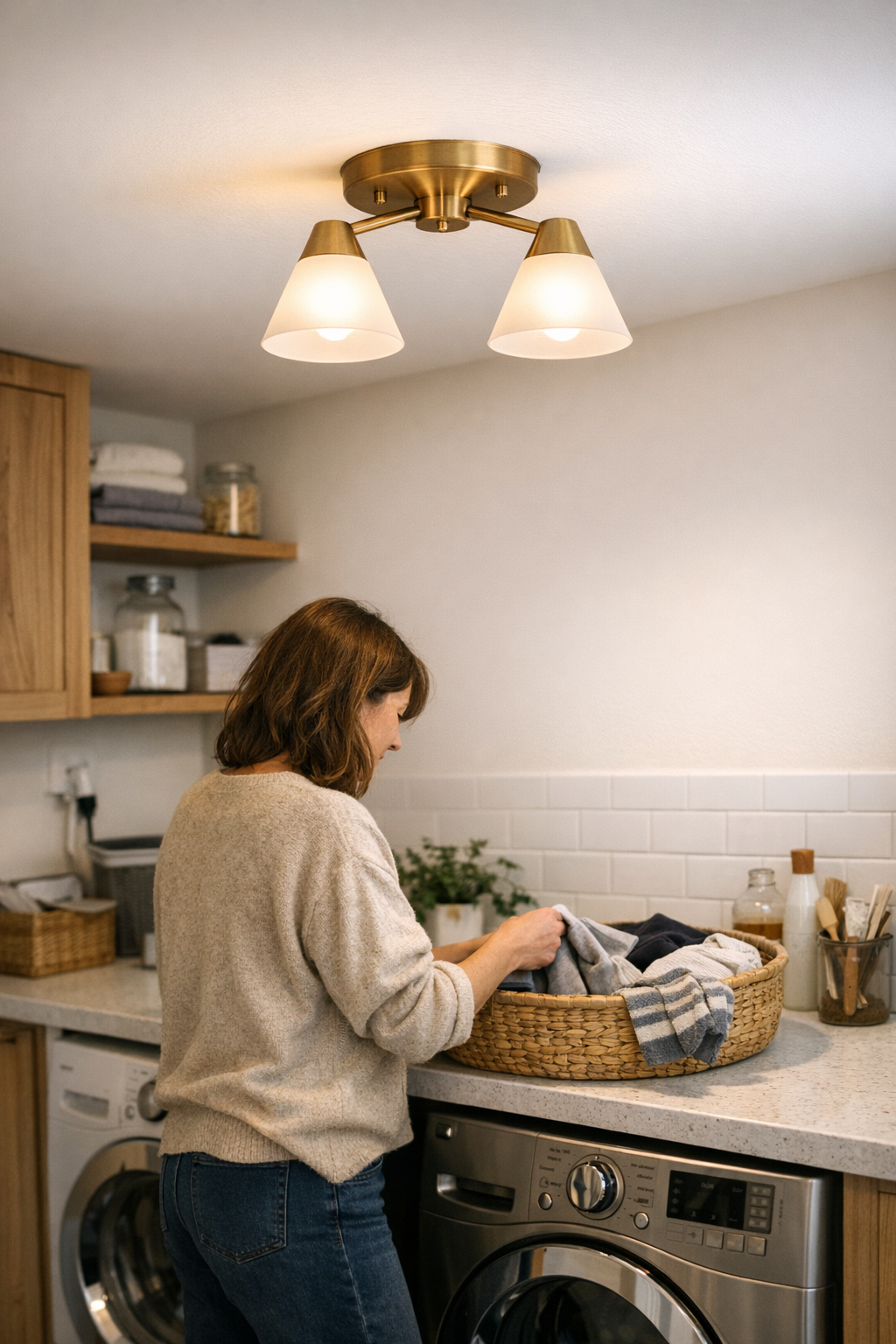
One small adjustment—a flush mount moved closer to the corridor wall—did more to soften those hard edges than any higher wattage ever had. In the laundry room, swapping an extra-flat ceiling panel for a semi-flush lens that diffused light gently over the folding counter meant I no longer felt drained by glare after a few minutes of moving clothes. The technical specs never explained this subtle difference.
You don’t see the improvement right away. But you notice how everyday routines feel smoother, less fragile.
Lighting That Grows With the Space
Sometimes changing a fixture style does less than respecting how you move through a room. I noticed the bathroom mirror became truly usable only when wall-mounted vanity lights filled in from both sides, making the morning routine less of a struggle with shifting shadows. In the hallway, the urge to brace my step faded once sharp shadow edges at floor level disappeared from the far corner.
So much of it, I’ve learned, is not about raw output but about fit. A space feels complete only when lighting doesn’t get in the way—just quietly supports all the ordinary moving, folding, climbing, and looking that happens without much ceremony.
Over time it becomes clear: comfort in a room isn’t about first impressions, but about how gently the lighting adjusts itself around your habits.
If you’re still thinking about how small changes in fixture type or placement ripple through daily life, there’s a little more to see at LightHelper.