Living with Light That Matches Our Daily Spaces
When lighting matches room structure and routines, spaces stay safer and clearer, avoiding shadows and missed steps for daily ease.
A ceiling light can look right, shining steady in the middle, but the edges tell a different story after a few weeks. Hallways appear bright enough at first glance, yet your feet learn the limits faster than your eyes. I began noticing where the shadow gathered—just at the stair edge, or in the uneven reflection of a bathroom mirror. It’s not something you see on installation day, but you feel it; it settles in quietly amid daily movements.
Living with these little mismatches turns quick chores into minor maneuvers. A fixture picked for “general brightness” does its job, but not quite where regular life plays out. I kept coming back to the same patches of glare and gloom—wondering why these supposed solutions felt like they added steps, not ease. The core of it, I realized, was less about wattage and more about where the light manages to land after the room reshapes it.
The Edges Always Tell
You don’t notice it immediately.
Flush mounts, semi-flush mounts, and panel lights claim to fill the space evenly, but most days, corners and turns look less certain after sunset. Hallways feel clear in the middle, then drop off near the walls. Passing a stair at night, a dim streak at your feet reminds you which side the beam forgot.
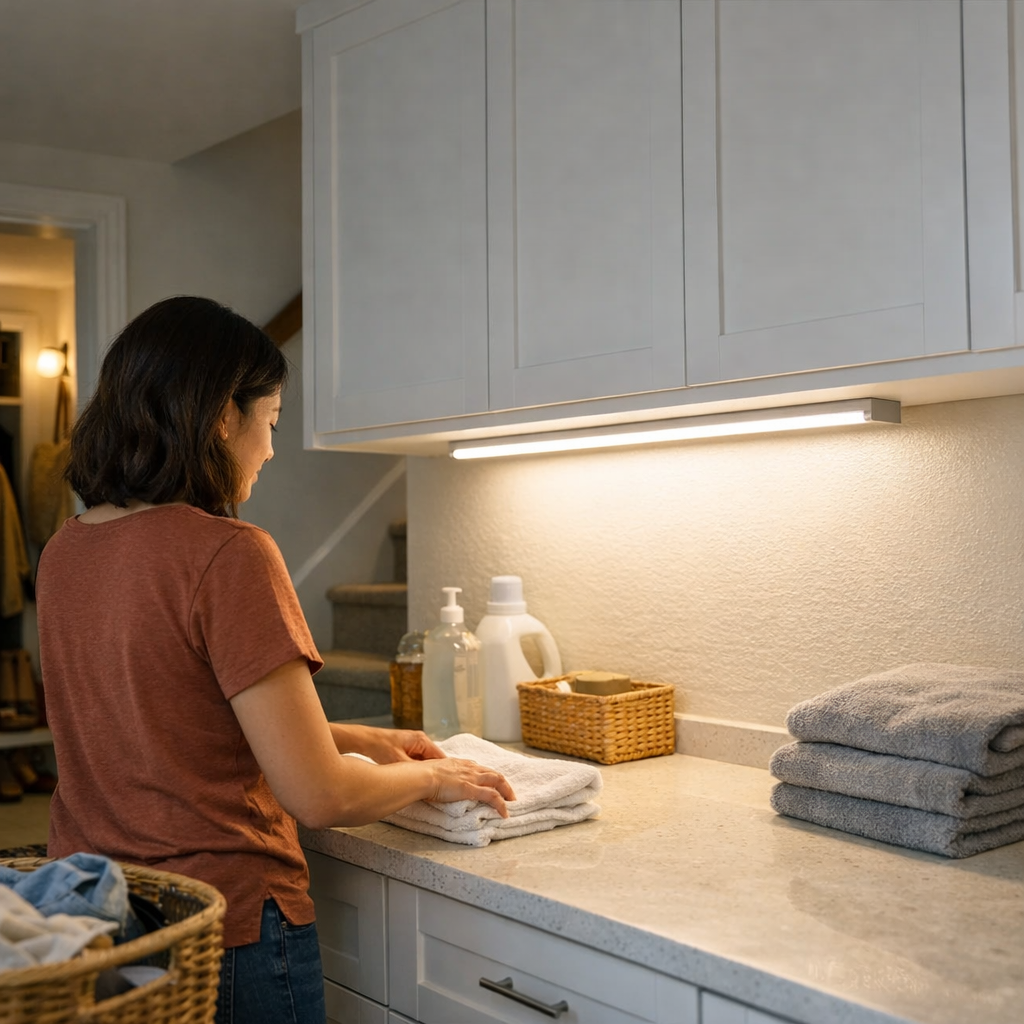
One evening, heading to the laundry after a rain, I saw the folding counter almost erased by shadows—though the ceiling fixture shone above, the work surface looked distant and gray. That was the part I kept coming back to.
Shadows in the Flow
Lighting patterns that follow catalog diagrams don’t always account for how a room is actually used.
Over time, a shadow at the entryway or a missed edge at the stairs becomes part of the routine. You make little adjustments without thinking: shifting the laundry basket, squinting at stains on the countertop, leaning sideways for a better look in the mirror.
The effect isn’t dramatic, but it lingers. Each movement points out where the light misses, not just where it hits.
Clarity in the Small Adjustments
One change made a bigger difference than expected—a slim LED strip mounted along the far side of the laundry counter, damp-rated for splashy indoor conditions. It didn’t add more fixtures; just rethought where light actually needs to land.
Suddenly, the countertop came into focus, even on dull mornings. The last stair became visible with every crossing. It was a reminder that clarity comes from matching light to motion—to the parts of the room that quietly matter most.
Sometimes the best understanding comes halfway through a routine, right where the light first failed. If this feels familiar, there’s a bit more to explore quietly at LightHelper.