Living with Light That Moves When You Do
Plug-in accessories offer flexible lighting for changing routines, trading cable visibility for easy repositioning in shared or evolving spaces.
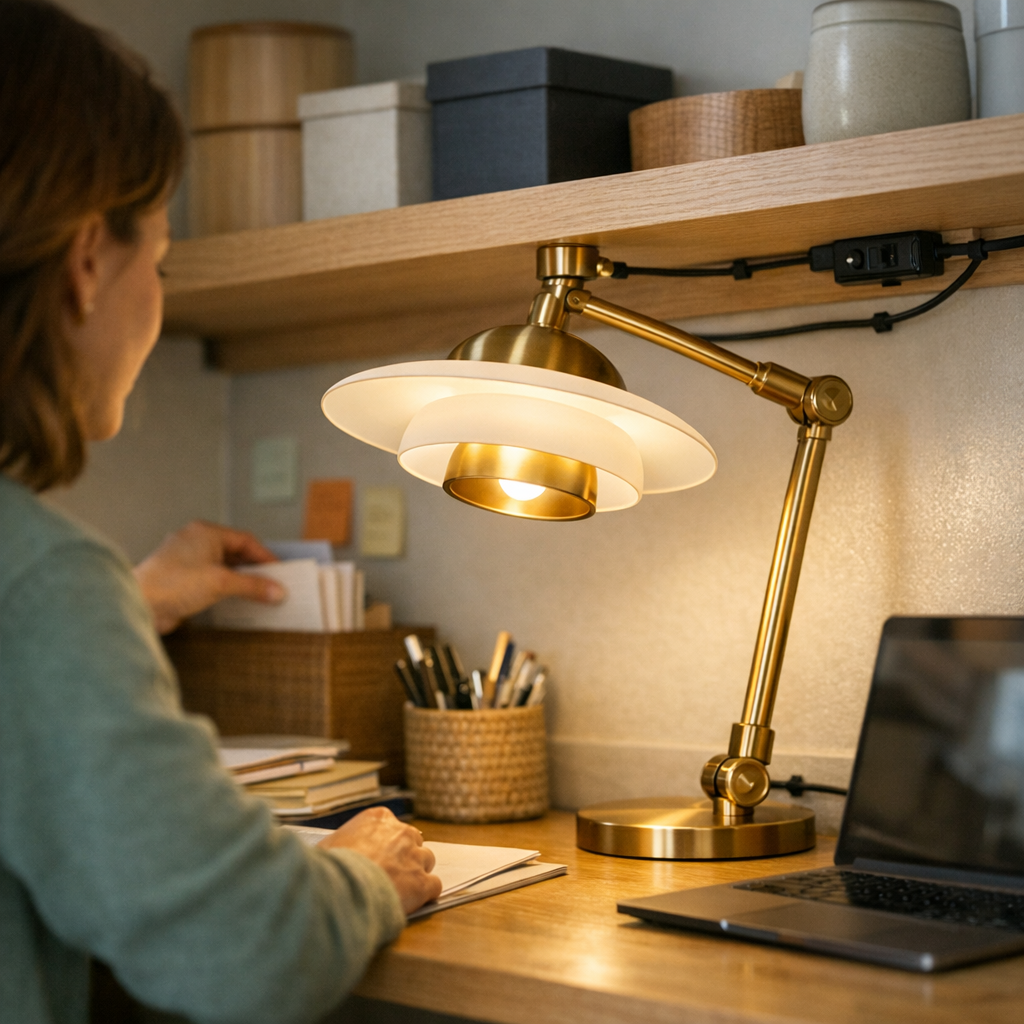
Sometimes it’s the smallest things you keep bumping into—almost literally—that start to reshape how a space feels. Sitting at the same desk a dozen evenings in a row, I began to notice how the glow, the shadows, and the lightly trailing cable seemed to rearrange themselves each time I shifted my setup. At first, I assumed a fixed light would feel more resolved and finished. But the reality became clear every time I reached for a different book, slid my laptop a few inches, or watched the light move differently for someone else using the same work area.
It’s easy to underestimate how much of daily life happens not just on the surface but around it—chasing glare away, stretching to reach a brighter edge, or untangling a cable just enough to keep things clear.
The Myth of Unbroken Lines
Ceiling lights or wall fixtures bring an immediate sense of calm—every cable tucked away, nothing distracting the eye. But the illusion of perfect order is fragile and easy to miss at first.
Move anything—a shelf, a screen, a chair—and the whole setup starts to feel rigid. You hesitate when you realize the brightest spot falls a few inches off target, missing the actual work surface. Glare appears where it hadn’t before.
It’s not the look that bothers you—it’s the feeling of being locked into someone else’s lighting plan, a fixed wiring grid that can’t adapt when you want to sit differently or share the table. The clean line becomes a quiet limitation.
The Honest Mess
Plug-in accessories offer both relief and compromise—a visible cord here, a bracket there, adapters noticeable if you look. When you rearrange, the light moves with you. At first, it’s hard not to notice the exposed cable, especially if you usually prefer minimal, clean surfaces.
But routine changes everything. With cables running just under shelves or behind desk edges, daily flexibility matters more than fully hidden power. Sharing a work surface, passing the lamp down a row, or refocusing from sheet music to screen—all happen in seconds. There’s an awkward honesty to that visible line, as if the light admits life doesn’t stand still.
Over time, the cables fade into the background. The practical click of moving the lamp becomes more important—a subtle shift matching the day’s patterns, rather than the permanence of the room itself.
Living With The Difference
Once, a cable clip gave way, dropping the cord at an awkward angle. Fixing it took a minute; there was no need to rewire or cut power. That moment made me realize even imperfect support has its own kind of ease.
A surface adapter tucked under the desk edge, with short, low-profile cable runs supported snugly along a path, avoids catching on chairs or distracting at a glance. The right placement means the lamp works for whoever needs it next, instead of just looking settled in place.
There’s comfort in a setup that changes without friction, even if a cable crosses part of your view. That gentle trade-off—valuing adaptability over airtight neatness—became what I appreciated most evenings, flicking the light on, sliding it a fraction closer, letting the room fit around me for a while.
For anyone curious, the quiet difference between these setups shows up in small moments, and there are a few examples to see here: http://www.lightsupport.myshopify.com



