Living with Light: The Quiet Challenges of Hallway Illumination
Hallway lighting works best when the path stays clear and readable, with proper fixture placement and cable management ensuring safety and comfort.
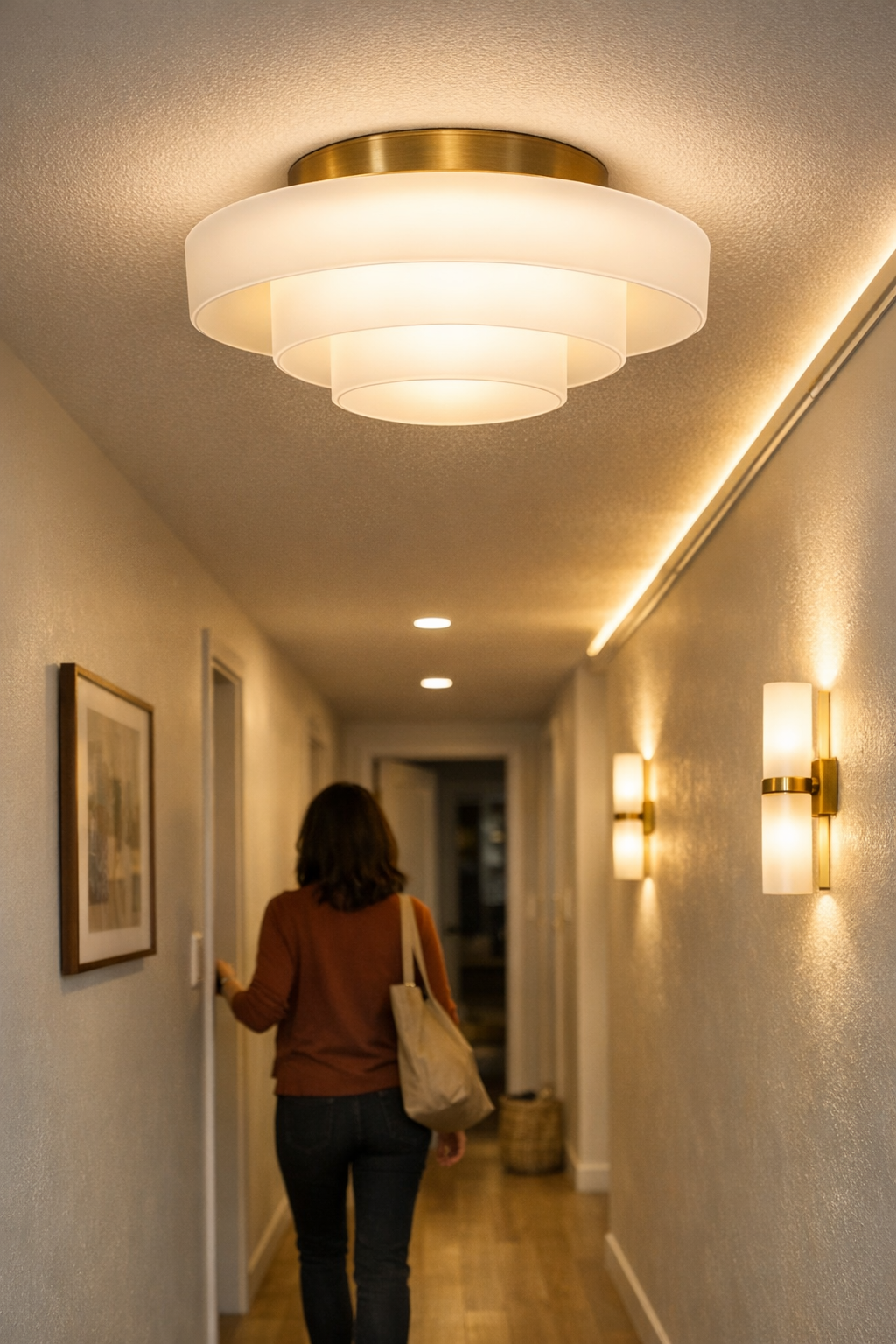
Some places look perfectly finished at first glance. Light panels pressed flush against the ceiling, a few soft-glow sconces, no cables running wild. The hallway gave off that ready-for-anything feeling—a kind of understated order. But nights have a way of revealing the details that even good design can’t fully anticipate.
I never gave much thought to the difference between simply seeing a fixture and actually seeing the path through after dark. From a distance, the lights looked right—neat, aligned, almost invisible during the day. But after a week of late evenings and walking barefoot, a pattern emerged. Shadows gathered near the walls and stayed quiet in the corners. Each turn or pause to grab shoes traced out patches where light fell short, or a cable edge caught the eye. You don’t notice it immediately, but you feel it.
Where the Shadow Sits
A flush-mounted ceiling light does its job for the eye—until you’re halfway down the corridor and start to notice the drop in brightness along the floor. I only realized how much that mattered when I caught myself slowing down slightly every time—especially near the section closest to the bathroom door after midnight.
It wasn’t about fear of stubbing a toe. More about how, even in a space meant to guide movement, a narrow band of shadow shifts your pace, causing a subtle hesitation or a quick glance to avoid bumping the wall’s edge. Guests would instinctively glance back toward the door as they passed, searching for a clearer path that didn’t quite materialize.
Lighting that sits neatly near the entrance reads well during the day, but the far end tells its own story in the dark.
Cables, Corners, Repeat Movement
One of the things that stuck with me was how quickly a loosely placed cable or bracket becomes part of daily muscle memory. I found myself brushing against an exposed cable near shoulder height every few days—a small but persistent disruption that breaks the rhythm once you’ve registered it.
Carrying laundry down the narrow hallway or slipping out for a glass of water, I kept noticing the awkward shuffle caused by a wire box that sat just proud of the trim. It created a hidden drag along the path.
That was the detail I kept returning to. The walking line needs clarity from the ceiling, but it also demands invisible support to stay open. Raising cables all the way up to the top trim made a bigger difference than I expected. No more subtle drag, no more pausing to avoid obstacles.
Symmetry Doesn’t Always Mean Clarity
Even with lights spaced evenly, spots where I turned or reached for a handle were often left in shadow. Symmetry might look complete, but feet and eyes tell a different story—especially when the routine repeats night after night.
Replacing the center fixture with staggered, diffused LED panels changed how the entire hallway felt. Suddenly, every part of the floor was visible—regardless of what I was carrying. It was a reminder that lighting isn’t just about appearance; it’s about supporting movement and giving the body certainty.
The space lost its strict symmetry, but it felt easier, more forgiving—less about how it looked and more about smoothing the small crossings that happen routinely. Most nights now, I don’t even think about the lighting. That, I believe, is the best outcome.
If you’re interested in some of the lighting setups that led to these observations, some quiet examples can be found here: http://www.lightsupport.myshopify.com



