Living with Light: The Quiet Change in Hallway Flow
Linear and panel ceiling lights provide even, continuous corridor lighting that prevents shadows, improving safety and smooth movement.
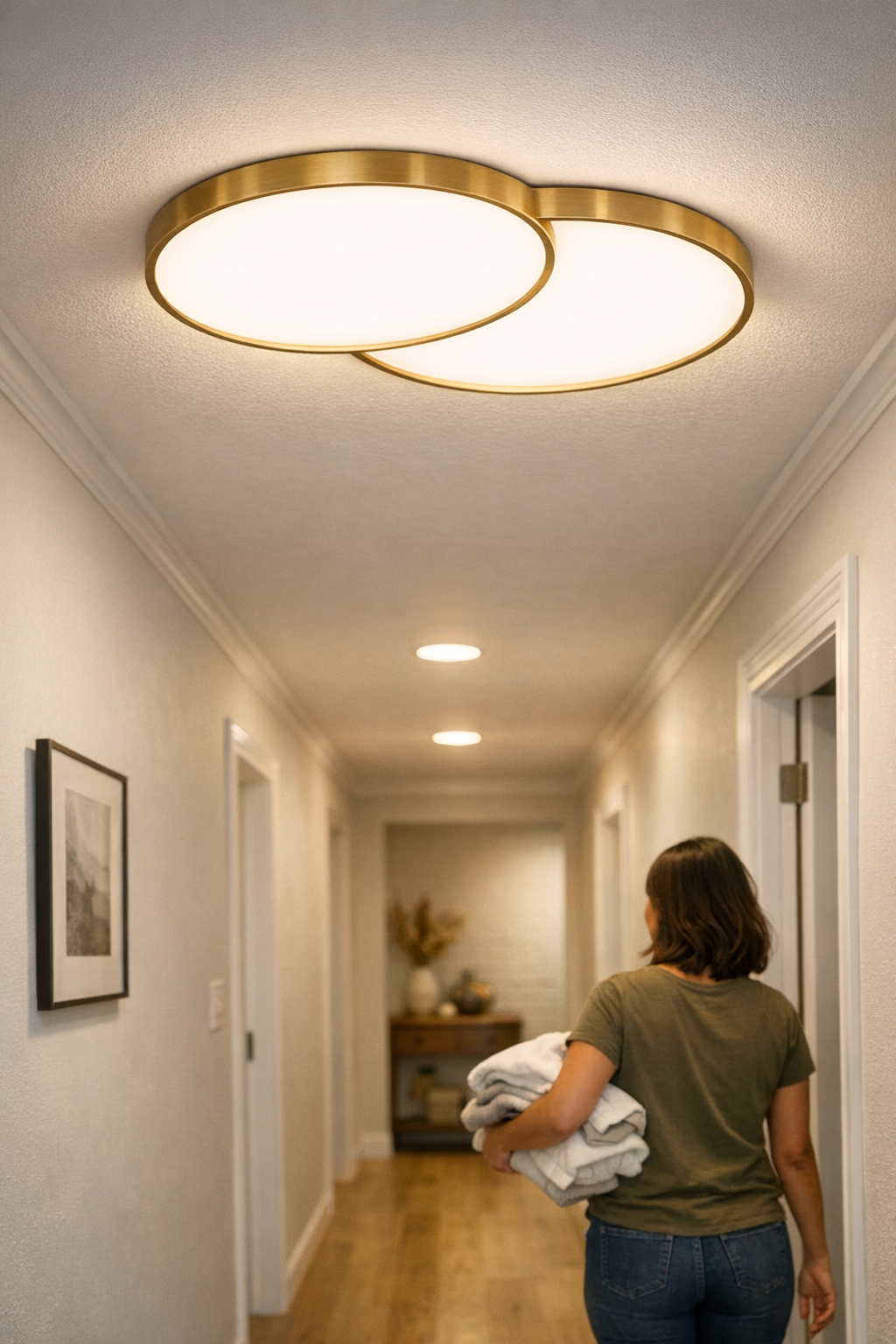
It’s easy to think of lighting as something you notice right away—bright enough, or maybe too harsh. But sometimes, what you really remember isn’t the light itself, but the way you hesitate at the edge of a shadowed corner. In my hallway, that hesitation appeared more often than I admitted. Long after sunset, it was the unevenness underfoot that lingered: the spots where the ceiling fixture fell short, creating islands of light and dark that made the walk feel longer. I’d cross the space with my hands full and find myself slowing down slightly at each transition from light to shadow. It wasn’t about how the place looked, but about how complete—or not—it felt at the end of each day.
The Edges You Keep Stepping Through
You don’t notice the issue immediately. The first week with a single decorative ceiling fixture, everything appeared neat enough. Corners looked tidy, at least from the right angle.
But over time, familiar routes told a different story. One side of the hall, near the threshold, seemed to swallow small objects—dropped mail, an envelope, the edge of a shoe. The farther end of the corridor receded after sunset, brushed with that dimness overhead lighting can never quite reach. I’d pause before turning the corner or opening a door, not consciously, just enough to sense the unevenness creeping in.
It made me realize that the right fixture installed in the wrong arrangement does more to separate a corridor visually—and functionally—than any clutter might.
Not Just Brighter, But Smoother
That was the part I kept coming back to. It wasn’t about flooding the corridor with more light or finding the “perfect” bulb. It was about how the light traveled—or didn’t—along the hallway. Replacing the lone fixture with two slim LED panel lights, arranged with a gentle overlap, created quiet continuity.
There was no sudden “aha” moment, but something shifted. The spaces between each doorway, the patches where wall met floor—those edges stayed visible, even late at night. It was nothing flashy, but I found myself walking without looking down, hands full or not. Spotting misplaced pens or a stray sock against the wall became easier. The routine felt smoother, less fraught with second-guessing steps.
You feel it: the absence of friction beneath a steady band of light. Sometimes the relief comes simply from not having to adjust your pace.
Living With the Correction
The hall isn’t wide or open to daylight. But with overlapping LED panel lights providing coverage that blurs edges instead of breaking them, the walk finally felt predictable. No more losing track of where the wall ended, or tripping over a dropped charger cable hidden in darkness.
The surprise wasn’t in efficiency, or even in the fixture’s appearance. It was in how the space stopped slowing me down—until it didn’t.
The technical fix was simple: slightly overlapped slim panel lights kept the corridor flowing, even and quiet underfoot. No fuss, just moving through a place that felt a little more complete each day.
If you’re interested in subtle lighting improvements like this—balancing ceiling fixtures, reducing glare and shadow patches, stabilizing light coverage along shared walls—I’ve been quietly following along here: http://www.lightsupport.myshopify.com You will receive a blog body draft.



