Living with Light: When Ceiling Fixtures Ease Daily Eye Fatigue
Linear and panel ceiling lights reduce eye strain by providing even illumination and minimizing harsh contrasts when properly sized and installed.
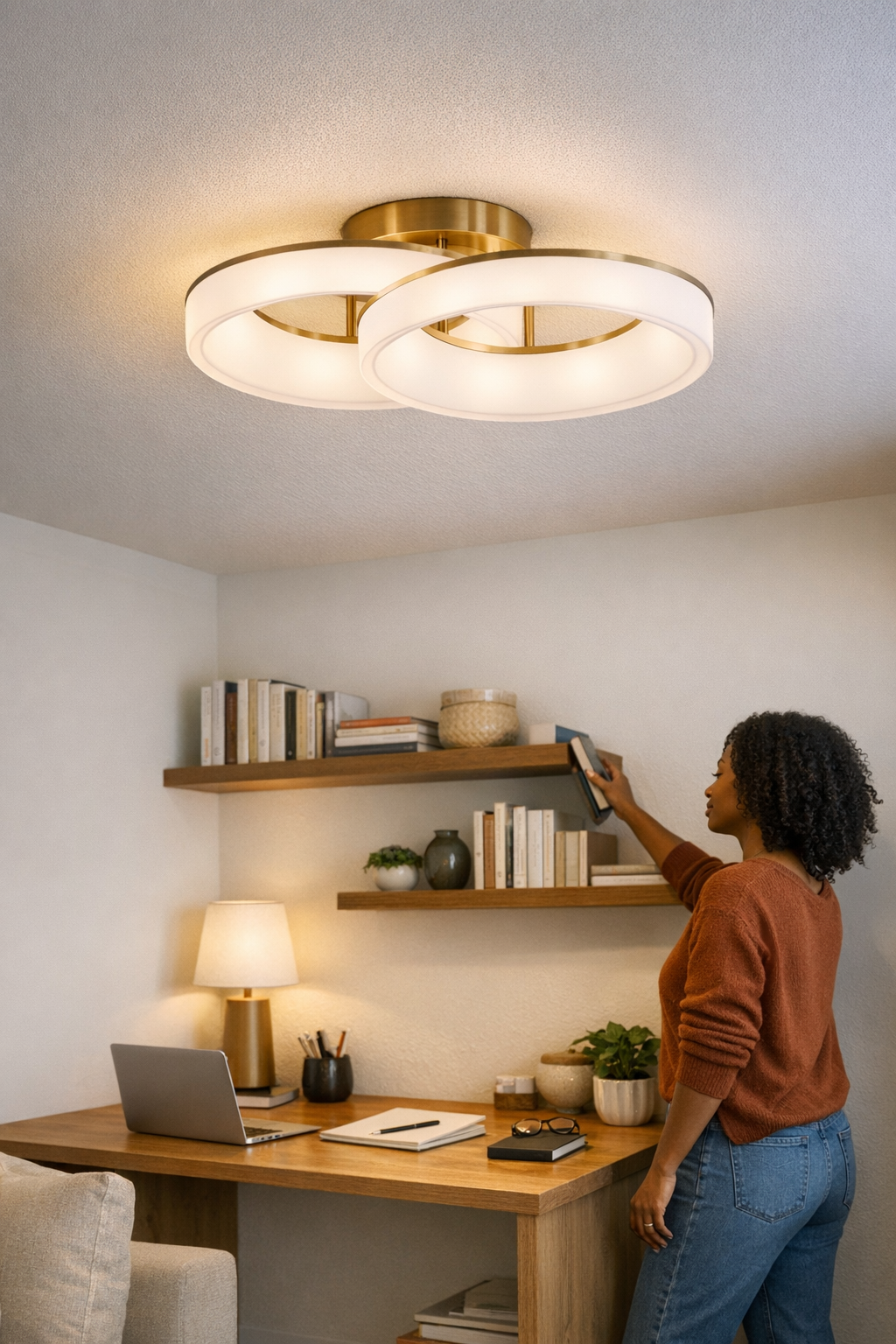
Some rooms just seem determined to test you. I first noticed it in the hour after dinner, sitting down at the same desk every evening. The ceiling light had always looked fine on paper—a slim LED panel, neatly recessed and wired with care, spanning the busiest stretch of the room. It seemed perfectly clean and friendly. But the light it cast on the workspace was another matter. Edges that glowed clearly one night would fade into dull gray the next. A few days in, I realized the visual comfort I’d expected wasn’t really settling at all. What looked “finished” overhead started a different kind of distraction right at eye level.
Light Finds Its Edges
You don’t notice it immediately. At first, the brighter surface feels like a small celebration—papers suddenly readable, keys on the keyboard sharp and clear.
But then you become aware of the rest creeping in: shadows gathering under the shallow shelf, the way the desktop glare seems to sit awkwardly, even a thin cable dipping into the edge of your vision. The more even the panel tries to be, the clearer it becomes where its light trails off. This is especially true in multi-use rooms, where a working desk meets a walkway, or the line between shelf and workspace blurs with every shift in routine.
That was what I kept returning to. Panel and linear LED lights promise clarity, but any small mismatch between their footprint and the actual work surface steals it back by degrees.
Clean Lines, Unseen Mess
Flush-mounted LED panels promise order. Fewer bulbs, less chaos overhead. But in reality, a gap as small as a few inches—between where the brightest patch lands and where your hand moves—can make each task feel less certain.
I caught myself sliding a legal pad forward, then angling the mouse to dodge a cable that had wandered onto the desk. The fixtures that looked so resolved from across the room still left small, nagging shadows and cable loops in all the wrong places. It wasn’t always a lack of brightness, but an unexpected interruption: a mounting bracket casting a sharp line, a power cord shimmering in an uneven pool of light near the wall.
It turns out a room can look modern and streamlined, and still leave you renegotiating comfort repeatedly.
Shifting the Center
Eventually, I moved the panel’s position—just half its length forward—so the furthest edge of the desk caught the beam. Tucking cables neatly along the wall and above the shelf also changed the quiet feel of the space. Not everything was perfect after that, but the persistent gray zone at the edges finally evened out.
Reading or sorting papers was easier, and even the shelf above lost its awkward shadow pocket. These small adjustments added up. After a week, the effect felt steady and almost invisible; the urge to reach for a task lamp or clear away a tangle of cords faded away. Sometimes relief isn’t about the feature itself, but about how the whole setup stops demanding constant attention.
The little problems are the ones you solve by seeing how a space is really used—not just how it looks when first installed. That realization lingers quietly, long after the rest of the room has dimmed for the night.
For anyone quietly tuning their own working spaces, more can be found here: http://www.lightsupport.myshopify.com



