Living with Light: When Shadows Tell a Deeper Story
Real indoor lighting quality reveals itself through daily routines. Overhead fixtures alone allow shadows or glare, slowing tasks. Targeted lighting fixes ensure comfort and safety.
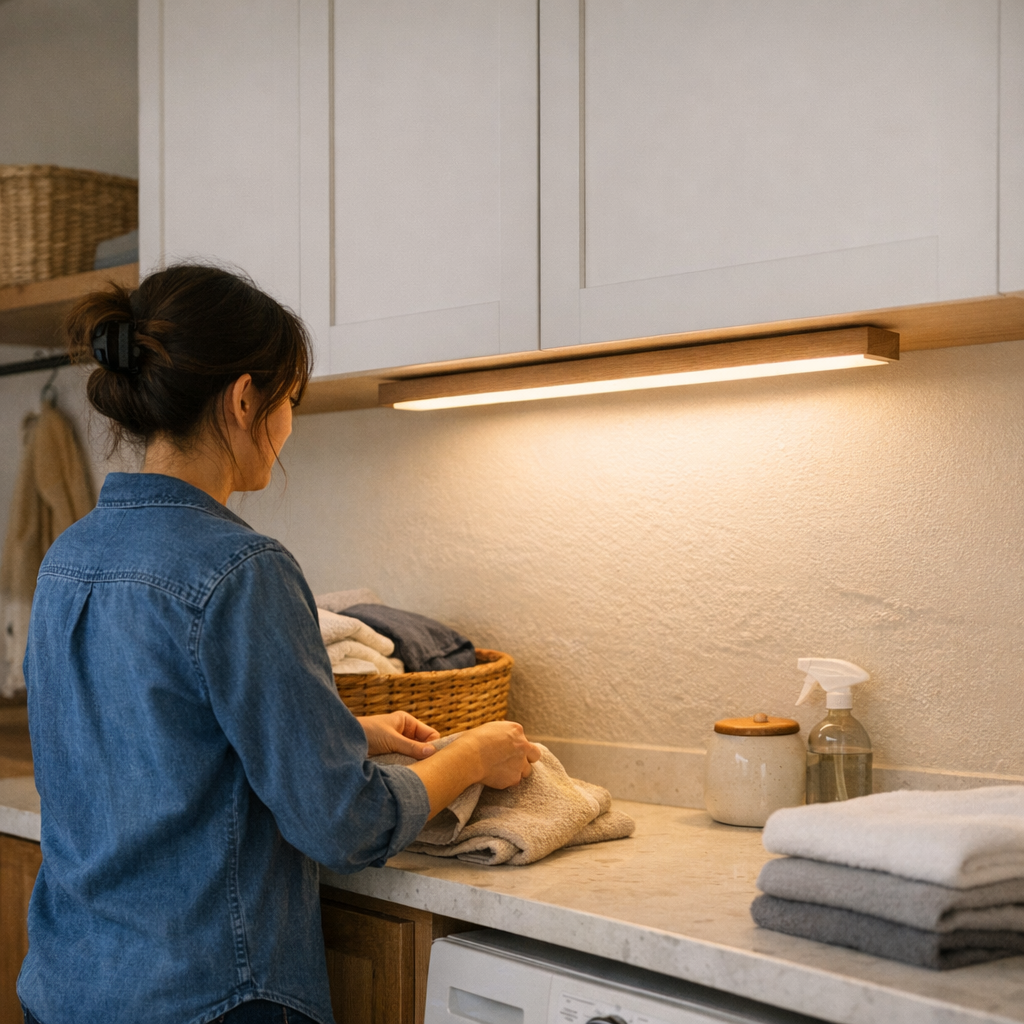
There’s a quiet moment after moving into a freshly-lit space when everything feels clear enough at first. Flush mount ceiling lights, semi-flush fixtures, or linear panel lights spread a sense of completion overhead. Hallways and entries look ready for whatever the day brings. But as the days pass and routines return, something softer emerges beneath that uniform brightness. Shadows gather at the edges of worktops, stray glare catches your eye in the bathroom mirror, and certain turns—especially in the evening or early morning—start to feel uncertain.
You don’t notice it immediately.
But you feel it.
The Edges That Don’t Show Themselves on Day One
General ceiling lights—flush or semi-flush mount disks and panels—can light a room like a box ready for display. At first, everything seems to belong. You walk down the hall, see shapes on the wall, and call a room “done.” It’s only later, when you’re reaching for socks under the laundry counter or taking the stairs at midnight, that you become aware of what the light leaves behind.
The easy brightness flattens out somewhere, while shadows wedge themselves into the spots where you sort, step, or search. A friend once missed the top step at our place—it wasn’t a fall, just a stutter and a laugh—but I found myself watching that corner differently after. The landing looked fine—if anything, a bit too bright overhead—but the riser’s edge faded into nighttime shadow anyway. Moments like these gather quickly: fumbling for lost keys where glare floods the entryway, bending over dim counters while overhead lights throw your hands into shadow, or watching how bathroom mirrors break your face into uneven patches of light and dark.
The Quiet Shift a Simple Fixture Can Make
One day, I added a small moisture-rated wall sconce above the laundry counter. It wasn’t anything special—just positioned so the back edge finally caught enough light. Suddenly, the surface that always felt like guesswork became quietly clear. No need to reach by memory or juggle a lamp nearby; the task moved along naturally, without second thought.
That’s the part that stuck with me. The room didn’t get brighter overall; it just stopped getting in the way.
There’s something steadying about reliable light—shadow where it helps, clarity where it counts, glare kept in check. You start moving differently. Tasks pick up pace. Confidence grows, the kind you don’t notice until small snags vanish.
Why a Room Sometimes Needs More Than “Enough” Light
Routine reveals the real story. After a week or two, gaps show themselves: a stair too dim at one end, a hallway shifting unevenly in brightness, a mirror that never quite renders your face the same way twice. These aren’t glaring errors—they’re subtle frictions. Safety edges into the calculation, and comfort lingers just out of reach.
You realize eventually that the right fixture in the right place carries the whole room. Damp-rated where water and air meet, hardwired wall lights placed where shadows cluster, focused task lighting quietly set to fill work surfaces or laundry corners. It doesn’t need to be more light—just better placed and suited—enough to let your daily routines flow without interruption.
There’s a real difference between lighting that looks finished and lighting that feels quietly right every time you return.
Sometimes I browse lighting setups for ideas or small adjustments: http://www.lighthelper.myshopify.com You will receive a blog body draft.



