Living with Lighting That Moves When You Do
Strong cable management breaks the rule that fixtures must follow outlets, protecting work edges, cutting clutter, and keeping lighting flexible.
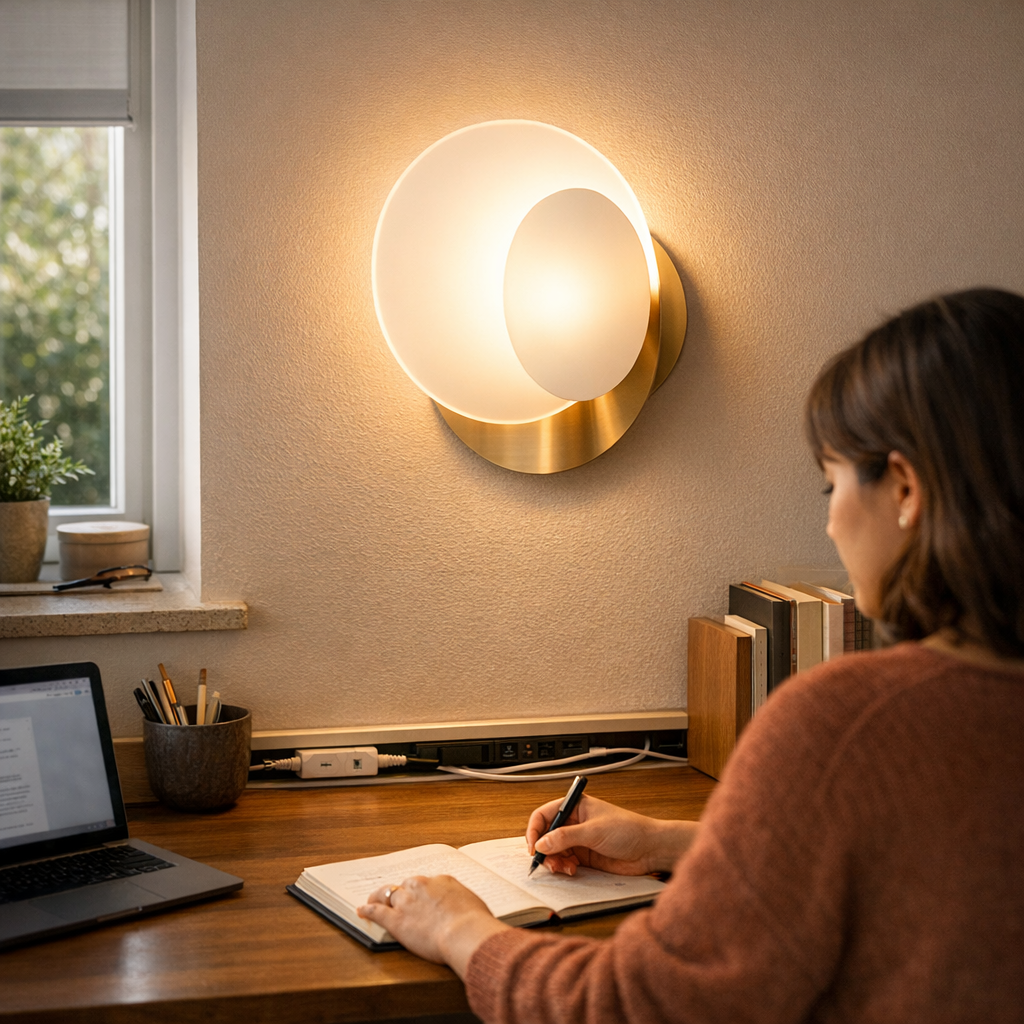
There’s a quiet kind of friction that builds up around cables in lighting setups. At first, a new lamp sits neatly in its corner, cords tucked behind the desk as best you can. But over time, as you move chairs or shift work surfaces, the whole arrangement starts to show where the light is truly serving the room—and where it’s just chasing the nearest outlet.
Most days, I’d find myself reaching for the same dim end of the table, wishing the light could extend further without a cable snaking awkwardly along the floor. The space was tidy enough, but it never quite felt finished—only arranged around the limits of plug locations. It’s the moment you pull a lamp closer for a late project and realize the cable is tight and pulling at the edge. That’s the part that kept bothering me.
Where Cables Guide the Light Instead of the Other Way Around
It’s easy to live with subtle inconvenience for a long time before it demands attention.
Lighting arranged to fit the reach of an outlet quickly forms patterns—desk lamps clustered at one end, wall lights spaced for plug access rather than coverage, under-cabinet strips barely hitting their targets. In photos, the setup looks organized. In daily use, half-lit corners appear and cords become unavoidable obstacles, especially in shared spaces or rooms where furniture moves frequently.
The real difference emerges not at installation, but after a few routines. One adjustment can expose twisted cords, turn cleaning into an obstacle course, and leave the side of a table that usually holds pencils or plates oddly dim. Often you don’t notice until the clutter beneath the surfaces is more distracting than the objects on top.
Small Shifts That Change the Feel of the Whole Room
Allowing light to follow need instead of outlet reach can ripple through the room.
I carved a narrow cable channel behind a window ledge on a shared desk—nothing elaborate, just enough to hide cords completely and keep the surface edge clear. The difference? Lamps now settled where they made sense, not just where the cables could reach. After chairs swapped sides or devices changed, cords stayed tucked away. There was a real relief in that. You feel it when stepping back and seeing no cables to sidestep, no lamps to nudge a fifth time for better coverage.
Good cable support doesn’t call attention to itself. It lets the structure fade so the light can meet the task clearly. It makes rearranging less cumbersome and the room’s routine feel less dictated by hardware constraints.
Honest Light for Real Use
A well-managed cable can’t add outlets, but it restores flexibility.
By keeping power strips out of view and running cables behind seams or cabinet lips, key corners stay open and dust collects elsewhere. When the lighting finally fits how the table is used—not just where the wall sockets are—the room settles into a quieter, more functional rhythm.
Most lighting looks fine on day one, but the feeling after a week of use tells the real story.
There might be a little more on this, quietly collected here: http://www.lightsupport.myshopify.com



