Living with Mirror Glare in Quiet Morning Routines
Bathroom-rated lighting reduces mirror glare and reflection, improving daily tasks by minimizing visual disturbance and mounting clutter over time.
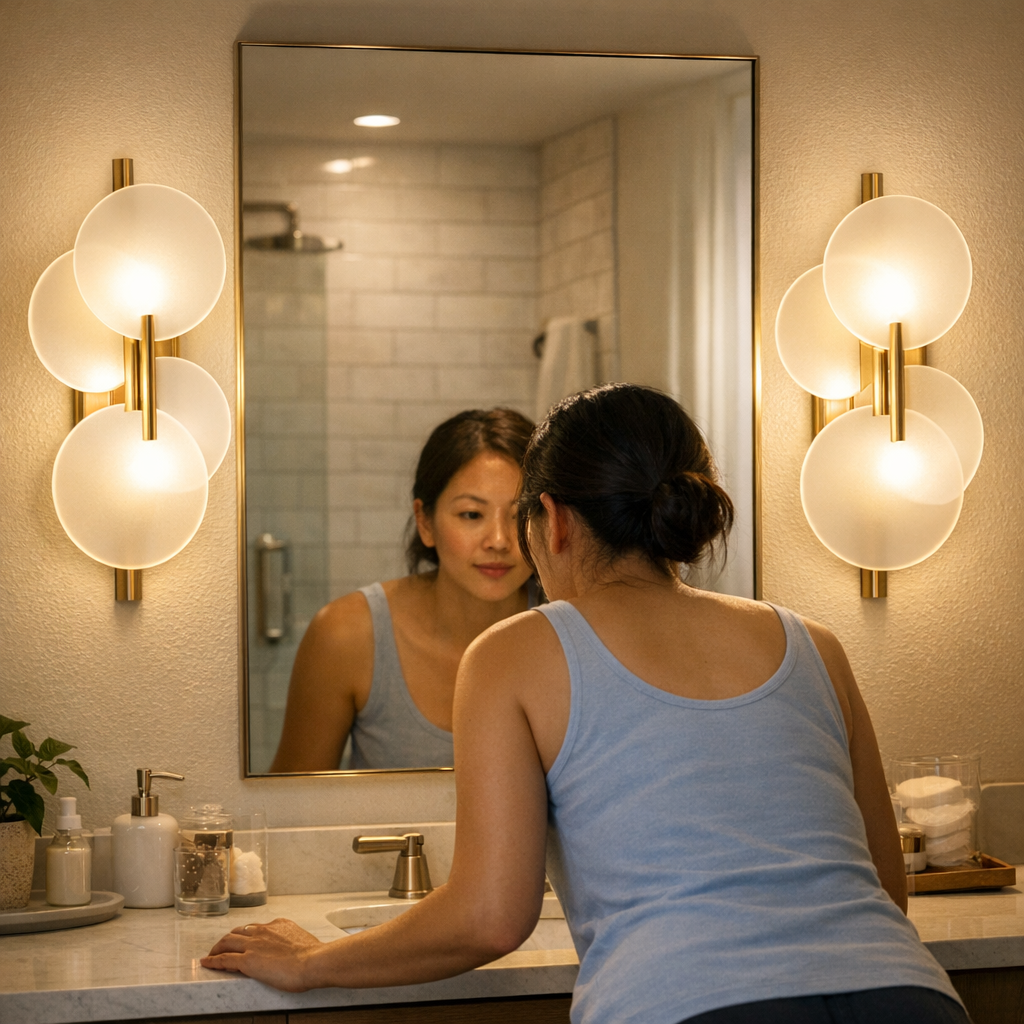
You only notice after a few days—a certain glare along the bathroom sink that wasn’t there before. At first, the new light makes the space look crisp and even generous. But as you rinse your face or help a child at the faucet, stray reflections catch your eye, making it harder to see clearly. Even shaving or spotting a small bottle feels slightly off. It’s subtle, but over the day, the mirror becomes a minor obstacle. The awkwardness accumulates.
When Glare Becomes Routine
Glare and reflection don’t hit immediately.
They creep in with everyday routines—leaning over the sink, reaching for soap, checking the corner of your mouth. It’s that extra flash of light in the glass, just strong enough to pull your gaze away. Over time, it builds into an invisible kind of visual fatigue.
I noticed this effect most when two people needed the sink at once. Light bounced unpredictably, fracturing across the glass. It didn’t help that the fixture was bright or that cables were tidy. Something still felt off every morning.
Lighting That Looks Right—Until It Doesn’t
Most setups rely on a single light bar above the mirror or an LED strip. This seems practical and minimal. But direct glare from above—or an awkward angle—quickly magnifies the problem. Double images, distracting shadow stripes, and washed-out details show up exactly where focus is needed most.
In rushed mornings, these issues become clear: dull corners, cable shadows creeping in, or smudges you missed cleaning. I found myself leaning sideways just to get a better look or turning the light off more often than I expected.
That feeling—that the lighting wasn't really supporting basic tasks—kept drawing me back.
Changing the View
After weeks of these small frustrations, I replaced the overhead bar with two wall lights positioned slightly wider than the mirror. It was a simple change, less dramatic than it sounds. Immediately, the countertop felt calmer: no more harsh lines on the glass, fewer distracting stripes on the sink, and no need to avoid my own reflection.
The cables stayed well managed and out of sight. The light softened but sharpness improved. For the first time in months, daily routines felt smooth again.
It’s surprising how much difference the placement and direction of lighting makes. The best light often hides in the background—quietly supporting tasks without pulling focus. The real test is not how a room first looks, but how it performs after repeated use, how ordinary light quietly eases the strain of daily routines.
Sometimes, simply adjusting angles and mounting choices is all it takes to make living with a space feel easier and more natural.