Living with Outdoor Storage That Finally Works
Real outdoor storage upgrades depend less on adding volume and more on precise placement, smooth access, and open paths to prevent clutter.
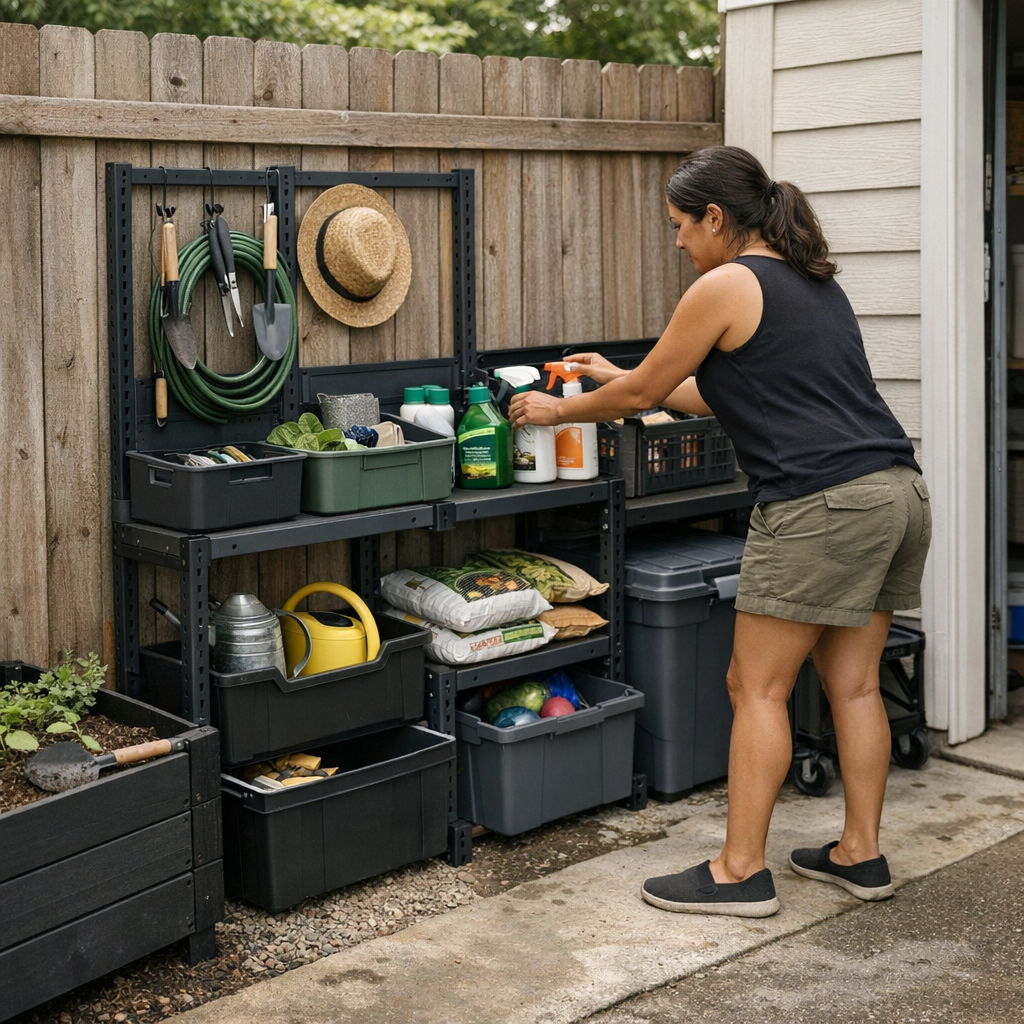
There’s a brief, reassuring silence in a newly organized backyard storage area. For a moment, all the garden gloves, soccer balls, and tools are tucked just where they belong. But it doesn’t take long to notice a quiet tug of inconvenience—like having to move two bins just to find the hose, or reaching awkwardly past a lid for the shovel. That sense of order is thinner than it seems. Real change rarely comes from simply adding another storage box or expanding capacity.
The Unseen Slowdown
You don’t notice it immediately, but you feel it over time.
At first, it’s small things: an outdoor path narrowing, a frequently used tool pushed behind a stack of containers. With each trip outside, the feeling of tidiness starts to blur. Overflow—the stuff that just doesn’t fit—is rarely the initial problem. Instead, there’s a creeping friction. It isn’t about where things live, but how hard they are to reach, return, and use again on the next outing.
That was the part I kept coming back to when working on my setup.
Small Shifts, Noticeable Differences
We tend to admire perfect rows of storage chests lined along fences, or wall panels covering every usable inch. From a distance, everything looks accounted for and contained. But up close, you find yourself straining to pull out a bin hidden behind another, or making detours for garden gloves wedged under pool floats. With repeated use, a subtle fatigue builds from these little workarounds.
One change made a bigger difference than expected: splitting a single storage wall by activity type, leaving waist-level space clear, and moving the entire system just a few feet forward. Suddenly, nothing was hiding behind or under anything else. The floor space stayed open, and the usual detritus—clippers, gloves, stray water toys—barely had a chance to pile up. Organizing didn’t feel like extra effort, but a natural result of how easily things could be put away.
You end up noticing the absence of clutter even more than its presence.
The Space You Return To
It’s tempting to think more storage capacity equals a better setup. But after several seasons shifting bins and units around, I realized the ones I kept returning to were those that worked with repetition, not against it. When putting things away takes too many awkward steps, clutter finds its own shortcut—to the nearest flat surface.
That’s the quiet, persistent truth about outdoor storage: the smoothness of return matters more than the amount you can shove inside. Keeping even modest gaps—or dividing zones so each has a clear purpose—removes enough friction to make tidiness almost automatic. There’s less pressure to reset the space, and fewer moments spent hunting for lost bits and pieces.
The best outdoor storage setups often ask for less—from you, and from the space itself.
These lessons came slowly while I was tinkering with my backyard setup over time, learning how repeated outdoor use changes what works. If you’re curious, I kept a quiet record here: tidyyard.myshopify.com