Living with Shadows: How Lighting Shapes Our Daily Spaces
Ceiling lights alone often leave work zones shadowed; purpose-shaped, damp-rated fixtures ensure clear, reliable lighting for safer daily tasks.
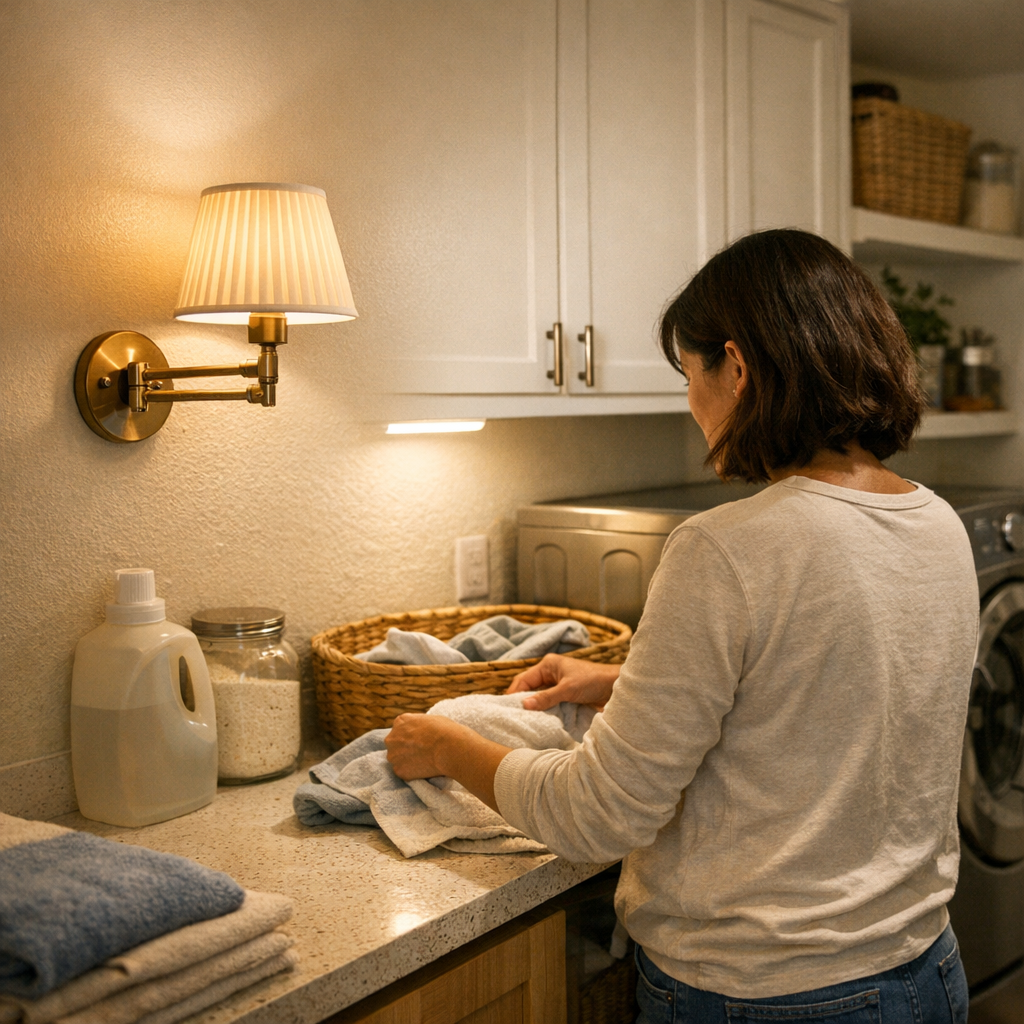
There’s a quiet frustration that comes with using the same room, day after day, under the same lighting—something you really only notice when you miss a step in the hallway, squint at a speckled work surface, or juggle laundry with a bottle in hand, wishing the shadow near the cabinet would lift. The light was there, technically, but it never landed where it needed to.
This isn’t about style or brightness for its own sake. It’s about how light helps you move clearly and safely through the places you keep returning to.
Shadows You Don’t Notice—Until You Do
Walking into the laundry area, I always understood where the glare hit the counter and where dusk gathered in odd corners near the floor. You don’t notice it immediately.
But you feel it. The hesitation in your footing, the moment spent searching for a bottle’s label or a sock at the edge of the dryer.
Ceiling fixtures, like flush mount or semi-flush mount lights, promise general brightness—but that rarely lines up with where you need the light most. Corners go unlit, shadows build under cabinets and stair treads. Sometimes the room looks “bright enough,” yet small details vanish all the same.
A Small Adjustment That Changed Everything
I used to think adding more light meant just getting a stronger ceiling fixture. But it changed when I tried something different—installing a damp-rated wall light fixed just above counter height, right where laundry and handheld tasks happen.
Suddenly, nothing was left in the dark. Left edges where socks would get lost became clean and visible. No workarounds, no balancing on stools, and none of the restless feeling of making do with temporary fixes. That was the part I kept coming back to.
A wall or task light, placed at the level of actual movement, lets every task happen in clear view. It wasn’t about chasing lumens anymore. It was about seeing exactly what was in front of me, every time.
It’s Not the Room—It’s the Routine
I still think about how a light can look impressive from the hallway and still leave you turning bottles sideways just to see a measuring line. The humidity around the washer means the choice of damp-rated fixtures is essential.
The practical fix is placing the right fixture where the activity actually happens—not just where the ceiling happens to be. It isn’t dramatic, just an end to wasted motion and awkward workarounds.
Light that fits routine doesn’t draw attention to itself; it stays quietly reliable. Every movement becomes simpler—less of a guess, more of a flow. It feels different—like finally having all the edges in focus and nothing undiscovered in the shadows.
Some of these moments stayed with me, and if you’re interested in where I landed, you’ll find more at LightHelper.



