Living with Shadows: The Hidden Struggle of Shelf Lighting
Shelf and under-cabinet lighting delivers true convenience only when edges are bright, support is sturdy, and cable management is complete.
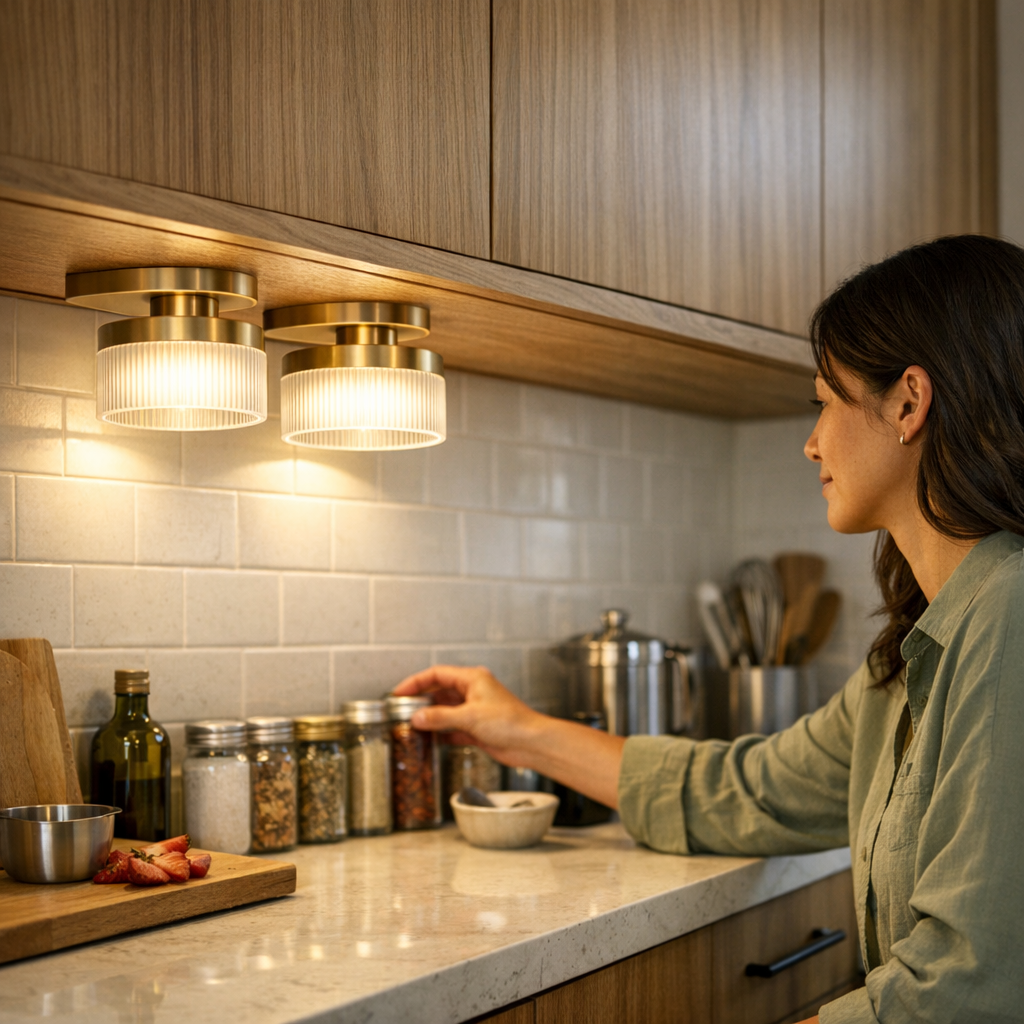
The longer I lived with the same half-lit counter, the more I found myself inching into the bright middle and pretending not to notice what slipped out of view. It was a small thing, but over time the routine snuck up on me—a quiet tension where light fell short and tasks started to stall. Dust liked those corners just as much as I did.
Under-cabinet and shelf lighting isn’t something you think much about until you keep reaching for what you can’t clearly see. At first, I blamed clutter or habits. But the real culprit was always the same: the edges that stayed in shadow.
The Illusion of Enough Light
You don’t notice it immediately. A slim LED strip tucked near the back wall, wires hidden, the counter looking crisp on day one. But then you realize you’re always nudging jars inward or leaning close to read a label. Lighting that seems complete at a glance can still leave a surprising amount unfinished at the edges.
I noticed it most clearly by the end of each week—crumbs scattered near the edge and a small kitchen tool lingering where the light faded. Routine gestures like wiping the counter or scanning for that one packet felt less certain, as if each missed detail pushed me back into the middle, away from the shadow creeping in at the edges.
The Small Drift of Annoyance
But you feel it.
A cable, once neatly tucked away, slips loose and catches your eye. Or you bend down to check the very edge, squinting because the front strip isn’t quite as bright as you thought. These aren’t major problems, but they build up—small inconveniences repeated often enough to disrupt your rhythm.
The neatest LED installation can go quickly: dim corners, glare from a poorly placed mounting bracket, a loose cable peeking out of place. I found myself compensating—changing posture, moving items around, even cleaning differently—just to stay fully in the light I assumed was already there.
A Shift That Changed the Edges
That was the part I kept coming back to.
It turns out the feeling of a space isn’t set by how wide a fixture is, but by whether the corners feel just as usable as the center. I switched from one long center strip to two smaller lights positioned near the ends, and added discreet cable clips where cables needed support—not exactly hidden, just steady and out of the way. The difference surprised me: suddenly every label was clear without leaning forward, and crumbs only stayed if I let them.
The change wasn’t loud or flashy. It felt more like relief—an adjustment that faded into the background over time.
It’s a quiet kind of progress: having lighting that reliably reaches the edges and support pieces that hold their place, even as daily use wears a groove into the surface.
Sometimes only after living with these small details does the logic of good support—the right bracket, the right cable clip, correct placement—really settle in. If that thought keeps going, you’ll find more gentle details over here: http://www.lightsupport.myshopify.com