Living With Shadows: The Quiet Challenge of Corridor Lighting
Corridor lighting gaps and poor support cause daily issues; tuning fixture position and mounting keeps corridors safe and distraction-free.
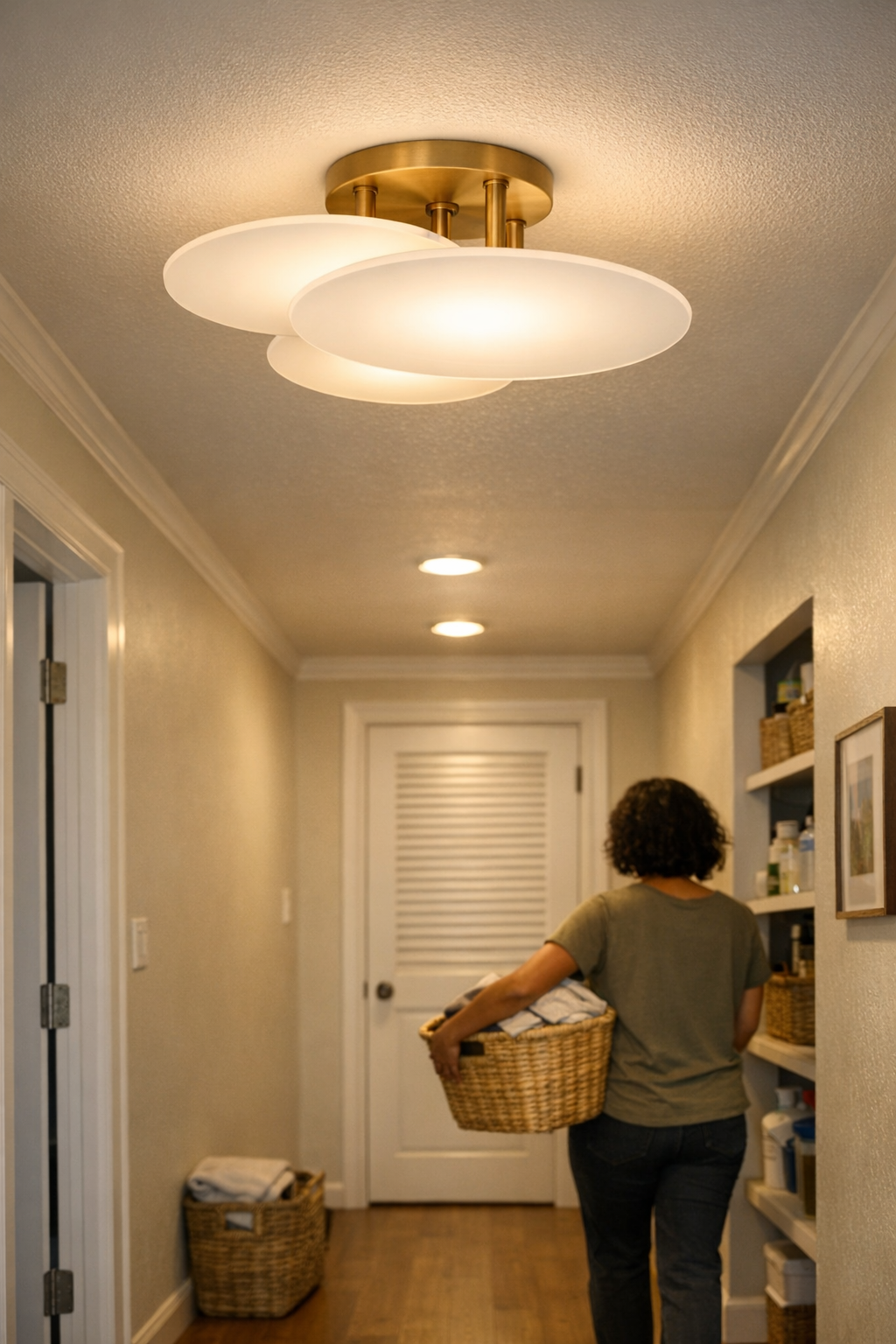
For a long time, I thought our corridor lighting was fine. The installs were tidy enough—clean ceiling panels, matching brackets, no loose wires visible unless you bent down at an odd angle near the baseboard. Everything felt “resolved”—until it didn’t. I’d walk through on a quiet evening, carrying a bag or just moving between rooms, and find myself hesitating at the same dim patch by the supply closet. It wasn’t dramatic, but it became familiar—a subtle friction woven into daily routines. The real character of lighting, especially in transitional indoor spaces, only reveals itself slowly, day after day.
The Difference Movement Makes
It’s funny how standing still in a space might feel fine, but as soon as you’re in motion, the story changes.
After a string of late nights—rushing laundry down the hall or guiding a guest toward the kitchen without thinking—I noticed the breaks in lighting didn’t call attention to themselves at first. But over time, I found myself steering clear of the darker seam, naturally walking closer to the wall where the light actually reached. You don’t notice it immediately.
But you feel it.
Most issues weren’t about appearance. They were about how an underlit zone or a poorly supported cable quieted dictated movement, asking you to slow down, squint, or avoid a spot altogether. It was less about style and more about how lighting practically supports real routines.
Where the Gaps Hide
Even a corridor that looks deliberately organized—each fixture the same, spaced evenly—can lose its rhythm in the details.
The real friction settles in at transitions: a bracket that doesn’t hold a cable flush at a corner, a door frame interrupting the merged glow of ceiling panels, or subtle misalignments that only surface in passing. These aren’t construction flaws but small practical gaps that show up when you’re half-awake, hands full, or two people move together.
One underlit patch at a junction gathered stray shoes and missed mail. A shelf edge near a closet slipped into shadow, out of mind but still in the path. A run of well-matched fixtures created the illusion of completeness—until everyday life tested the setup.
A Subtle Shift in the Everyday
Eventually, the choice to adjust came not from frustration but from noticing a small drag on routine tasks.
I replaced the single light bar near the door with two slightly overlapping slim LED panels, nudged a mounting point closer to the usual walking path, and used a proper bracket to tuck the cable flat to the ceiling. The corridor didn’t look radically different. But now the light moved with you instead of breaking awkwardly in the middle. It felt connected and almost invisible in the best way.
It’s the quiet relief of not pausing or thinking about glare, shadow edges, or exposed cables every time you cross from one room to another. Those adjustments—closing the lighting gap, aligning a fixture where it actually supports movement, and securing cable management—are simpler than a full install overhaul. But they stick. They change how you experience a space you use every day.
The corridor was never about style; it’s just one more place where good lighting quietly supports what you’re already doing.
Sometimes I look back and realize that making a space truly work takes more than what first meets the eye.
If you’re curious, LightSupport has a calm corner of practical ideas that helped me along: http://www.lightsupport.myshopify.com