Living with Shadows: The Quiet Impact of Poor Fixture Fit
Dry-fitting the canopy before wiring is key to avoiding misalignments that cause shadows, uneven light, and cleaning hassles in daily use.
Where the Shadows Fall: The Quiet Ways Indoor Lighting Gets in Our Way
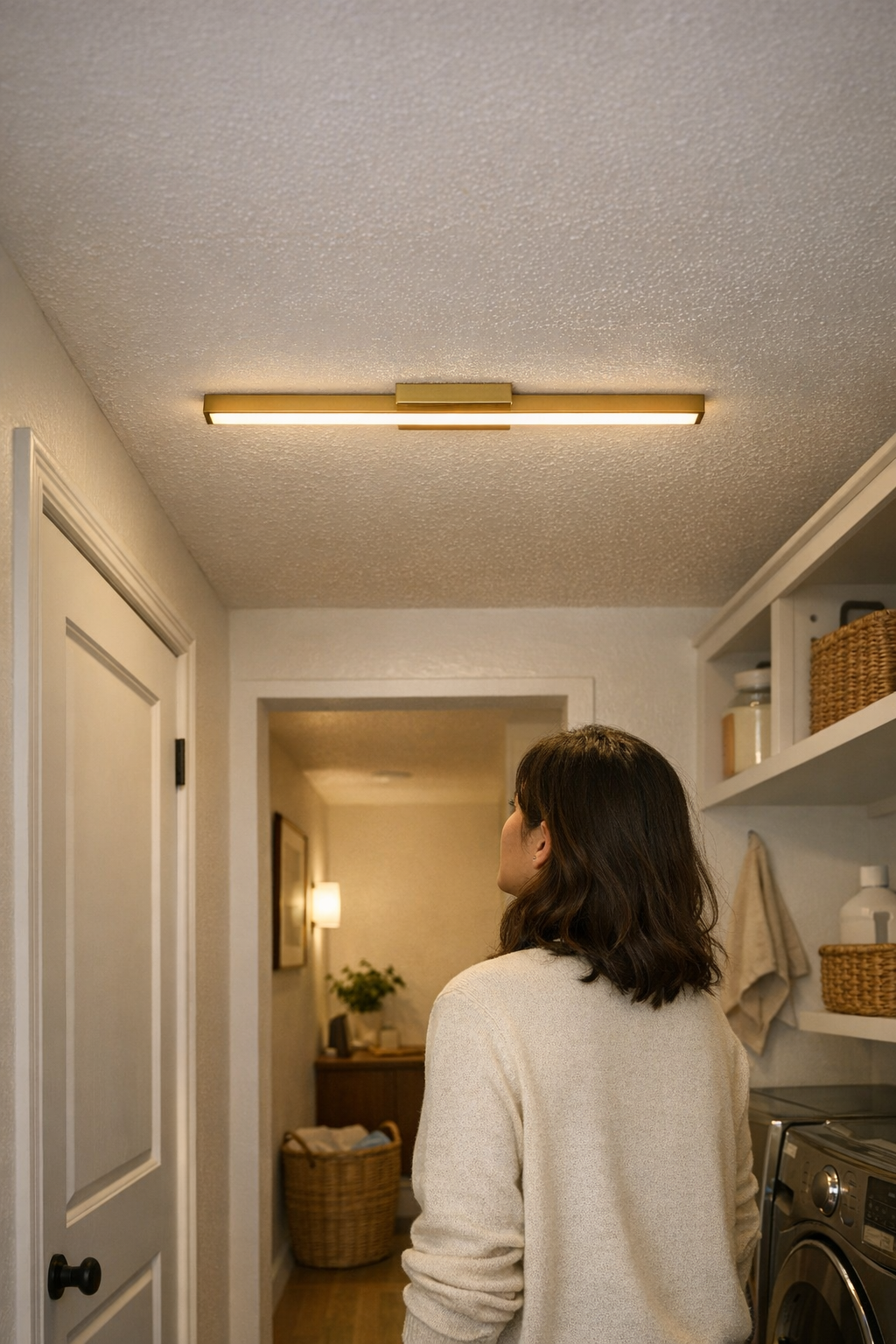
There’s always one spot in the hallway where the light feels just a little off. Not broken, not dark, but somehow incomplete—like something leaning or reaching awkwardly over a corner. I used to dismiss it as a quirk of older houses or the limits of a particular fixture, but after living with it day in and day out, that unevenness began to bother me. It slipped into daily routines, a subtle shadow that didn’t demand attention yet made itself known with every hesitant step or fumbled reach.
Indoor lighting is easy to overlook—until it’s not.
The Difference That Hangs in the Air
Light pools in corners, stretches over thresholds, and clings beneath cabinets or behind laundry machines. Sometimes a room looks bright overall, but the light doesn’t fall exactly where you need it. Most days, I told myself the fixtures were just “like that”—a minor inconvenience. But after running my hand along the ceiling above the stair landing and feeling its slope, the small mystery behind the shadow became clear. A fixture that seemed perfect from below was actually pressed slightly off by uneven plaster. Each time I passed that top stair tread, the light never quite reached it.
You don’t notice these things right away.
It turns out the real difference doesn’t begin with bulbs or wattage, but with how a fixture fits the surface it’s mounted on. Not the style—just the contact. I used to think that as long as a flush mount, semi-flush mount, or panel light was secure against the ceiling and junction box, the rest would take care of itself.
But the truth emerges slowly, over weeks. If a canopy sits even a fraction off—just a millimeter away from flush, meeting the ceiling at an odd angle—the room picks up subtle flaws. Hallways reveal a ripple of shadows along one wall. Glare bounces awkwardly off laundry appliances. Bathroom mirrors slice your reflection with a sharp, uneven divide. And in places where movement is automatic—stairways, corridors—those small shadows stop being cosmetic. They start causing missed steps or moments of hesitation.
That was what I kept coming back to.
When Small Decisions Become Routine Obstacles
A well-chosen fixture promises relief from dimness and harsh glare, but so much depends on how it meets the surface it calls home. A simple dry-fit check before wiring would have flagged sloping ceilings or uneven junction boxes before these became everyday annoyances.
Once, after carefully realigning a flush-mount fixture over the entryway, I noticed the whole corridor seemed brighter and clearer. Not because the fixture was new or the bulb stronger, but because shadows no longer sliced the doorway in half. The difference was abrupt and quietly satisfying—something practical, with no fuss, that made crossing the threshold feel right again, each time.
Especially at night, when the rest of the house is quiet, the clarity of well-fitted lighting stands on its own.
A Subtle Relief That Stays With You
Every ceiling and wall—especially those patched and painted repeatedly over time—challenges how light spreads. Imperfections stay hidden until routine use reveals them: angles that are just slightly off, shadows sharper than expected, or glare where none should be.
It’s rarely a topic people raise until they’ve experienced enough half-lit steps or distracting shadows. But once you live with these effects, it’s the fit of the fixture—not the fixture itself—that stays with you.
After moving that misaligned fixture, I sometimes glance back at the once-shadowed stair tread, half-expecting the shadow to return. Instead, the light holds steady. A simple, flush fit makes daily tasks clearer and nighttime navigation steadier.
There are quiet lessons in indoor lighting I hadn’t expected; many become apparent only after walking the same hallway several times.
If you’re interested in these details, there’s more to see here.