Living with Shadows: The Quiet Struggle of Patchwork Lighting
Linear and panel ceiling lights eliminate shadows, cable clutter, and daily workarounds, providing steady, reliable coverage and comfort.
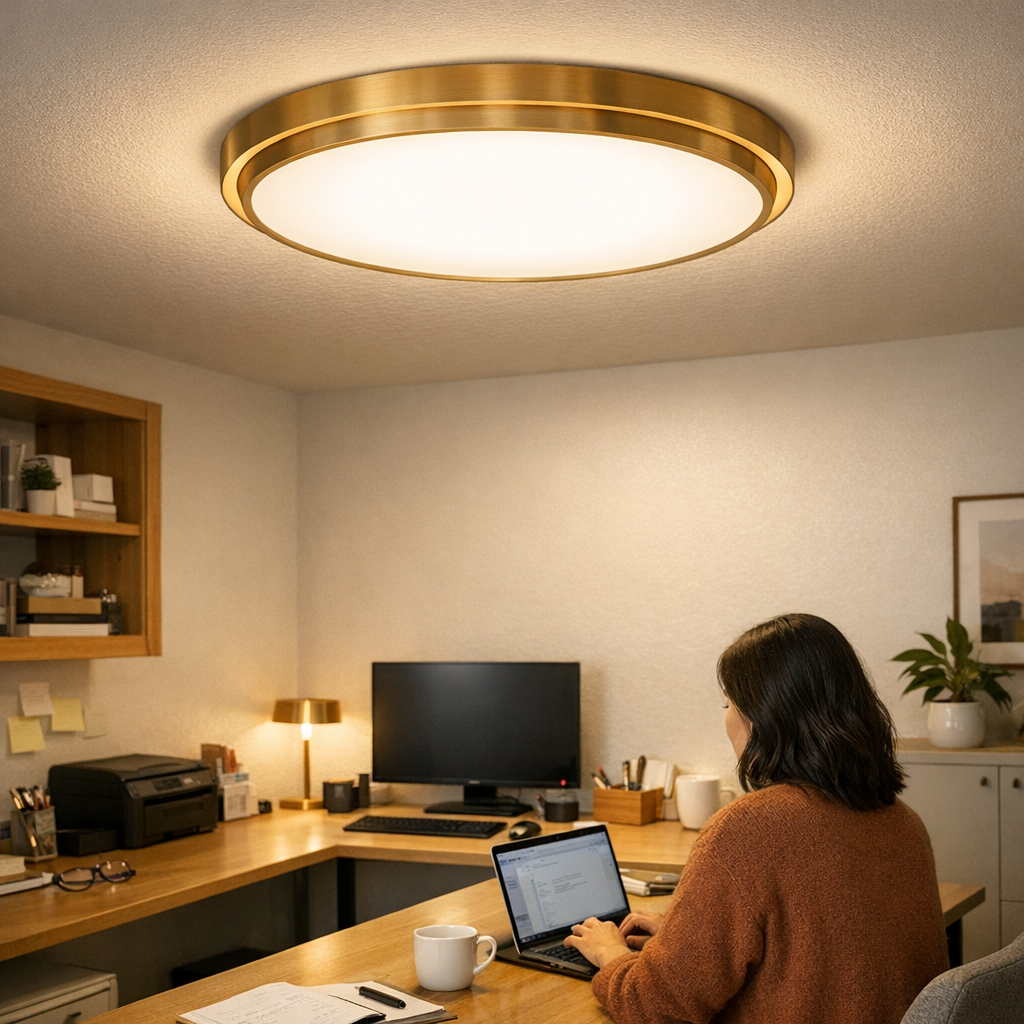
There’s a particular fatigue that settles in after hours spent weaving around dull edges of light. I didn’t quite notice it at first—just a little squinting by the desk, a lazy reach under a shelf where my hand disappeared, cables winding into odd patterns as I tried to coax a lamp into a better angle. Spaces can look organized with their collection of lamps and fixtures—table lamps, wall sconces, low-profile ceiling lights all neat and accounted for—but that sense of “solved” is fleeting the moment regular life begins. For a long time, I didn’t consider how much lighting actually shaped the feel of every routine.
Stepping Through Shadows
Patchwork lighting does its best to pretend everything’s fine. A pair of table lamps. A slim wall sconce. Maybe a ceiling-slung panel or strip light, doing what it can. But as evenings stretch longer or a workspace fills with quiet tasks, subtle blind spots start to appear.
You don’t notice this immediately.
It takes repetition—the thud of a chair leg catching a cable loop, the quiet frustration of chasing brightness with a portable lamp, the memory of where the screen glares while the keyboard slips into shadow. What once felt like a finished lighting setup turns into a puzzle with ragged edges where the light just doesn’t land right.
That was the part I kept coming back to. The lighting looked tidy and “finished,” but it didn’t settle into the way the room was actually lived in—especially across compact desks, shallow shelf runs, and mixed-use work surfaces.
Less Rearranging, More Belonging
It’s a quiet kind of freedom when every spot on a desk or table just feels usable. A soft LED panel overhead, or a ceiling-mounted linear light, unrolls an even field of light that doesn’t play favorites—leaving corners open and cables undisturbed. Adjustable task lights and under-shelf fixtures also help reduce awkward shadows and ill-placed brackets.
Something shifted for me when I saw how one well-placed fixture could erase old workarounds: no more scattering desk lamps, no more extension cords snaking under chairs or behind shelving to ignite another dim zone. Even plugging in devices loses friction—the cord lands where expected, never pushed around for reach or extra glow.
You’re left with a sense that nothing is missing or in the way. It’s less about raw brightness, more about the absence of constant adjustment—less time moving fixtures or managing cables, more time actually present and focused in the space.
The Difference in Routine
What stays with me most is the shift in daily rhythm. Lighting that covers the whole span of a workspace or worktop lets you move, settle, and adjust objects without a second thought.
Glare along one edge and shadow on the other become rare. There’s an unexpected calm whenever you stop relocating tiny lamps or threading cables between light and dark zones. The improvement wasn’t flashy; it was quiet and lasting.
It’s as if the lighting finally started listening—not just to how the room looked on the first tidy day, but to how it was actually used. Stability in fixtures and bracket placement, clarity across task surfaces, and discreet cable management transformed the space from a set-up into a workspace.
If you’re curious how real lighting support can change the feel of a room, I found a small bit more to think about here: http://www.lightsupport.myshopify.com