Living with Shadows: When Bright Lights Don’t Feel Bright Enough
Lighting that seems simple fails if shadows or glare block movement; matching fixtures to real routines boosts daily safety and usability.
You expect a room to work the moment you flick the switch. Most spaces look bright enough on day one, with crisp edges and reflections giving a clear first impression of usefulness. But the reality of lighting—real, lived-in, functional lighting—emerges only after you start living with it. When your arms are full or your feet find the same stair every night, it’s no longer about how the room looks but what you miss in the corners, the shadow trapped beneath a cabinet, or the glare lingering on the bathroom mirror.
You don’t notice these things right away. But over time, you feel them.
The Shape of a Room After Dark
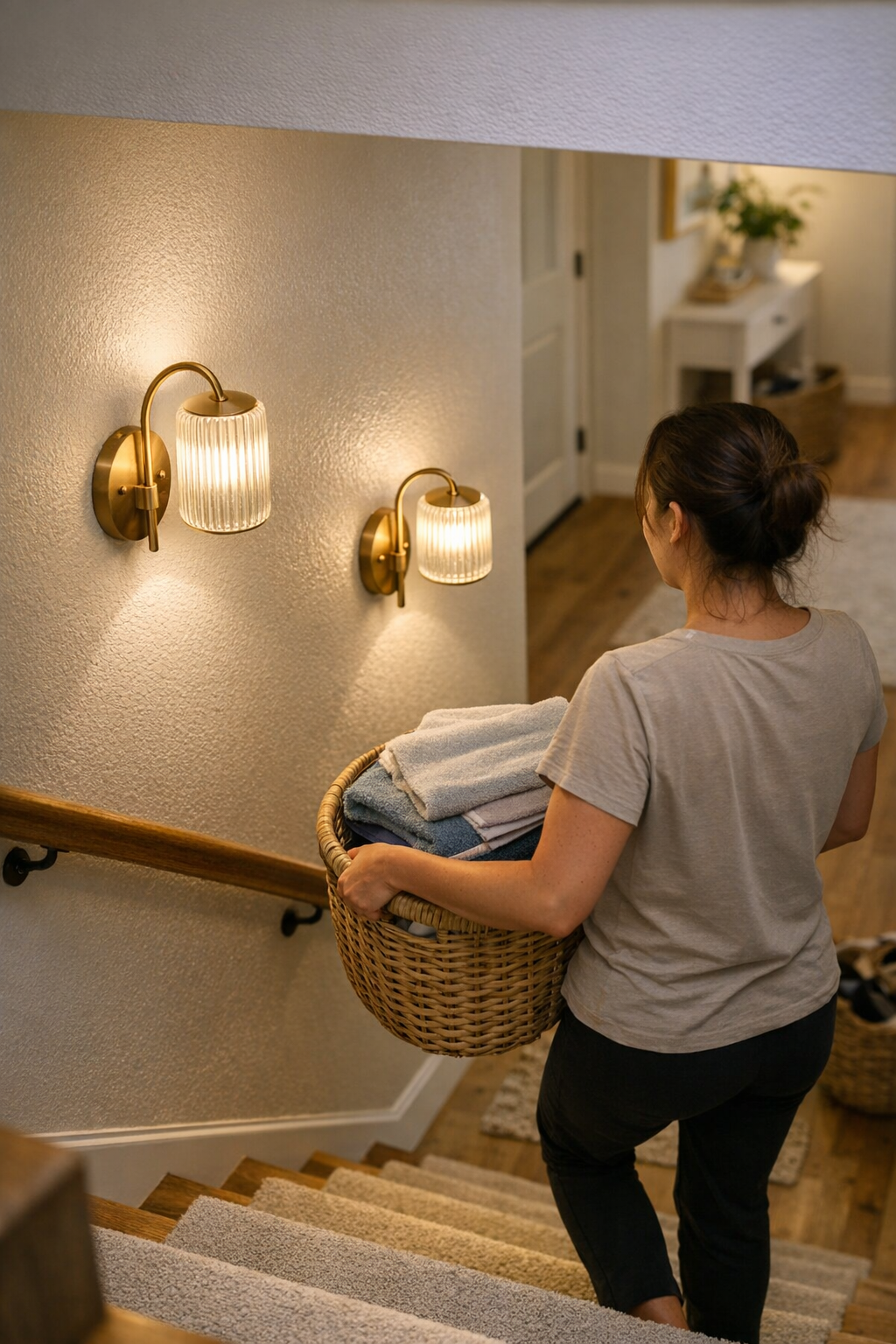
There’s something specific about how light behaves in narrow spaces. Hallways, tight corridors, laundry zones with half-closed doors, and rooms you pass through often enough to learn where darkness settles. I found myself slowing down by the stair landing—just for a moment, almost without thinking—waiting for my eyes to adjust. Carrying the laundry basket, my own shadow would fall directly onto the turn in the stairs. That pause became part of the routine.
It wasn’t about overall brightness. The single flush-mount ceiling fixture overhead seemed strong enough at first glance, yet every evening certain steps felt uncertain. It became clear that in these high-use transitional spaces, “enough light” doesn’t always mean the right kind of light. Sometimes it’s more about where the light is positioned than how much there is.
Lighting That Follows the Routine
After a few weeks, I changed the setup: replacing the lone ceiling fixture with two slim wall sconces placed low and to the sides. It wasn’t a dramatic upgrade, just a more thoughtful arrangement. Suddenly, the bottom steps stayed visible even with my hands full. Corners that once gathered shadows became safer to cross—less guesswork, fewer hesitant steps.
That shift became the most important realization. Lighting isn’t just about picking a fixture; it’s about creating a structure that supports movement. The right combination—whether a ceiling fixture paired with wall lights or a strip of task lighting above the laundry counter—becomes so natural you forget the struggle was ever there. On busy or overcast days, everyday routines feel smoother, hazards less hidden.
The Things You Notice Once You Stop Pausing
There’s a quiet satisfaction when you stop thinking about where your foot lands on the stair edge, or how bathroom mirror lighting avoids harsh reflections breaking your face into shadows. Even kitchen counters, illuminated by under-cabinet LED strips, make nighttime cleanup clearer and less guesswork-heavy.
You don’t always need more light—just the right shape of it, positioned in the right places, matching the habits that repeat daily. When lighting fades seamlessly into the background, you realize something is working exactly as it should.
Sometimes small adjustments to everyday fixtures can make all the difference—letting well-placed lighting quietly nudge routines back toward ease. I’ve gathered a handful of quietly practical solutions here: http://www.lighthelper.myshopify.com