Living with Shifting Gear: Storage That Adapts to Your Yard
Flexible storage adjusts for seasonal changes and mixed gear, keeping access clear and resets easy, unlike fixed setups that cause clutter and friction.
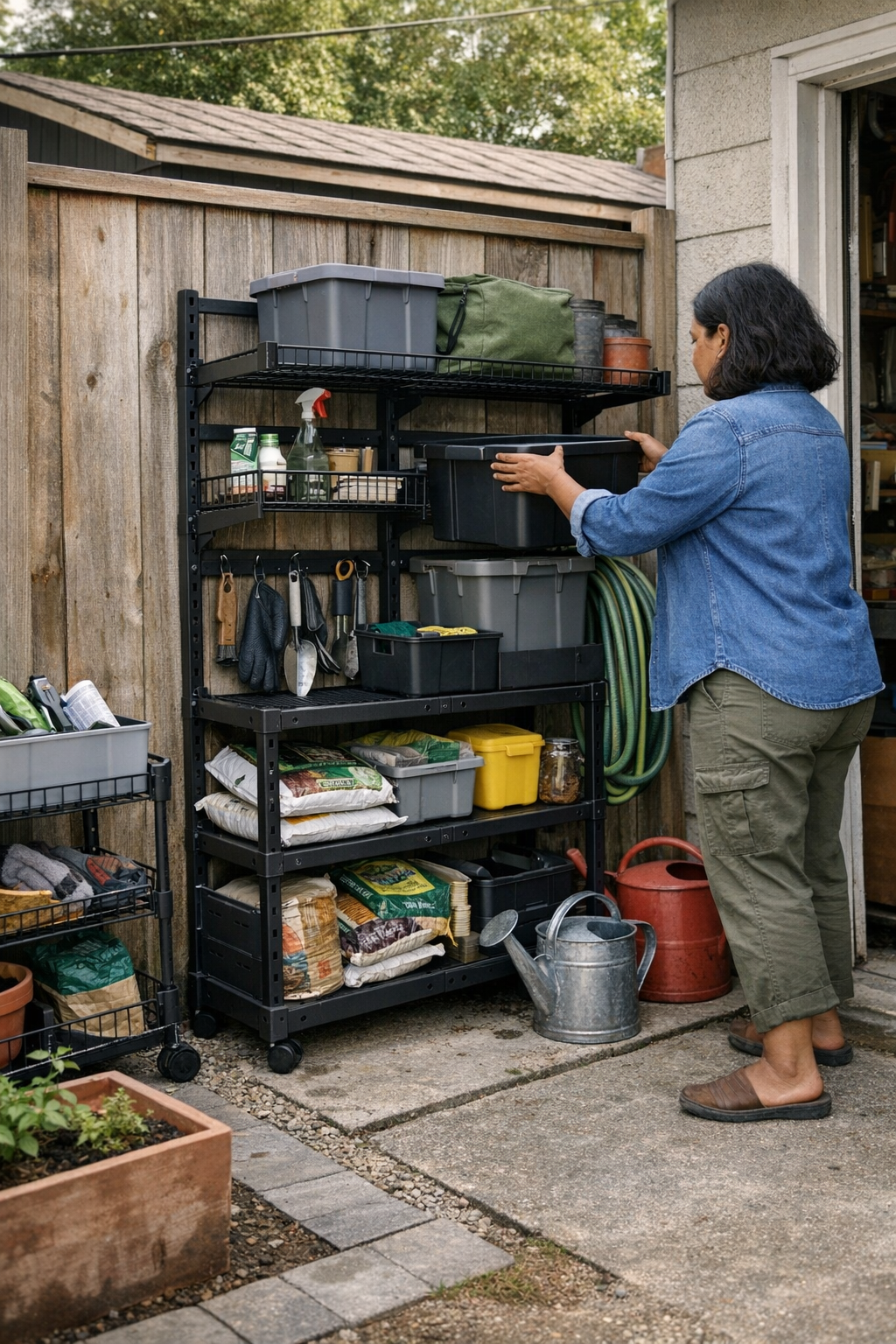
The first few days after setting up backyard storage always feel oddly satisfying. There’s calm in seeing everything lined up—tools in their slots, bins stacked just so—an order inviting optimism. For a while, that arrangement holds. But as weeks pass and the seasons shift, that neatness bends under the weight of real, unpredictable outdoor use.
It’s not just extra boots or rogue soccer balls appearing from nowhere. Even in small yards, the system begins to fight against itself: doors wedged shut by winter gear, piles displaced by today’s chores, forgotten bags tightening pathways. You don’t notice it immediately. Maybe you start drifting around the clutter, promising to tidy up “soon.” But you feel it—that drift between how storage should work and how it actually works when the footprint changes regularly.
Waiting for the Next Shift
Fixed shelves and permanent bins feel like solutions at first. I’ve set them up, admired the symmetry, even snapped a few photos for satisfaction. But when you’re rerouting monthly, squeezing past whatever spilled over last, the illusion fades. A heavy shelving unit too close to a door, or a deep bin where gloves and hedge trimmers tangle at the bottom—these choices made sense when everything was in place.
Seasons change, kids grow, someone picks up a new hobby. The system doesn’t. Frustration slides in quietly. I’d notice that one shortcut was now blocked by a stray hose or that fetching a shovel became a mini excavation through clutter. The setup built for efficiency quickly started crowding me out.
Flexibility Grows, Frustration Shrinks
With flexible storage, the shifts feel less dramatic, almost gentle. Hooks slide sideways when a new tool appears. Shelves adjust as the amount of gear cycles up and down, almost as if the space anticipates your needs. I remember swapping a heavy bench for a rail-and-hook setup—nothing flashy, just different enough to notice. Suddenly, there was no need to crawl for a lost trowel, and nothing blocked the way after a late Sunday cleanup.
That was the part I kept coming back to: a small tweak, like raising a shelf a few inches, would clear a path and save a stubbed toe. Clutter had less floor to claim, and putting things away felt lighter, less like a losing battle.
There Is No “Final” Layout
Every busy weekend, every surprise storm, tests whatever order you thought you’d established. I’ve realized no setup is permanent—and that’s not failure. It’s just life moving through the space. Adapting to that rhythm—rearranging as routines settle in, letting go of “perfect”—has made resets easier and the mess more forgiving.
If you pay attention, you find the right balance. Not by buying more storage, but by reshaping what’s already there so the next change isn’t a headache. All the while, clutter never quite disappears. But the way forward stays open, even as seasons spin and everything keeps moving again.
Small moments like these kept circling back as I worked with my own outdoor setup, which you can see here: View the full collection



