Living with Softer Light in Everyday Corners
Switching to wall sconces with proper support and cable management relieves glare, provides steadier light, and reduces clutter in shared spaces.
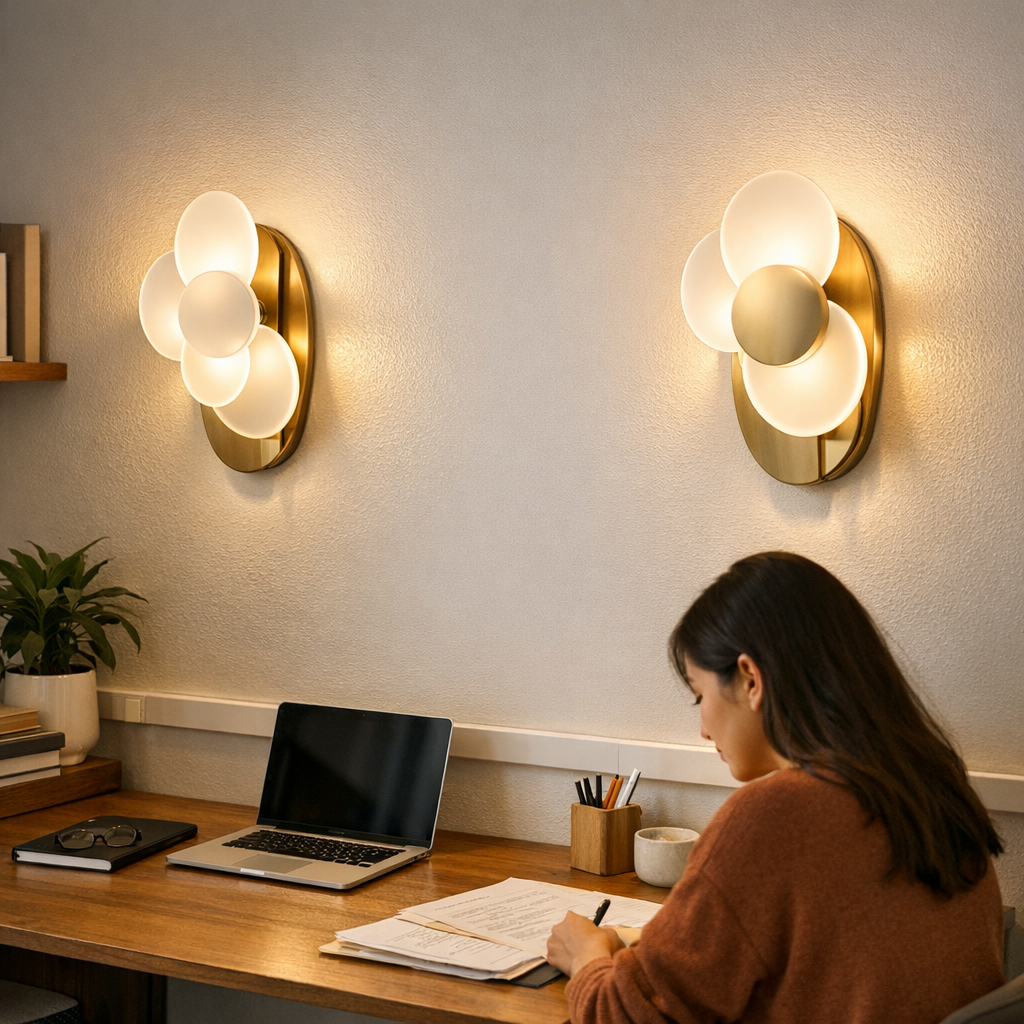
It’s easy to fill a room with light. That was the first thing I noticed, watching the ceiling fixture glow across the little office after sunset—no corner left untouched, every object washed in brightness. But after a dozen evenings in the same chair, that “enough” started to feel oddly incomplete. The room was fully lit, yet actual work—reading, typing, sharing space—felt tiring in a way I couldn’t quite explain. My eyes wandered to the edges, catching glare and sharp shadow lines flickering with every small movement. It kept happening, a kind of daily friction that never showed in the photos.
Lighting is supposed to disappear into the background, yet here it was, always present. Overhead fixtures seem so clean at first—flush, symmetrical, nothing loose or out of place. But living with them tells another story. Surfaces looked bland, their texture and depth lost under broad, uniform light. I’d catch myself adjusting papers, shifting the laptop, dodging reflections or untangling a cable snaking out from a desk lamp I’d added for extra help. It’s strange how quickly a neat setup can feel cluttered when cables and shadows gather around what you actually use.
You don’t notice this friction immediately.
Moments When Light Matters More Than Expected
After a while, I tried wall sconces. It was a small experiment: mounting two about a foot and a half from each side of the desk, angled gently to avoid direct glare. The change wasn’t loud, just quietly persuasive. The harsh bright spot in the center of the desk softened, and the dull band along the back became a gentle gradient. Reading became easier—no more leaning in or squinting—and even typing late at night strained the eyes less.
But it wasn’t just the light itself. With cables tucked away in a simple channel, there was less visual static. The desk finally looked as open as I hoped it would feel. The clutter hadn’t really been the objects themselves, but the lines they left in sight and reach—a lesson that sank in after catching my shoelace on a loose cord one too many times. Surfaces stayed usable, even as hours passed.
That was the part I kept coming back to.
The Practical Quiet of Good Placement
The real comfort came from a small adjustment. By positioning the sconces just above eye level, angled away from glossy desks and screens, there was enough brightness where I needed it without the old harshness. The light settled on the work surface and stayed out of the way everywhere else. Ceiling fixtures may look deliberate from a distance, but up close, their story changes—edges dim, screen glare builds, and reach zones remain awkward.
It became clear that when a support bracket sits just right, or cables disappear behind a shelf edge, the space holds together much longer. No corner competes for attention. Over time, the difference shows up not in how a room looks when you walk in, but in how little you think about light once you start using the space for real.
Maybe that’s all there is to it: relief comes softly, slipping in through better choices rather than bigger bulbs or more fixtures.
Some of these scenes probably sound familiar. There’s a quiet in finding a setup that, finally, is easy to live with—and easier to forget about as you move around.
If you’re curious what’s possible, you can find a few of the setups that shaped these thoughts over at this page.



