Living with the Chaos of a Crowded Utility Room
A utility room setup holds up only if it matches daily flows—wall-mounted, segmented storage reduces pileups and keeps resets fast.
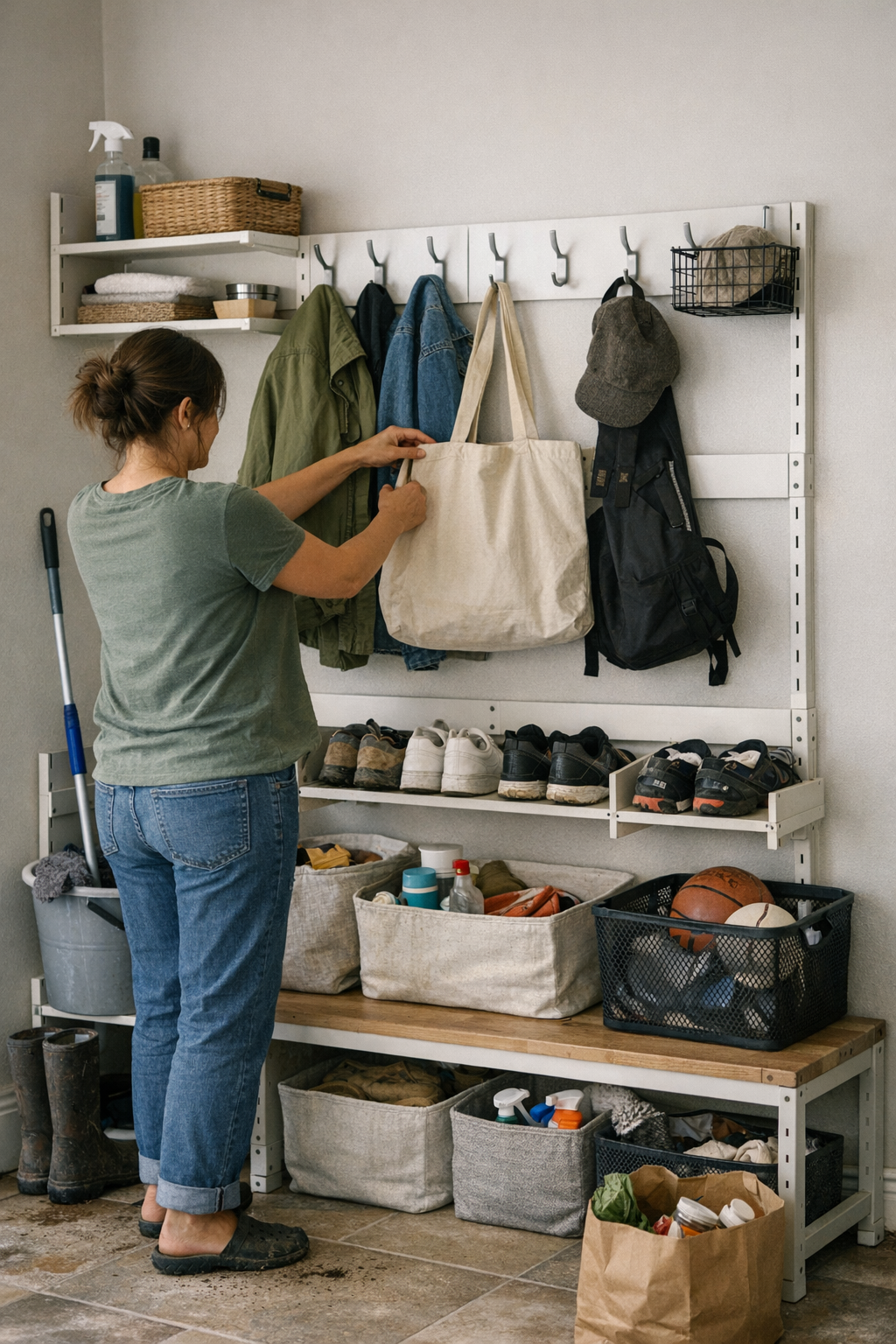
Sometimes the bench isn’t enough to hold the daily incoming clutter, and that’s when you notice everything piling up around the entryway.
It usually starts quietly—one shoe out of place, a bag half-hanging from a hook, the bench edge filling up before you’ve even taken your coat off. In those in-between spaces where the day leaks in from outdoors, the rhythms are small but relentless. Living with a transition-space setup isn’t about how clean things look for company; it’s whether that near-threshold sense of pressure drops or builds as the week drags on. Almost without noticing, you start tracing which kinds of storage let things flow, and which ones just push yesterday’s mess a little further out of sight.
Watching the Routine Change Itself
You don’t notice the limits right away.
At first, every new shoe rack or wall panel feels like the fix—the thing that will slow the constant drip of clutter into the house. But once the pattern of daily arrivals settles, the limits show up in quiet ways: bags slowly eating up the bench, wet shoes drifting underfoot, baskets bulging and edging toward overflow. The gentle promise of a reset never quite lands. That was the part I kept coming back to, especially on days when the entry needed to handle laundry, garden trimmings, and rain gear all at once.
In these moments, something as simple as a wall-mounted shoe slot at shin height made a difference—not because it looked tidy, but because returning things there felt just as easy as dropping them anywhere else.
Boundaries, and When They Hold—or Break
A row of hooks and a low bench sometimes create an illusion of order, but after repeated cycles, categories quietly blur. The bag meant for Monday’s errands shares space with winter boots and a tennis racquet, the overflow blending at the edges. The space feels increasingly negotiated; with every new arrival, there’s a little more improvising, a little more shuffling of what’s already there. Benches and open baskets work best for the first few hours after a reset. Past that, without clear physical boundaries, everything competes for the same ground.
Segmented wall storage, oddly enough, can collapse this ongoing negotiation. There’s a relief to having set places that stay functional even under pressure—a visible line between what’s used daily and what’s only passing through.
The Quiet Shift When Storage Fits the Flow
What surprised me most was how daily movement changed once storage actually matched routine. The wall-mounted panel—or even a single utility cabinet near the door—did something a bench couldn’t: it provided friction in just the right places, keeping shoes from drifting underfoot, and signaling when the line between “in use” and “clutter” had to be redrawn.
There’s something settling in being able to sweep the space under a wall unit after repeated arrivals, instead of picking your way around scattered gear. If anything lingered on the bench edge, it was a feedback loop—subtly pointing to what wasn’t working, or what needed a deeper shift. Sometimes, the smallest change in storage position made reset cycles fall away, replaced by the gentle hum of things simply returning to where they belonged.
Sometimes it’s easier to see what’s working in the slowing down, and I found more of that quiet sense of arrival here: http://www.betweenry.myshopify.com



