Living With Visible Clutter in the Heart of Home
Tiered carts bring visibility to busy entry zones, turning hunting into quick scans and resets with open designs that reveal clutter immediately.
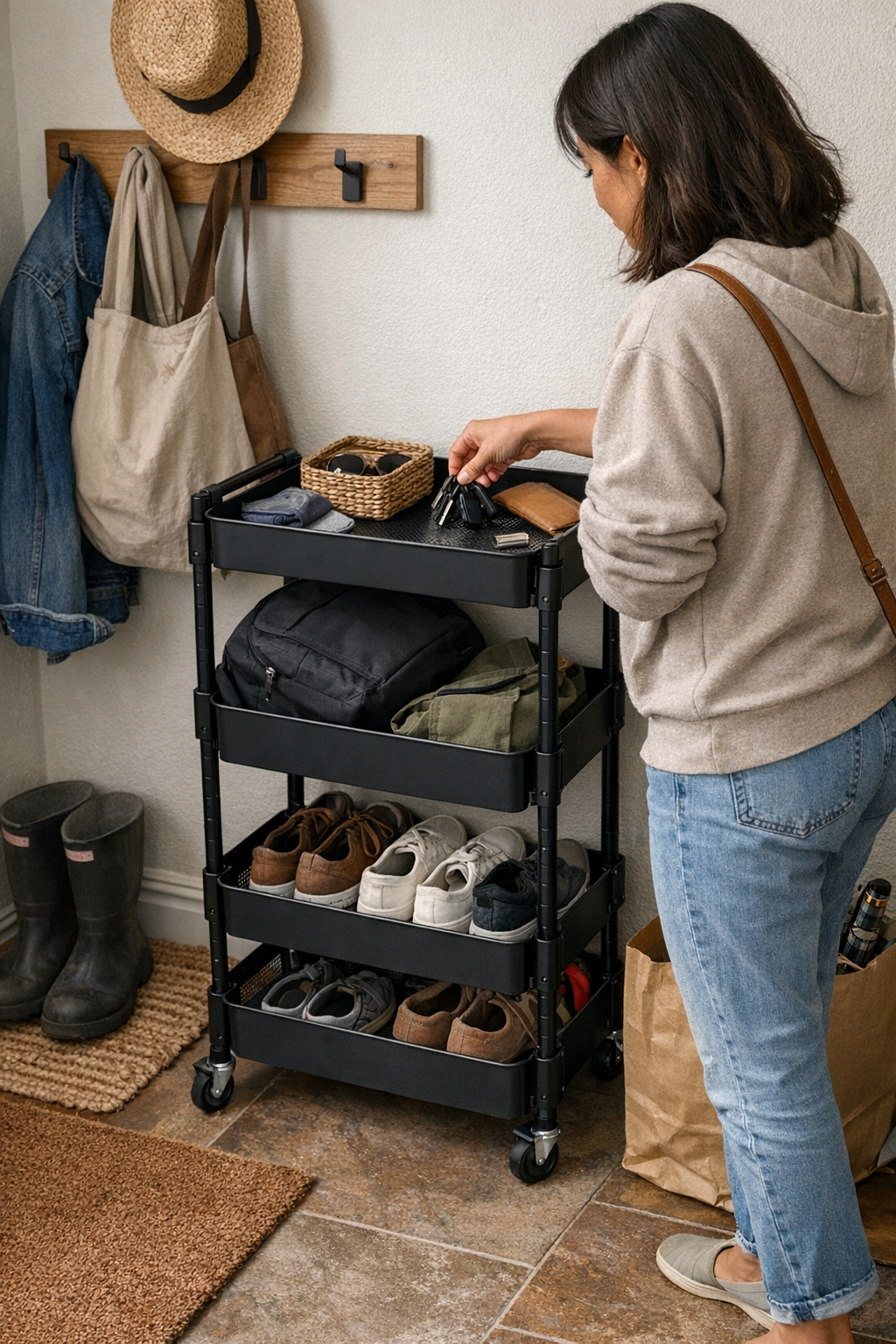
There’s an odd relief in not having to dig for something urgent every time I walk through the door. It crept up gradually—this quiet difference—after switching our drop-zone setup from the usual closed bin to an open, tiered cart designed for entryway use. What once felt like a simple storage tweak ended up changing my entire sense of the transition space. Instead of bracing for the daily scramble, the threshold felt lighter, a bit less like an obstacle and more like a functional handoff point for everyday gear.
A Layered Kind of Order
Before, I relied on deep baskets, convinced that hiding clutter was the same as controlling it. It looked calm from the outside, but the truth waited beneath the lid—a jumble of shoes tangled with dog leashes, keys slipping out of sight. There were mornings when a lone glove disappeared for days, or when leaving on time felt impossible because everything had drifted to the bottom of the bin.
You don’t notice it immediately. But you feel it—this buildup of threshold pressure in a small entry area where so many essentials pass through daily.
The tiered cart revealed all of it at once. Layers for shoes, trays for bags, a clear place for whatever lands in your hands when you cross the threshold. The visual openness turned resets into casual, quick actions. After a few days of arrivals and departures, there was no more guessing where the missing cleat or badge ended up. It was just there—easier to spot, even easier to put back.
Overflow On Display
It’s interesting how making the clutter visible changes the routine. With the cart, stray mail or a forgotten water bottle no longer lingered hidden for a week—it sat in plain view, nudging a quick return to order. At first, the mess felt a little exposed, less camouflaged than before. But over time, the space became less tense. The pressure at this narrow pass-through eased because there was no secret buildup waiting to spill over during rushes of repeated arrivals and departures.
I kept coming back to a subtle clarity: visible, layered storage invites brief, casual resets rather than exhausting overhauls. The bench-edge stopped overflowing with random items, and there was enough give in the system to absorb the constant in-and-out flow of daily comings and goings.
The Routine that Emerges
Stacking by layer gave every item a predictable landing spot. Shoes below, bags in the middle, little stuff up top—nothing special at first glance, but somehow it worked. Even when things got messy, fixing it never felt like a big project. The cart’s edge was always within easy reach, right by the wall-mounted entryway for smooth access. Sometimes it was enough to just glide everything back toward its tier, keeping the passage clear.
The entryway stopped feeling like a daily battlefield and turned into something more flexible. There was still movement, still the scatter of a lived-in space, but it stayed manageable without trying too hard. That’s the part I kept returning to: how the right transition-space setup quietly changes the rhythm of every arrival and departure, reducing clutter spread and bag drop drift, while keeping the shoe rows from building up and blocking passage.
If you’re curious where these moments have led, you can find more here: http://www.betweenry.myshopify.com



