Nighttime Hallways Reveal Hidden Lighting Flaws
Effective hallway lighting combines proper fixtures with sturdy support like cable guides and brackets, ensuring stable visibility and reducing hazards over time.
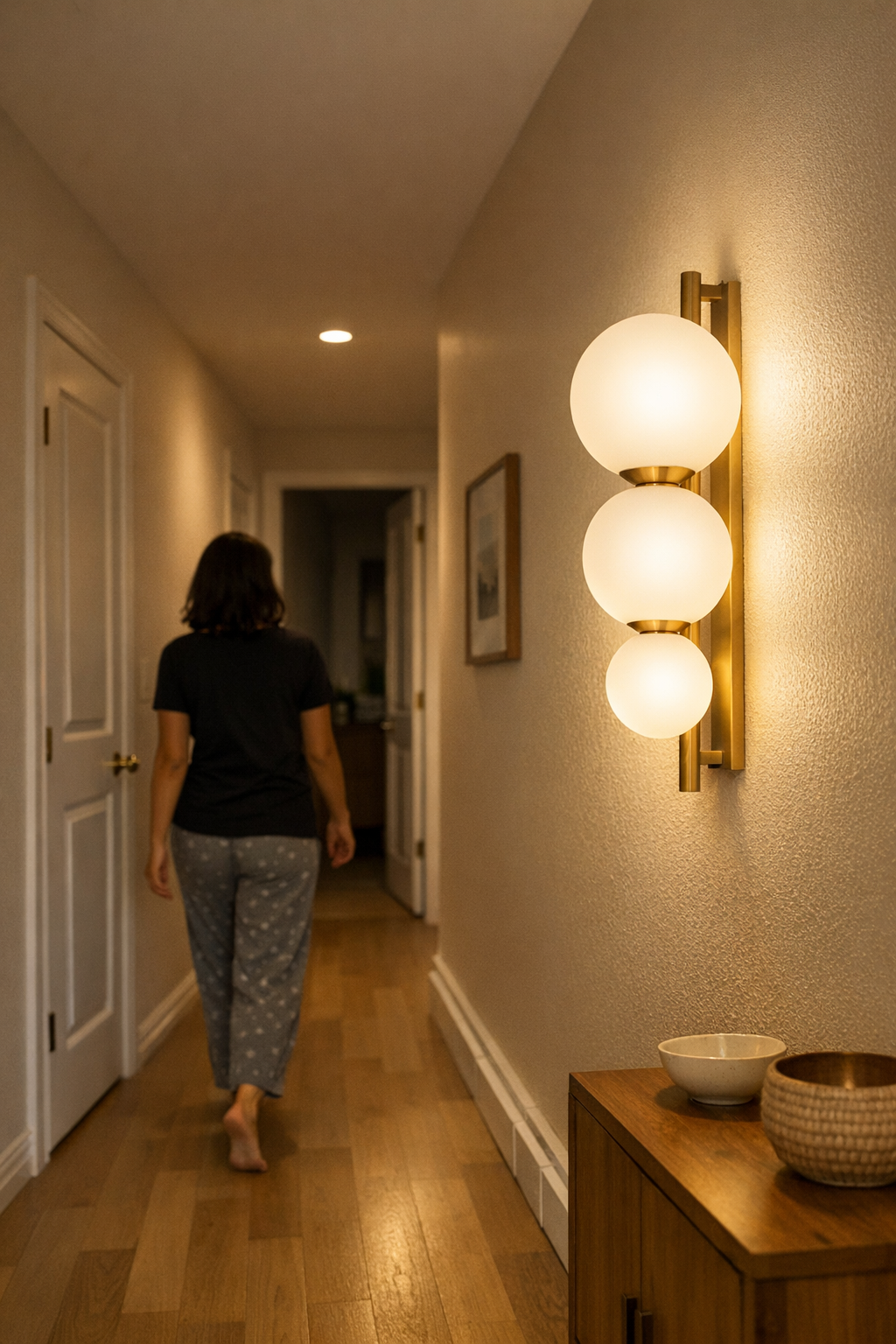
It’s easy to feel satisfied with new lighting once the last cable is tucked and the switch is flipped. The hallway looks even, every fixture aligned just so. But much later, crossing to bed or wandering back from the kitchen, a sharper truth creeps in. Shadows gather at edges, a stray cord snags, and light suddenly marks its limits. Hallway lighting can feel resolved in daylight, yet unsettle as routines unfold across weeks and nights.
I didn’t notice right away how often I’d adjust my steps at the same dark patch near the closet. Or how a glossy door bounced glare from the wall light, making the floor uncertain for a step or two. These small things collect. You don’t feel them in the first days—there’s a sense of order, the job done. But it settles in as the weeks go by and the pattern repeats.
Something Shifts After Dark
Moving around after everyone else is asleep pulls out the real gaps in a setup. The fixture that looked clean in the plan feels starkly uneven in practice. There’s more tension in a hallway than anyone brags about: hearing shoes scrape in the dim, feeling for the edge of the runner with a toe, tracing a cable with a glance while half-awake.
You don’t notice it immediately.
But you feel it.
Almost always, where light drops off or a wire strays, that’s where movement slows down. Over time, I found myself sidestepping the same low loop of cord—pulled loose by a few vacuum passes—then dodging a bag left in that patch the light never fully reached.
The Surface Isn’t the Story
By day, everything looks neat: a slim LED bar by the ceiling, cords disguised in tidy channels, switches in easy reach. But the ease unravels minute by minute. Sometimes I’d catch myself drifting to the wall, guiding a hand along, navigating around what was meant to disappear. The “solve” fades as weeks pass.
Here’s the part that changed things: swapping out a basic plug-in for a fixture with a proper bracket and real cable management didn’t just make the light look better, it made walking itself—and all those small nighttime crossings—fade into the background. Suddenly, light landed where it mattered. No cable to brush, no hard edge left cold.
That was the part I kept coming back to.
Living With Details, Not Just Designs
A hallway finds its rhythm in all the times it’s nearly forgotten. I’d cross the same spot on cleaning day or in the middle of the night and realize nothing had shifted: light steady, cable tucked, no surprises. It’s surprisingly restful. There’s no fight with a moved cord or new harsh glare ricocheting off a door handle.
Real comfort started where support was strongest: cable runs tracked neatly to the baseboard, fixtures bracketed so nothing sagged or migrated even after months. It wasn’t about brightness or a sense of “finished”—just that nothing kept coming loose, nothing called for adjustment. The space stayed silent, frictionless, easy to cross.
Somehow, the difference lingers far longer than the clean line you admire at the start.
I kept noticing new lighting options here: LightSupport.



