Quiet Corners and Steady Suction: Storing Your Cleaner Right
Proper storage of air-based power cleaners means purging dust, venting moisture, and keeping filters loose to prevent performance drop-off.
There’s a subtle comfort in knowing that your tools will work the next time you reach for them—especially the trusty air-based power cleaner, often taken for granted until the day it hesitates to start or spits out more dust than it takes in. It’s only when that steady flow is broken that we realize how much we depend on reliable performance.
This isn’t just about appearances or finding a tidy spot on the shelf. How we store air cleaners, done right or wrong, quietly shapes how these machines age with us.
When Habits Hide Their Impact
Take any two identical cleaners in a workshop. At first glance, both seem equally ready. Maybe each is wiped down, coiled cords resting on hooks, lids snapped shut. You don’t notice anything missing.
But you feel it.
That slight pause when flipping the switch—one powers up smoothly, the other rattles or stutters, its airflow oddly choking. Only then do the little habits behind the scenes reveal themselves: the moments after each use, barely considered, when lingering dust or moist air is either set free or left to settle deeper inside.
It’s not obvious right away. Sometimes it takes weeks. But over time, skipped care shows itself as a slow decline—less suction here, a stuck control there.
Small Rituals, Big Shifts
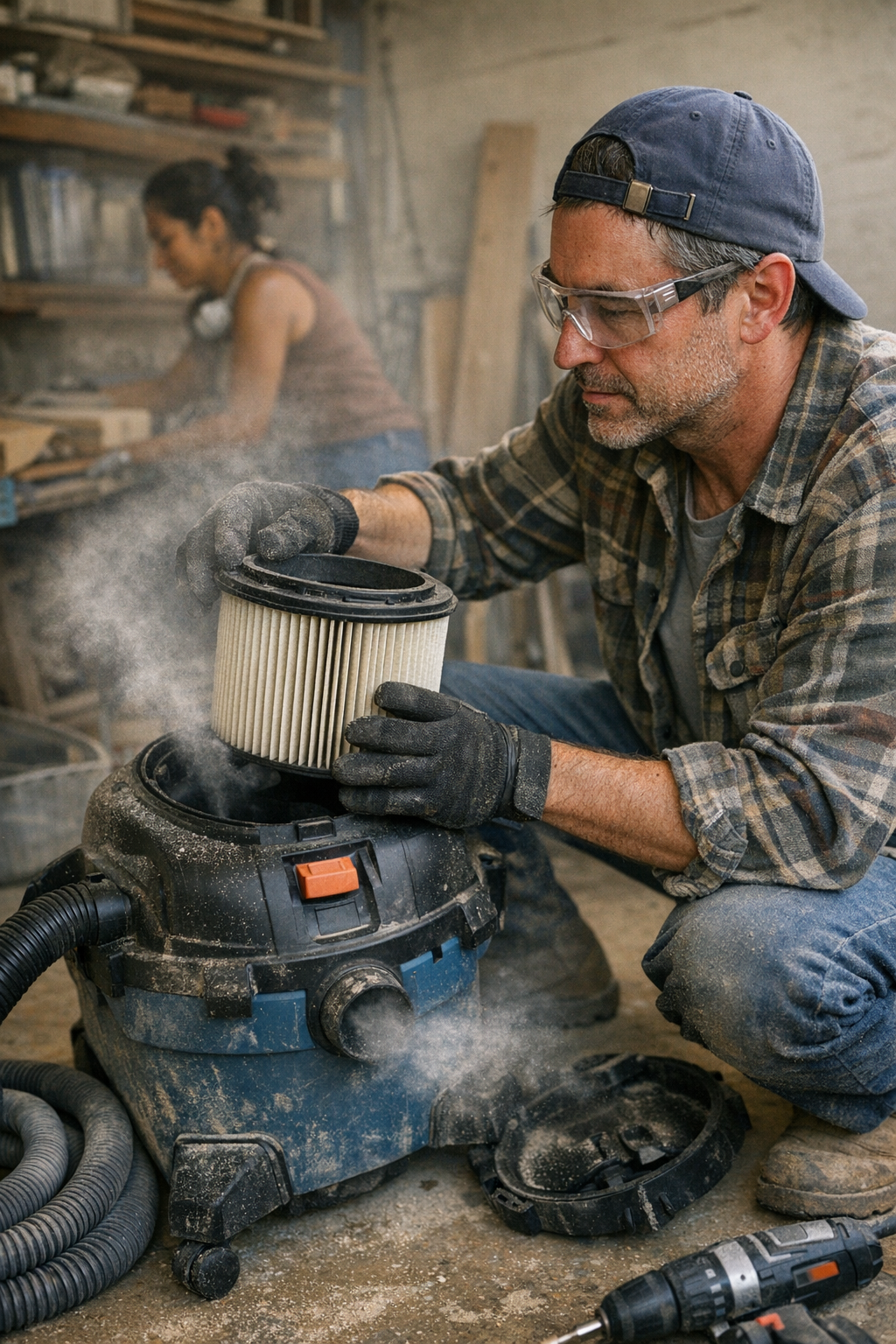
Sometimes, what matters is almost invisible. Maybe it’s the extra minute at the end of a long workday, letting the cleaner run on low with the filter loose. The dust clears out, invisible moisture gently vented rather than trapped.
It feels like a small thing. But on the next day—especially after a dirty, exhausting job—startup is crisp. Controls glide instead of complain. There’s a quiet satisfaction in seeing a machine reward what is, in truth, a very gentle habit.
There was a time I rushed this part, ready to move on. Then a clogged filter and lazy airflow made the lesson plain: a neglected routine can turn a reliable tool into a finicky chore.
Consider this a kind of refresh—pausing to appreciate that maintenance isn’t just a task, but a way of protecting those small, everyday victories.
What Stays, What Doesn’t
Storage is never just about where we put things, but how they’re left to rest. Filters loosened, inner passages left clear, a dry environment—it all adds up across dozens of uses. Over time, the cleaner’s heart stays supple, air routes stay unburdened, and startup is nearly silent.
If, instead, the rituals fade—hoses stay clamped, dust sits unmoved, the machine waits in a cold or damp corner—troubles multiply at just the wrong moment. Startup stutters, suction drops off, buttons don’t bounce back like they used to. There’s no single dramatic failure—just a gradual slipping away of reliability.
It’s easy to miss, until you need that first full-powered sweep, and something expected simply isn’t there.
The small moments of care done in routine—a little patience, a little attention—quietly shape the reliability we crave. Maybe we only notice when things don’t work, but the true change happens long before, in the pauses and habits nobody sees.
These thoughts came together after a late evening tidying up my workspace, with the soft hum of a freshly cared-for machine nearby.