Quiet Moments Amid Terminal Chaos with a Calm Pet
Traveling with pets requires setups prioritizing exterior access and easy reach to reduce snags during repeated stops and resets.
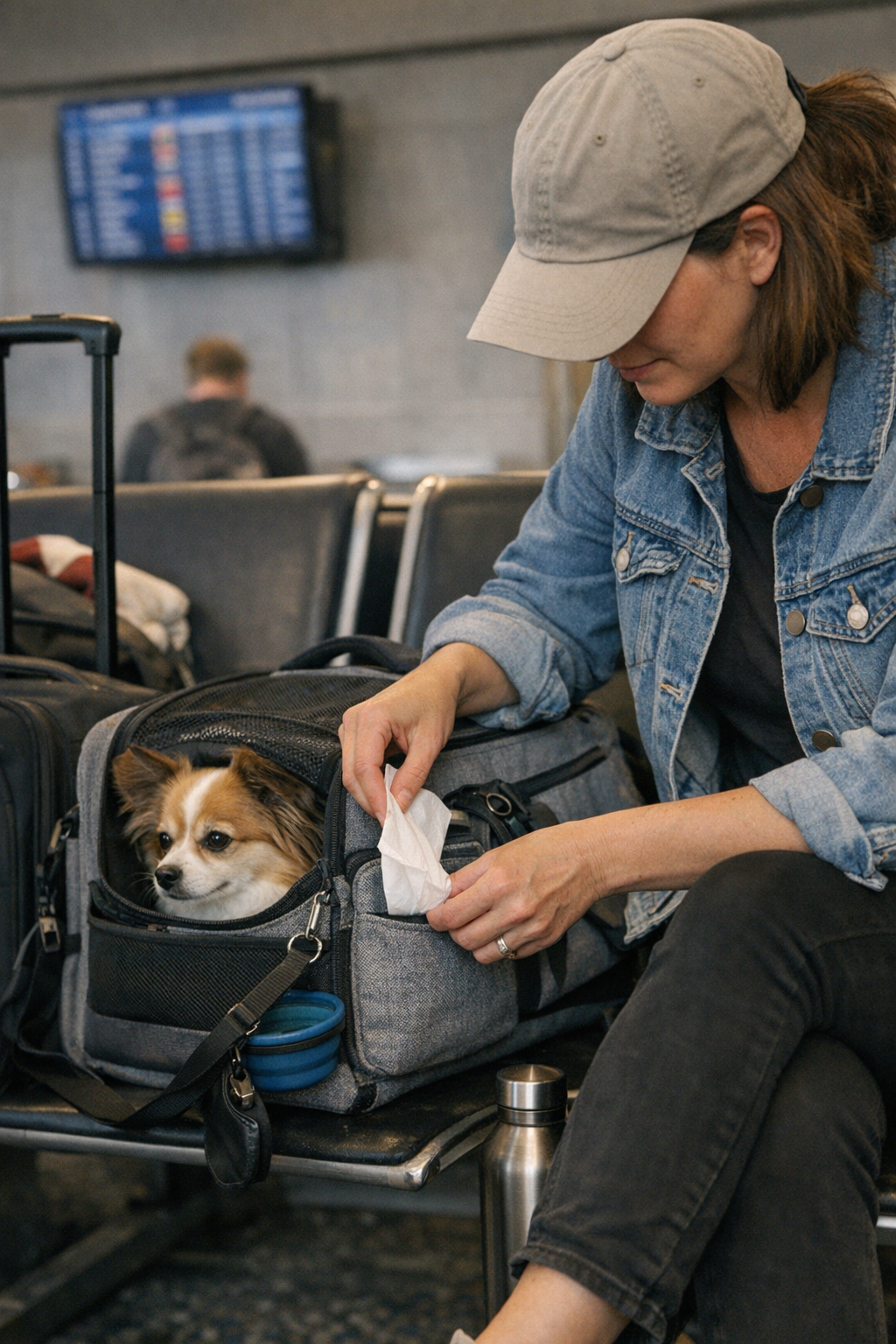
There’s a quiet relief that settles in after a few pet-in-tow trips—that moment when you notice how often you end up standing still, hands busy, reaching for something that isn’t quite where you expected. At home, everything seems ready: wipes in their sleeve, leash wrapped, snacks lined up, all zipped and orderly. But once you’ve passed through a couple of gates and settled in for a boarding call, the choreography starts to stutter. Travel with a pet isn’t really measured in distance, but in the small frictions of access and reset.
You notice it after a few trips. The bag that seemed well-organized begins to resist you, just a little. Most days, these delays aren’t dramatic—just realizing the wipe pouch is buried under snacks, or that clean-up bags have slipped beneath tins. Sometimes it takes longer to dig out a simple item than to walk to the next terminal. The pets in their carriers sense none of this, but the friction quietly intrudes, nudging your focus every time movement becomes a pause and a reach.
At first, I thought tight packing meant I was prepared. But the difference kept showing up. A setup can look ready—every pocket filled, all zipped—but still slow you down. It’s the recurring pause to move a leash before grabbing wipes, or the mid-trip scramble to locate the cleanup pouch you were sure was “right here.” It’s not chaos, just a low-heat friction that builds trip after trip.
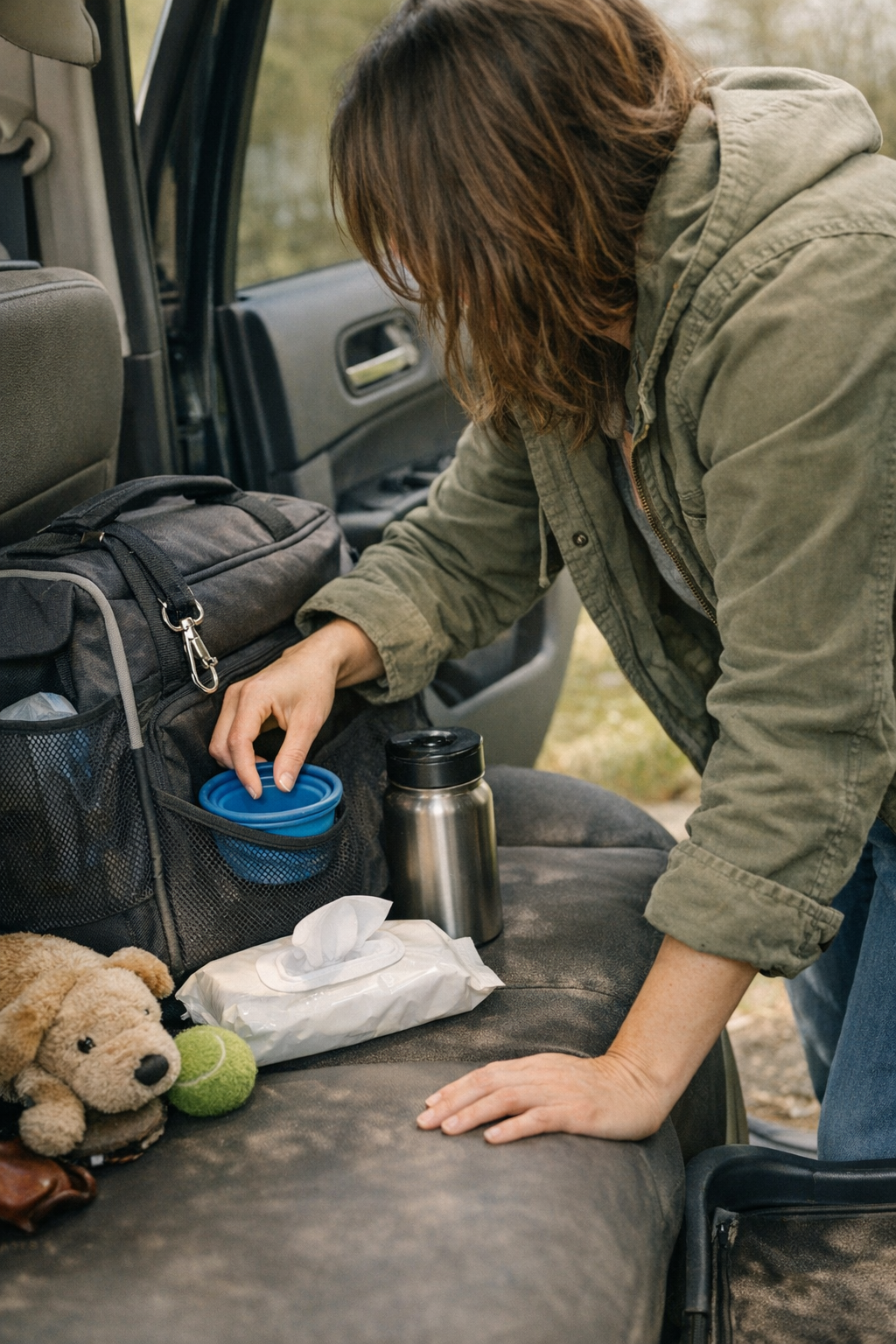
It looked fine at first. But the setups that truly work are the ones you barely notice as you move. A few subtle changes made that clear: bringing core items—wipes, leash, quick treats—to the edges, where they’re simply there, reachable without extra steps. One small upgrade—an exterior-facing pouch near your seat that stays open—cut out repeated rummaging. The relief wasn’t loud or dramatic, just a soft, ongoing ease. Less digging meant cleanup or little resets could happen one-handed, the pet unbothered, and the restart immediate. In pet travel, that lightness only becomes clear with use. The rest is just theory.
So practicality rules: in real movement, fewer, better-placed outer pockets ease the trip more than dense, zipped-in “organization” ever does. Especially after the third or fourth pause, when routines blur and fatigue sets in, those little one-move grabs matter most.
Somewhere in the back of a terminal, mid-shuffle, it’s the setups that let you keep moving—without hunting, shuffling, or doubling back—that stick with you. Not because they look clever, but because nothing slows, and you just keep traveling together.